
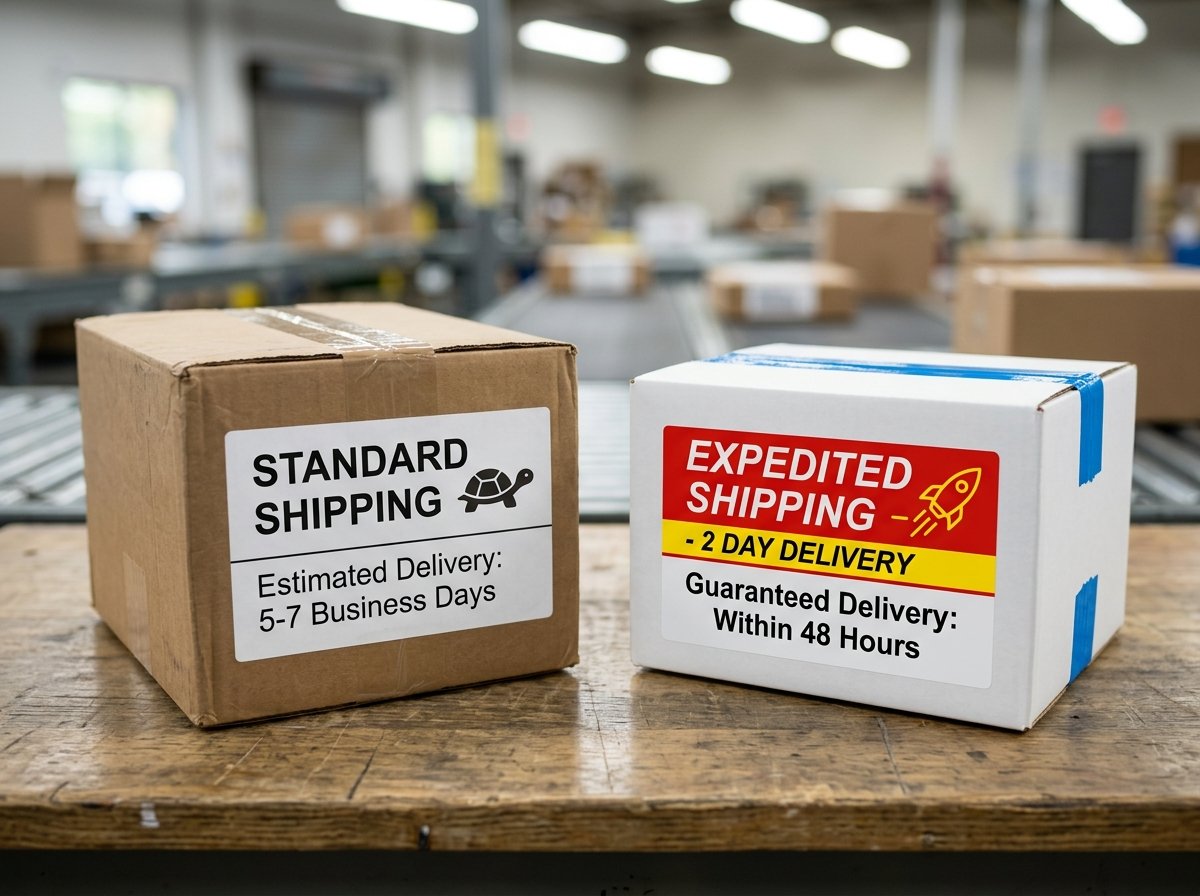
You’ve just placed an order online. You’re at checkout, and there it is — two shipping options staring at you. Standard shipping. Expedited shipping. One’s cheaper, one’s faster, and you’re sitting there wondering if the price difference is even worth it.
Here’s a number that puts things into perspective: according to a 2024 Baymard Institute study, nearly 69.8% of online shoppers abandon their carts, and unexpected shipping costs are the #1 reason. So yeah, understanding what you’re paying for actually matters.
Whether you’re a shopper trying to figure out if your birthday gift will arrive on time, or a small business owner deciding which shipping option to offer your customers, this breakdown will give you everything you need to make a smart call. No jargon, no fluff — just clear answers.
What Exactly Is Standard Shipping?
Standard shipping is the default option most online stores offer. It’s the “no rush” method. Your package travels through regular ground transportation networks — trucks, trains, sometimes a short domestic flight — and reaches you within a typical window.
Typical delivery time: 5 to 8 business days for domestic shipments. For international orders, this can stretch to 2–4 weeks depending on the destination country and customs processing.
Cost: Usually the cheapest option. Many retailers offer free standard shipping once you cross a minimum order value — think Amazon’s free shipping on orders over $35, or similar thresholds on most e-commerce stores.
Here’s how standard shipping actually works behind the scenes. Your order gets picked, packed, and handed off to a carrier like USPS, FedEx Ground, UPS Ground, or a regional courier. The package joins a large batch of shipments heading in the same general direction. It moves through multiple sorting facilities, hops onto different trucks, and eventually lands at your local delivery hub before reaching your door.
The reason it’s cheaper? Carriers optimize these routes for volume, not speed. They fill trucks to capacity before dispatching them. That saves fuel and labor costs, and those savings get passed to you.
⚡ Quick Fact: USPS Retail Ground, one of the most common standard shipping services in the US, delivers packages within 2–8 business days based on distance. A package going from New York to New Jersey might arrive in 2 days, while one heading to California could take the full 8.
What Exactly Is Expedited Shipping?
Expedited shipping is anything faster than standard. That’s the simplest way to think about it. The exact speed depends on the carrier and service level you pick, but the promise is clear: your package jumps ahead of the regular queue and gets to you sooner.
Typical delivery time: 1 to 3 business days for domestic shipments. Some expedited services guarantee 2-day delivery, while others promise overnight or next-day arrival.
Cost: Noticeably more expensive. You might pay $10–$30 extra for domestic expedited shipping, and significantly more for international routes.
So what makes it faster? A few things change. Your package gets priority handling at warehouses and sorting centers. It often travels by air instead of ground. And carriers use dedicated, time-sensitive routes instead of the batch-and-wait approach standard shipping relies on.
Think of it like this: standard shipping is a local bus that stops at every corner. Expedited shipping is a direct cab ride. Both get you there, but one takes a straighter path.
Common expedited services you’ll see include FedEx 2Day, UPS 2nd Day Air, USPS Priority Mail, and DHL Express. Each has slightly different delivery commitments, coverage areas, and price points.
If you’re curious about how speed differences play out between economy and express options internationally, this economy vs express international shipping comparison breaks it down really well.
Standard vs Expedited Shipping: A Side-by-Side Comparison
Let’s put the two options next to each other so you can see the differences at a glance.
Speed
Standard shipping takes 5–8 business days domestically. Expedited shipping cuts that down to 1–3 business days. For international shipments, the gap widens even more — standard can take weeks, while expedited often delivers within 3–7 days.
Cost
Standard is the budget-friendly choice. Free standard shipping is common on orders above a certain amount. Expedited shipping costs extra — sometimes a flat fee, sometimes calculated based on weight and distance. For a medium-sized package within the US, you might pay $5–$8 for standard but $15–$35 for expedited.
Tracking and Visibility
Both options typically come with tracking numbers in 2025. But expedited shipments often get more detailed, real-time tracking updates because carriers monitor time-sensitive packages more closely. If you’ve ever been confused by tracking updates, this guide on understanding tracking statuses explains what each status actually means.
Handling Priority
Standard packages sit in sorting queues and move when there’s space. Expedited packages get pulled first, loaded first, and dispatched first. That priority treatment is a big part of what you’re paying for.
Reliability of Delivery Dates
Expedited shipping tends to have tighter delivery guarantees. Some carriers even offer money-back guarantees if they miss the promised date. Standard shipping gives you a wider delivery window with less commitment to a specific day.
When Should You Choose Standard Shipping?
Standard shipping isn’t just the “cheap” option — it’s the smart option in a lot of situations. Here’s when it makes perfect sense:
You’re not in a hurry. Ordered something you don’t need right away? Restocking household supplies, buying a book you’ll read next month, or grabbing a gift well before the occasion? Standard shipping saves you money without any downside.
You’re ordering heavy or bulky items. Shipping costs increase with weight and size. If you’re sending something like furniture internationally or large auto parts, the cost difference between standard and expedited can be massive. We’re talking $50–$200+ in some cases. Standard shipping makes way more financial sense for big, heavy items that aren’t time-sensitive.
Budget is tight. If you’re running an online business with thin margins, offering standard shipping (or free standard shipping above a threshold) keeps your costs manageable. For shoppers, saving $15–$20 on shipping per order adds up quickly over a year.
You’re doing bulk orders. Businesses placing wholesale or bulk orders almost always use standard or ground shipping. The per-unit shipping cost drops significantly. If you regularly ship in volume, you might also want to look into how bulk shipping discounts work — they can cut costs even further.
🔑 Pro Tip: Many carriers offer slightly faster standard delivery during off-peak seasons (January through September). Holiday season shipping — October through December — is when standard delivery windows tend to stretch because of volume surges.
When Should You Choose Expedited Shipping?
There are situations where spending extra on speed is absolutely worth it. Here’s when you should go expedited without second-guessing:
Last-minute gifts and occasions. Forgot your mom’s birthday? Anniversary snuck up on you? Expedited shipping becomes your best friend. If you’re planning ahead for occasions, this Mother’s Day gift shipping guide can help you avoid the last-minute panic entirely.
Time-sensitive business shipments. If you sell products online and a customer pays for fast delivery, you need to match that promise. Late deliveries kill customer trust. Platforms like Amazon, eBay, and Etsy track your shipping performance, and slow delivery can hurt your seller ratings.
Perishable or temperature-sensitive items. Certain products — cosmetics, chocolates, some medications — don’t do well sitting in a truck for a week. If you’re shipping something like cosmetics and skincare products, faster transit means less exposure to heat, cold, and handling damage.
High-value items you want out of transit quickly. The longer a package is in the shipping network, the higher the risk of loss or damage. Expensive electronics, jewelry, and collectibles benefit from shorter transit times. Less time moving means fewer touchpoints and fewer chances for something to go wrong.
Replacement or urgent parts. A broken laptop charger, a phone screen protector before a trip, car parts needed for a repair — some things you just can’t wait 8 days for.
Did You Know? FedEx and UPS both report that expedited and express packages have lower damage and loss rates compared to standard ground shipments. The reason? Fewer handling transfers and shorter time in the system.
How Do Major Carriers Handle Standard and Expedited?
Every carrier defines “standard” and “expedited” slightly differently. Here’s a breakdown of the big players in 2025:
USPS (United States Postal Service)
Their standard option is USPS Ground Advantage (which replaced Retail Ground and First-Class Package in 2023). It delivers in 2–5 business days. For expedited, Priority Mail delivers in 1–3 business days, and Priority Mail Express guarantees overnight to 2-day delivery.
UPS
UPS Ground is their standard service, delivering in 1–5 business days depending on distance. For expedited, UPS 2nd Day Air and UPS Next Day Air are the go-to options. UPS also offers UPS 3 Day Select as a mid-tier choice.
FedEx
FedEx Ground handles standard domestic deliveries in 1–5 business days. FedEx Express Saver (3 business days), FedEx 2Day, and FedEx Standard Overnight cover the expedited tier.
DHL
DHL is primarily an international carrier. Their standard service (DHL Parcel) can take 1–3 weeks internationally. DHL Express, their expedited option, delivers in 1–4 business days to most countries worldwide. If you’re comparing DHL’s services with other international carriers, this DHL vs FedEx international shipping comparison is worth reading.
One thing to keep in mind: carrier definitions aren’t universal. What FedEx calls “expedited” might be different from what UPS means by the same word. Always check the estimated delivery date at checkout rather than relying on the label alone.
How Shipping Costs Are Actually Calculated
Understanding why expedited shipping costs more requires knowing how carriers calculate shipping rates. It isn’t just about speed — several factors play into pricing.
Package weight. Heavier packages cost more. Simple.
Package dimensions. This is where it gets interesting. Carriers use something called dimensional weight (or DIM weight). If your box is large but lightweight — say, a pillow in a big box — the carrier charges based on the space it takes up, not just what it weighs. If you’ve never heard of this, dimensional weight explained is a really helpful read.
Distance. Shipping from New York to Philadelphia costs less than shipping from New York to Los Angeles. Zones determine pricing — most carriers divide the country into 8 shipping zones based on distance from the origin.
Service level. This is the standard vs expedited distinction. Faster service = higher price. Air freight costs more than ground transport.
Surcharges. Fuel surcharges, residential delivery fees, signature requirements, Saturday delivery — all of these can add to the total. Holiday season surcharges are especially common; FedEx and UPS both add peak season surcharges from November through January.
For a deeper look at how all these pieces fit together, check out this guide on how shipping rates are calculated.
⚠️ Warning: Don’t just compare base rates. Two carriers might show similar base prices, but their surcharges can make the final cost very different. Always look at the total landed cost.
The Real Cost of Choosing Wrong
Picking the wrong shipping option doesn’t just affect your wallet — it can cause real headaches.
Choosing standard when you needed expedited: Your package arrives late. If it’s a gift, you’ve missed the occasion. If it’s a business order, your customer might cancel, leave a bad review, or file a dispute. If you sell on platforms like eBay or Etsy, late deliveries directly affect your seller score.
Choosing expedited when standard would’ve been fine: You’ve spent money you didn’t need to spend. Over time, especially for business owners, unnecessary expedited shipping eats into profit margins. If you ship 50 orders a month and overspend $10 per order on shipping you didn’t need, that’s $500/month — $6,000 a year — gone.
The key is matching the urgency of the shipment to the right service level. Not every package needs to fly. Not every package can afford to crawl.
Smart Tips to Save Money on Shipping
Whether you’re a shopper or a seller, these practical tips can help you get the best value:
Order early. This is the simplest hack. If you order a gift two weeks before the occasion, standard shipping gets it there with days to spare. You save money and stress.
Use shipping comparison tools. Websites like Parcel Monkey, ShipStation, and Pirate Ship let you compare rates across multiple carriers in seconds. The cheapest option for the same delivery speed might surprise you.
Watch for free shipping thresholds. Many stores offer free standard shipping if your order crosses $35, $50, or $75. Sometimes adding a small item to your cart to cross the threshold saves you more than the item costs.
Choose the right box size. Remember dimensional weight? An oversized box means you’re paying for air. Pick a box that fits your product snugly. This guide on choosing the right box size walks you through it step by step.
Negotiate with carriers if you’re a business. If you ship regularly, most carriers will offer discounted rates. FedEx, UPS, and DHL all have volume-based pricing programs. Even small businesses shipping 20+ packages a week can negotiate 15–30% off published rates.
Standard vs Expedited for International Shipping
The standard vs expedited question gets more complicated once you cross borders. International shipping involves customs clearance, import duties, and more handoffs between carriers.
Standard international shipping typically uses a combination of ground and sea transport. Delivery can take 2–6 weeks depending on the destination. It’s cheap, but the delivery window is unpredictable. Customs delays can add days or even weeks.
Expedited international shipping almost always involves air freight. Delivery times shrink to 2–7 business days for most countries. Carriers like DHL Express, FedEx International Priority, and UPS Worldwide Express handle customs brokerage as part of the service, which speeds things up significantly.
For international shipments, the cost gap between standard and expedited is much larger than domestic. Shipping a 2kg package from the US to the UK might cost $15–$20 standard but $45–$70 expedited. If you’re comparing carriers for international routes, this Aramex vs DHL comparison can help you find the best fit.
🔑 Pro Tip: If you’re shipping to countries with strict import regulations — like the US, UK, or Australia — expedited services with built-in customs clearance can actually save you time and avoid packages getting stuck at the border.
What About Next-Day and Same-Day Delivery?
You might be wondering: where do next-day and same-day delivery fit into all of this?
They’re essentially the fastest tiers of expedited shipping. Same-day delivery means your order arrives within hours of placing it. Next-day delivery guarantees arrival by the end of the following business day.
These options cost the most and are typically available only in major metro areas. Amazon, Walmart, and Target offer same-day delivery in many US cities, but it’s usually limited to items stocked in nearby fulfillment centers.
For a detailed breakdown of how these ultra-fast options compare, check out this next-day vs same-day delivery guide.
Ground Shipping vs Air Shipping: The Hidden Factor
Here’s something most shoppers don’t think about: the standard vs expedited choice often boils down to ground vs air transport behind the scenes.
Standard shipping usually goes by ground — trucks and trains. Expedited shipping frequently uses air transport, especially for distances over 500 miles or international routes.
Ground shipping is slower but much cheaper and has a lower carbon footprint. Air shipping is fast but burns more fuel and costs more.
If environmental impact matters to you, choosing standard shipping is the greener option in most cases. You can also ask carriers about carbon-neutral shipping programs — FedEx, UPS, and DHL all offer carbon offset options in 2025. And if you want to go even further, using eco-friendly packaging for your shipments reduces your environmental footprint beyond just the transport method.
For a full comparison of these two transport methods, this ground vs air shipping pros and cons guide covers everything you need to know.
FAQ
Is expedited shipping the same as overnight shipping?
No. Expedited shipping is a broad term that covers any service faster than standard. It could mean 2-day, 3-day, or next-day delivery. Overnight shipping (next-day delivery) is a specific type of expedited shipping — the fastest and most expensive tier. Not all expedited services promise overnight arrival.
Does expedited shipping mean my order ships sooner?
Not necessarily. Expedited shipping affects how fast the package moves after it leaves the warehouse — not how quickly the seller packs and hands it off to the carrier. If a seller takes 2 days to process your order, adding expedited shipping speeds up only the transit portion. The total delivery time is processing time + transit time.
Can I switch from standard to expedited after I’ve placed an order?
It depends on the seller and the carrier. Some retailers let you upgrade your shipping speed if the order hasn’t been packed yet. Once a package is in transit with a carrier, upgrading the service level is usually not possible. Your best bet is to contact the seller’s customer support as quickly as possible after placing the order.
Is expedited shipping worth the extra cost?
It depends entirely on urgency. If missing the delivery window means a ruined birthday, a lost sale, or a work deadline gone wrong, the extra $10–$30 is a small price to pay. If you’re buying something you won’t use for weeks, save your money and go standard.
Why does expedited shipping cost so much more for international orders?
International expedited shipping involves air freight, customs brokerage fees, fuel surcharges, and handling across multiple countries. Each of these adds cost. Standard international shipping avoids air freight by using cheaper sea or ground transport, which dramatically reduces the price but increases delivery time.
Your Next Move
Picking between standard and expedited shipping doesn’t have to be complicated. Ask yourself one question: “Do I need this by a specific date?”
If yes, count backward from that date. Subtract the carrier’s expedited delivery window. If you can still order today and make it with standard, go standard. If not, pay for expedited and don’t look back.
If there’s no deadline, standard shipping almost always wins. It’s cheaper, it’s reliable enough for most situations, and the money you save adds up over time.
And here’s a final thought for business owners: offering both options at checkout isn’t just good logistics — it’s good customer experience. Let your buyers choose their own balance between speed and cost. That small flexibility can be the difference between a completed sale and an abandoned cart.