
A small business owner in Mumbai ships handmade jewelry to a customer in New York. She picks a courier, pays the charges, and waits. Seven days later, her customer emails — the package is stuck in customs, and nobody can tell her why. She wonders: did she pick the wrong shipping partner?
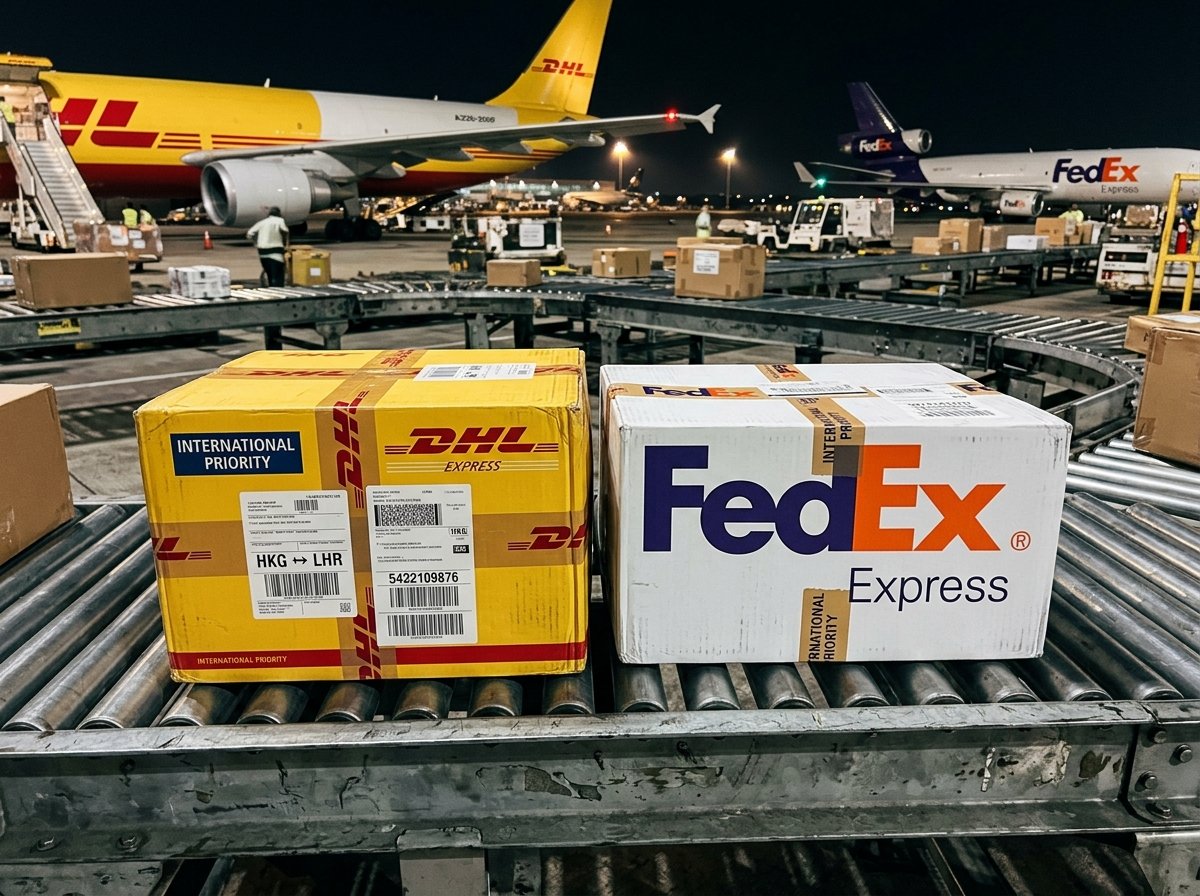
This scenario plays out thousands of times every single day. And the two names that pop up almost every time someone searches for international shipping are DHL and FedEx. Both are global giants. Both promise fast delivery, package tracking, and worldwide reach. So how do you actually decide which one is right for your shipment?
Here’s the thing — there’s no one-size-fits-all answer. Your choice depends on where you’re shipping, what you’re sending, how fast you need it there, and how much you’re willing to spend. This article breaks down the real, practical differences between DHL and FedEx for international shipping so you can make a confident decision, whether you’re a first-time shipper or running an eCommerce business.
A Quick Look at Both Companies
Before we compare services, let’s understand who we’re actually talking about.
DHL was founded in San Francisco in 1969, but today it’s headquartered in Bonn, Germany, and owned by Deutsche Post. It operates in over 220 countries and territories, making it the largest international logistics company on the planet. DHL’s real strength? International shipping has always been its core DNA. While other companies added global shipping later, DHL was built for it from the ground up.
FedEx, founded in 1971 by Frederick Smith in Memphis, Tennessee, started as an overnight domestic courier in the United States. Over the decades, it expanded globally and now serves more than 220 countries as well. FedEx is often seen as the king of domestic U.S. shipping, but its international division — FedEx International — is a serious competitor with a massive network of planes, hubs, and ground operations.
Quick Fact: DHL operates the world’s largest international express network, while FedEx runs one of the biggest cargo airline fleets globally with over 700 aircraft.
So both companies are massive. But massive doesn’t always mean “best for your specific package.” Let’s get into what actually matters.
Coverage and Global Reach: Where Can They Actually Deliver?
Both DHL and FedEx claim coverage in 220+ countries. On paper, that sounds identical. But the depth of coverage tells a different story.
DHL dominates in Europe, Asia, Africa, and the Middle East. If you’re shipping to a smaller city in Germany, a business district in Dubai, or a semi-urban area in India, DHL’s network runs deep. Their infrastructure in these regions has been built over decades, and they have strong partnerships with local postal services.
FedEx, on the other hand, is incredibly strong in North America. Shipping within the U.S., to Canada, or to Mexico? FedEx handles those routes with speed and efficiency that’s hard to beat. Their network in Latin America is also more established than DHL’s in several countries.
Here’s a practical example: if you’re an Etsy seller shipping internationally from London to a buyer in Lagos, Nigeria, DHL will likely offer a smoother experience with fewer delays. But if you’re shipping from Toronto to Miami, FedEx probably gets it there faster and cheaper.
Pro Tip: Don’t just look at whether a courier “serves” a country. Check if they have direct service to the specific city or region. A courier might technically deliver to a country but use third-party partners in remote areas, which slows things down.
Shipping Speed: Who Gets Your Package There Faster?
Speed is usually the first thing people compare, and honestly, both carriers are remarkably close on international express timelines. But the details matter.
DHL Express International typically delivers within 1–3 business days for most major international routes. Their flagship service, DHL Express Worldwide, is designed for time-sensitive shipments. Because DHL’s entire infrastructure is optimized for cross-border shipping, their customs clearance process is often faster — they have in-house customs brokerage in most countries.
FedEx International Priority also promises 1–3 business days to major global destinations. FedEx International Economy takes 2–5 business days and costs less. FedEx has a strong advantage on transatlantic routes (U.S. to Europe and vice versa) because of their massive Memphis and Indianapolis air hubs.
So who’s actually faster? It depends on the route.
For shipments from or to the U.S., FedEx is often marginally faster because of their domestic hub infrastructure. For shipments within Europe, Asia-Pacific, or to emerging markets, DHL frequently edges ahead because their international network is simply more refined in those regions.
If you’re curious about how economy and express international shipping actually differ, that breakdown can help you pick the right speed tier and save money too.
Pricing: The Question Everyone Really Wants Answered
Let’s be honest — this is probably why you’re reading this article. And the answer is frustrating but true: it depends.
Neither DHL nor FedEx publishes straightforward international rate cards that apply universally. Pricing varies based on package weight, dimensions, origin, destination, service level, and whether you have a business account.
That said, here are some general patterns based on real user experiences and rate comparisons as of 2025:
DHL tends to be more competitive for shipments originating from Europe, Asia, and the Middle East. Their economy services (like DHL Express Worldwide) can be surprisingly affordable for small parcels going to established trade routes.
FedEx tends to be more competitive for shipments originating from the United States, especially for heavier packages. FedEx International Economy is often cheaper than DHL’s equivalent for U.S.-outbound shipments.
Both carriers use dimensional weight pricing, which means your cost isn’t just based on how heavy your package is — it’s also based on how much space it takes up. A large but lightweight box can cost as much as a small heavy one. If you haven’t heard of this concept before, understanding dimensional weight can literally save you from unexpected charges.
Pro Tip: Both DHL and FedEx offer significant discounts for business accounts with regular shipment volume. If you’re shipping more than 10–15 parcels a month internationally, call their sales teams directly. You can often negotiate 30–50% off published rates. Also, consider using a courier quote comparison tool to see real-time prices side by side before committing.
Customs Clearance and Duties: The Hidden Battlefield
Here’s where many shippers get caught off guard. You can pick the fastest, cheapest courier — but if your package gets stuck in customs for a week, none of that matters.
DHL has built a reputation for smooth customs clearance. They operate dedicated customs brokerage teams in most countries, and their electronic pre-clearance system often gets packages through customs before they even land. For shipments to countries with complex import regulations — think Brazil, India, Nigeria, or Russia — DHL’s experience shows. They proactively contact recipients about duties and paperwork, which reduces delays.
FedEx also handles customs clearance well, especially on U.S.-centric routes. Their customs systems are highly automated for shipments between the U.S., Canada, EU, UK, and Australia. But in some emerging markets, FedEx relies more heavily on local agents, which can occasionally slow things down.
Both carriers offer DDP (Delivered Duty Paid) and DDU (Delivered Duty Unpaid) options. With DDP, the sender pays all customs duties upfront, so the recipient doesn’t get hit with surprise charges at delivery. With DDU, the recipient pays duties upon arrival. If you’re running an online business, choosing DDP creates a much better customer experience.
Warning: Customs rules vary wildly by country. Before shipping, always check the shipping restrictions for your destination — certain items like cosmetics, electronics, food products, and even artwork have specific import requirements that can cause seizures or delays if you’re not prepared.
Tracking and Technology Experience
Both DHL and FedEx offer real-time tracking, but the quality of the experience differs in subtle ways.
DHL’s tracking is detailed and updates frequently, especially once a package is in transit internationally. Their app and website show customs status, estimated delivery windows, and even let recipients reschedule or redirect deliveries in many countries. DHL’s “On Demand Delivery” feature gives recipients control over when and where they want their package — a nice touch for international shipments where the recipient might not be home.
FedEx’s tracking is equally robust, with a strong mobile app and detailed scan updates. FedEx has an edge in proactive notifications — their system sends email and SMS alerts at every stage, and their FedEx Delivery Manager lets recipients hold packages, redirect them, or schedule specific delivery windows. For U.S.-based recipients, this system is particularly polished.
If you’ve ever dealt with confusing tracking updates like “in transit” for days with no movement, you know how stressful that can be. Here’s a helpful guide to understanding tracking statuses that breaks down what those cryptic updates actually mean.
Packaging Requirements and Support
This is an area people overlook until something goes wrong. A broken item after international shipping is a nightmare for both sender and receiver.
DHL provides free DHL Express packaging (envelopes, boxes, tubes) that you can order online. They also have detailed packaging guidelines on their website. For fragile or high-value shipments, DHL offers specialty packaging advice and even packaged solutions for specific industries.
FedEx also provides free FedEx-branded packaging for Express shipments. Their packaging resource center is quite detailed, with videos and guides for different product types. FedEx boxes tend to be slightly more varied in sizes.
If you’re shipping something specific — like a mobile phone or laptop, artwork or paintings, or even furniture internationally — the packaging approach matters far more than the courier choice. Getting the packaging right eliminates 90% of damage risks, regardless of which carrier you use.
Customer Service and Dispute Resolution
International shipping will, at some point, go wrong. A package gets delayed. An item arrives damaged. A customs issue pops up out of nowhere. When that happens, you need a courier that actually responds.
DHL’s customer service is generally rated well for international shipments. They have dedicated support lines for Express customers, and their online chat support is available in multiple languages. For business account holders, DHL assigns a dedicated account manager — which makes a massive difference when you need issues resolved quickly.
FedEx’s customer service is strong in North America but gets mixed reviews in other regions. Their phone support can involve long wait times for international queries, though their online tools and chatbot have improved a lot in 2024–2025. FedEx’s claims process for lost or damaged packages is fairly straightforward, but it can be slow — expect 5–7 business days for a response on international claims.
Pro Tip: Always get shipping insurance for valuable packages. Both DHL and FedEx offer it, but the coverage limits and claim processes differ. DHL includes basic coverage of around $100 for Express shipments, while FedEx provides similar declared value coverage. For anything worth more, buy additional insurance — it costs a few extra dollars but saves you massive headaches if something goes wrong.
Which One Should YOU Pick? Real Scenarios, Real Answers
Instead of giving you a generic “it depends” (even though it does), let me walk through specific scenarios so you can see yourself in one of them.
You’re an eCommerce seller in the UK shipping worldwide. Go with DHL. Their European infrastructure, customs expertise, and global reach make them the smarter choice. You’ll see fewer customs delays, and your customers in Asia and the Middle East will get better delivery experiences.
You’re a small business in the U.S. shipping to Canada and Europe. FedEx International is probably your best bet. Their U.S. outbound rates are competitive, transit times are fast, and their technology for North American routes is top-tier. If you’re starting to sell on eBay and shipping internationally, FedEx’s integration with eBay’s shipping tools is a big advantage.
You’re a student moving abroad and shipping personal belongings. This one’s interesting. For boxes of personal effects, DHL’s Express service will be fast but expensive. FedEx International Economy is slightly cheaper for heavier boxes. But honestly, for large-volume personal shipments, you might want to explore how to ship belongings when moving abroad — there might be better options than both DHL and FedEx for this specific use case.
You’re shipping high-value items like jewelry or electronics. Both are reliable, but DHL’s customs clearance expertise gives them a slight edge for high-value international shipments that need accurate customs declarations. Their proactive communication with recipients about duties reduces the chance of packages being held or returned.
You need the absolute cheapest option. Neither DHL nor FedEx is the budget king for international shipping. If cost is your primary concern and speed isn’t critical, postal services or consolidators might serve you better. But between these two, get quotes for your specific route — the cheaper option literally changes based on origin, destination, and package specs.
DHL vs FedEx at a Glance
Here’s a quick reference to keep things clear:
International Coverage Strength: DHL leads in Europe, Asia, Middle East, and Africa. FedEx leads in North America and Latin America.
Express Speed: Both offer 1–3 day international express. DHL is slightly faster on Asia-Europe routes. FedEx is slightly faster on U.S.-outbound routes.
Pricing: DHL is often cheaper for shipments originating outside the U.S. FedEx is often cheaper for U.S.-origin shipments.
Customs Handling: DHL has stronger in-house customs teams in more countries. FedEx is excellent on established Western routes but relies on local partners elsewhere.
Technology: Both are strong. FedEx has a slight edge in U.S.-focused features. DHL’s On Demand Delivery is great for international recipients.
Customer Service: DHL is more consistent globally. FedEx is excellent in North America but inconsistent in other regions.
Frequently Asked Questions
Is DHL cheaper than FedEx for international shipping?
It depends on where you’re shipping from and to. For shipments originating in Europe, Asia, or the Middle East, DHL is often cheaper. For shipments from the United States, FedEx tends to offer more competitive rates, especially for heavier packages. The best approach is to compare courier quotes for your specific shipment before deciding.
Which is faster for shipping from the U.S. to Europe — DHL or FedEx?
Both typically deliver within 1–3 business days on this route. FedEx International Priority is marginally faster in some cases because of their massive air hub in Memphis. DHL Express Worldwide is very close behind and sometimes matches FedEx on this route. The difference is usually hours, not days.
Can I ship restricted items like electronics or cosmetics with DHL or FedEx?
Both carriers allow electronics and cosmetics, but they have specific packaging and documentation requirements. Lithium batteries (in laptops and phones) require hazardous materials declarations. Cosmetics may need ingredient lists and safety data sheets for certain countries. Always check the destination country’s import rules. If you’re shipping items like cosmetics and skincare products, there are specific steps you should follow to avoid customs rejection.
Do DHL and FedEx handle customs clearance, or do I need a customs broker?
Both DHL and FedEx include customs clearance as part of their international express services. They act as your customs broker, file the necessary paperwork, and clear the package through customs. You don’t need to hire a separate broker for standard shipments. For complex or high-value commercial shipments, you can still use your own broker if preferred.
Which courier is better for an online store shipping globally?
If your customer base is primarily in Europe, Asia, or the Middle East, DHL is the stronger choice because of their deep international infrastructure and customs expertise. If most of your customers are in North America, FedEx gives you faster transit times and better rates. Many successful eCommerce sellers actually use both — DHL for certain destinations and FedEx for others — to optimize cost and speed for every order.
Your Move
Choosing between DHL and FedEx isn’t about finding the “best” courier — it’s about finding the best courier for your specific needs. Your shipping route, package size, budget, and how often you ship all play into this decision.
If you’re shipping regularly, test both. Seriously. Send a few packages with each carrier on the same route and compare real delivery times, costs, and customer experience. That real-world data is worth more than any comparison article — including this one.
And whatever you choose, don’t forget the basics that apply to both: pack your items properly, fill out customs forms accurately, and always consider shipping insurance for anything you can’t afford to lose. Those three things will save you more money and stress than any courier choice ever could.