
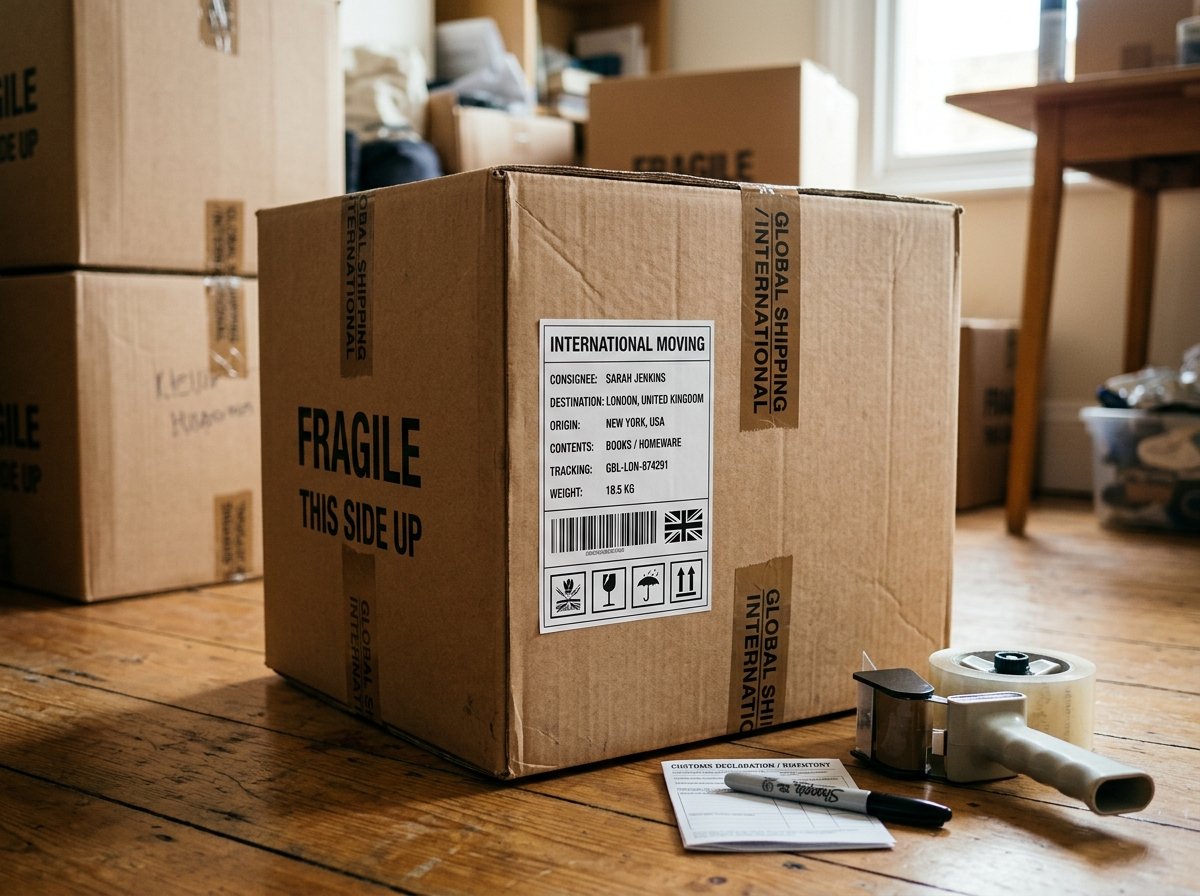
Every year, roughly 4.5 million people permanently relocate to another country. And almost every single one of them faces the same stressful question — “How do I get all my stuff there?”
You’ve sorted out your visa. Maybe you’ve even found a place to live. But your wardrobe full of clothes, your bookshelf, your kitchen essentials, that guitar you can’t leave behind — all of it needs to cross borders, sometimes oceans, and reach your new home safely.
Here’s the thing most people don’t realize until they’re knee-deep in the process: shipping your belongings abroad isn’t just about packing boxes and handing them to a courier. There are customs forms, weight restrictions, banned items, different shipping methods, insurance decisions, and timing considerations. Skip any of these, and you’re looking at delays, extra charges, or worse — lost belongings.
This guide walks you through the entire process step by step. Whether you’re a student heading to university, someone relocating for work, or a family starting fresh in a new country, you’ll find exactly what you need here.
Figure Out What’s Actually Worth Shipping
Before you even look at a single shipping quote, sit down and honestly evaluate what you own versus what you need to take with you.
This sounds obvious, but it’s where most people waste the most money. Shipping internationally is charged by weight, volume, or both. Every extra kilogram costs you real money. That old armchair you’re emotionally attached to? Shipping it might cost more than buying a new one at your destination.
Here’s a practical way to think about it: Walk through your home room by room. For every item, ask yourself three questions. Can I easily replace this at my destination? Will I actually use this in the next year? Is the shipping cost less than the replacement cost?
Items that almost always make sense to ship include personal documents, sentimental items (photos, heirlooms), expensive electronics, professional equipment, and specialty clothing or gear you can’t easily find abroad.
Items that rarely make sense to ship are bulky furniture (unless it’s antique or very valuable), cheap kitchenware, books you’ve already read, and old linens or towels. If you’re shipping furniture internationally, make sure the value truly justifies the cost — because it adds up fast.
Pro Tip: Create a detailed inventory spreadsheet. List every item, its approximate weight, estimated value, and whether it’s a “must ship” or “nice to have.” This list will also help you later with customs declarations.
Understand Your Shipping Options
You’ve got three main ways to ship belongings abroad, and each one suits a different situation. Let’s break them down honestly.
International Courier Services
Companies like DHL, FedEx, UPS, and Aramex handle smaller shipments — think boxes of clothes, books, electronics, and personal items. This is probably the best option if you’re shipping under 100 kg total.
Speed: Typically 3–10 business days depending on the destination and service tier.
Cost: Higher per kilogram than sea freight, but lower total cost for small shipments.
Best for: Students, solo movers with minimal belongings, or anyone shipping just a few boxes.
If you’re debating between specific carriers, a detailed DHL vs FedEx comparison can help you pick the right one based on your destination and budget. Similarly, if you’re shipping to the Middle East or South Asia, check out how Aramex stacks up against DHL — because regional strength matters.
You’ll also want to understand the difference between economy and express international shipping. Express costs more but gets your stuff there in days. Economy can take weeks but saves you a significant chunk of money — and when you’re moving abroad, those savings matter.
Sea Freight (Container Shipping)
This is the go-to option for larger moves — families relocating, or anyone shipping furniture, appliances, and multiple rooms’ worth of stuff.
Two options exist here. Full Container Load (FCL) means you rent an entire shipping container (20-foot or 40-foot). Less than Container Load (LCL) means your boxes share space with other people’s shipments in the same container.
Speed: 4–8 weeks depending on the route. Europe to Australia? That’s easily 6–8 weeks on water.
Cost: Most affordable per kilogram for large volumes. A 20-foot container from the UK to the US costs roughly $2,000–$5,000 depending on the season and route.
Best for: Families, large households, anyone with furniture and appliances.
Warning: Sea freight is slow. If you need essentials immediately upon arrival, ship a few critical boxes via air courier and send the bulk via sea. Many experienced movers split their shipment this way — it’s the smartest approach.
Air Freight
This sits between courier services and sea freight. Air freight companies handle larger volumes than typical couriers but move everything by plane.
Speed: 5–14 days typically.
Cost: Significantly more expensive than sea freight but faster. Expect roughly $4–$8 per kilogram for most routes.
Best for: Medium-sized shipments where time matters — say, 200–500 kg of belongings that you need within two weeks.
If you’re torn between air and sea shipping, our detailed guide on ground vs air shipping pros and cons explains the trade-offs clearly. Though that article covers domestic shipping too, the core logic applies internationally.
Packing Your Belongings the Right Way
Here’s something nobody tells you until it’s too late: how you pack matters just as much as how you ship. A poorly packed box that travels 10,000 km by sea will arrive with broken items, water damage, and headaches.
Choose the Right Boxes and Materials
Don’t use random old boxes from the supermarket. International shipments get stacked, loaded, unloaded, and handled multiple times. You need strong, double-walled corrugated cardboard boxes.
Picking the right box size for your shipment isn’t just about fitting things in — it directly affects your shipping cost. Oversized boxes with empty space inside get crushed during transit. Undersized boxes burst open. Both scenarios mean damaged belongings.
For fragile items, bubble wrap is your best friend. But how much do you actually need? There’s a helpful breakdown on how much bubble wrap different items require that can save you from both under-wrapping and overbuying.
Packing Tips That Actually Work
Electronics: Remove batteries from all devices. Wrap each item individually in bubble wrap, then place it inside an anti-static bag if possible. For laptops and phones, use the original packaging if you still have it. If not, read up on how to safely ship a mobile phone or laptop — the padding technique matters.
Clothing: Use vacuum-seal bags. They reduce volume by up to 75%, which directly cuts your shipping costs. Roll clothes instead of folding them — it prevents creases and fits more into each bag.
Shoes and footwear: Stuff shoes with paper to maintain shape, wrap each pair individually, and pack them sole-to-sole. If you’ve got expensive pairs, our guide on shipping shoes and footwear safely covers everything.
Jewelry and valuables: Don’t ship extremely valuable items via regular freight. Use a courier service with insurance and tracking for anything worth serious money. Here’s a dedicated guide on shipping jewelry and valuables if you’ve got pieces that need extra care.
Musical instruments: These need custom padding and often hardshell cases. A guitar case alone won’t survive being tossed into a container. Check our guide on shipping musical instruments for instrument-specific advice.
The Most Common Mistakes
People mess up packing more often than you’d think. The usual problems? Using newspaper instead of proper wrapping (the ink transfers and stains everything), not filling empty space in boxes (items shift and break), and taping boxes inadequately.
If you want to avoid the biggest pitfalls, read about common packaging mistakes that damage parcels. It could save you hundreds in damaged goods.
Deal with Customs Before Customs Deals with You
Customs is the part most people dread, and for good reason. Mess this up and your belongings sit in a warehouse for weeks while you pay storage fees and fill out more paperwork.
Customs Declarations
Every country requires a customs declaration form for incoming personal effects. This lists what you’re shipping, the value of each item, and whether the items are new or used.
Key things to know: Most countries allow duty-free import of used personal belongings if you’re moving there permanently or on a long-term visa. New items, gifts, and commercial goods usually attract customs duties and taxes. The distinction between “used personal effects” and “new goods” matters enormously.
Your inventory spreadsheet? This is where it becomes critical. Customs officers will cross-reference your declaration with the actual contents. Inconsistencies trigger inspections, delays, and potential fines.
Country-Specific Restrictions
Every destination country has its own list of restricted and prohibited items. This isn’t something you can afford to guess about.
For example, Australia is extremely strict about anything organic — food, plant material, wooden items with bark, even certain leather goods. The US has restrictions on certain food products, agricultural items, and specific medications. The UK post-Brexit has its own set of updated rules.
Check the specific restrictions for your destination. We have detailed guides for shipping restrictions to the USA, shipping restrictions to the UK, and shipping restrictions to Australia.
Also familiarize yourself with the items banned from international shipping universally — things like flammable materials, certain chemicals, and pressurized containers. You don’t want your entire shipment held up because you accidentally packed a can of spray paint.
Did You Know? Some countries require you to have arrived in the country before your shipment arrives. If your boxes arrive before you do, customs may classify them as commercial imports and charge full duties. Always check this timing rule for your specific destination.
Understand the Costs Involved
The sticker price you see on a shipping quote? That’s rarely the final number. International shipping has layers of costs, and knowing them upfront prevents nasty surprises.
What Goes Into the Price
Shipping rates depend on several factors: the origin and destination countries, the total weight and dimensions of your shipment, the shipping method (air, sea, or courier), and how fast you need it delivered. If you want to understand the mechanics, our guide on how shipping rates are calculated breaks it down.
There’s also something called dimensional weight — where the courier charges you based on the size of the box rather than its actual weight, if the size-based weight is higher. This catches a lot of people off guard. A large box of pillows might weigh 3 kg but get charged as 15 kg because of its volume. Learn how dimensional weight pricing works before you pack, not after.
Hidden Costs to Watch For
Customs duties and taxes — Even on used personal effects, some countries charge a small processing fee. New items will attract import duties, often 10–25% of the declared value.
Storage fees — If you don’t clear customs quickly, your shipment sits in a bonded warehouse. Most ports and airports charge daily storage fees after a grace period (usually 3–5 days). This can be $20–$50 per day or more.
Last-mile delivery — Some sea freight quotes cover port-to-port only. Getting your container from the destination port to your new home is a separate cost. Ask about door-to-door pricing upfront.
Insurance — We’ll cover this next, but it’s an additional cost most people overlook.
Getting Accurate Quotes
Don’t just grab one quote and go with it. Get at least three quotes from different providers. Use online comparison platforms and ask specifically about all-inclusive pricing.
When comparing, our guide on how to compare courier quotes effectively helps you ask the right questions so you’re comparing apples to apples.
Get Insurance — Seriously
“But it’s just personal stuff” — yes, and replacing “just personal stuff” across an entire household can cost thousands of dollars.
International shipments face real risks: rough seas, handling damage, theft at ports, warehouse fires, and customs mishandling. The probability is low, but the impact is high.
Most shipping companies offer basic coverage, but it’s usually limited — sometimes as low as $0.60 per pound. For a box of electronics worth $2,000, that basic coverage might pay out $30. Not exactly helpful.
What to do instead: Purchase comprehensive transit insurance. It typically costs 2–4% of the declared value of your shipment. So for $10,000 worth of belongings, you’d pay $200–$400 for full coverage. That’s a no-brainer when you think about the alternative.
Read the policy carefully. Some insurance policies exclude certain items (electronics, antiques, perishables). Some require specific packing standards — if you packed items yourself instead of using the company’s professional packing service, the claim might get denied.
Our complete guide on insurance for shipped packages covers what to look for, what’s typically excluded, and how to file a claim if something goes wrong.
Timing Your Shipment Right
Timing is everything with an international move, and getting it wrong creates a domino effect of problems.
When to Start the Process
8–12 weeks before your move: Start researching shipping companies, getting quotes, and sorting your belongings into “ship,” “sell,” “donate,” and “trash” categories.
6–8 weeks before: Book your shipping service. This is especially critical if you’re using sea freight during peak season (summer months for most routes). Slots on container ships fill up faster than you’d expect.
4–6 weeks before: Start packing non-essential items. Things you won’t need until you’re fully settled — out-of-season clothes, books, decorative items, kitchen gadgets you use occasionally.
2–3 weeks before: Pack everything else. Arrange pickup or drop-off dates with your shipping company.
1 week before: Finalize your essential travel bag — the stuff you’ll carry with you on the plane. This should include documents, medications, a change of clothes, toiletries, chargers, and valuables you don’t want to ship.
Peak Seasons to Avoid
Shipping rates spike during summer (June–August), which is peak moving season globally. If you can schedule your shipment for autumn or winter, you’ll likely pay 15–25% less. December is also expensive due to holiday shipping volume.
Choose Between a Shipping Company and a Moving Company
This is a decision many people don’t even realize they need to make. Shipping companies and international moving companies are not the same thing.
Shipping companies (couriers, freight forwarders) transport your packed boxes from point A to point B. You pack, you label, you handle customs paperwork (or pay them to help). It’s cheaper but more hands-on.
International moving companies offer full-service relocation. They come to your home, pack everything professionally, handle all customs documentation, ship it, clear customs at the destination, deliver to your new address, and even unpack. It’s significantly more expensive but virtually stress-free.
The right choice depends on your budget, the volume of your shipment, and how comfortable you are handling logistics yourself. For a detailed cost comparison, check our guide on shipping vs moving companies and which is cheaper.
Special Situations Worth Knowing About
Students Moving Abroad
If you’re heading overseas for university, your shipping needs are very different from a family relocation. You’re probably shipping 2–5 boxes of clothes, books, and personal items. Courier services are usually the best fit, and many companies offer student-specific rates.
We’ve put together a dedicated guide for shipping personal effects as a student going abroad — it covers the best services, student discounts, and what universities typically advise.
Work Relocations
When your employer is relocating you, find out exactly what they cover. Some companies pay for full-service international moving. Others offer a flat relocation allowance. And some cover nothing beyond your flight ticket.
If you’re handling shipping as part of a work move, our shipping guide for work relocation has specific tips on working with your employer’s relocation benefits.
Track Your Shipment and Prepare for Arrival
Once your belongings are on their way, don’t just sit and wait anxiously. Stay proactive.
Get your tracking details from the shipping company immediately after pickup. Most reputable companies provide online tracking. Understand what the various tracking statuses actually mean so you don’t panic when you see “In Transit — Customs Hold.”
Prepare at your destination by finding out exactly where you’ll pick up your shipment or confirming the delivery address with the shipping company. If your new address changes before the shipment arrives, find out if you can redirect the package to a different address.
Have your customs documents ready at the destination. Some countries require you to personally clear customs at the port or airport. Others allow your shipping company to do it on your behalf with a letter of authorization.
Quick Fact: The average customs clearance time for personal effects is 2–5 business days in most countries. But if there’s a problem with your paperwork, it can stretch to 2–4 weeks. Accurate documentation from the start saves you this headache.
FAQ
How much does it cost to ship belongings to another country?
Costs vary widely based on volume, weight, origin, destination, and method. Shipping 5 boxes (approx. 100 kg) via courier from the UK to the US costs roughly $500–$1,200. A full 20-foot container via sea freight runs $2,000–$5,000. Air freight for the same volume falls somewhere in between. Always get multiple quotes and ask about all-inclusive pricing.
Can I ship food items in my personal belongings?
Most countries restrict or ban food imports, especially fresh produce, meat, dairy, and homemade foods. Some commercially packaged, shelf-stable items might be allowed, but it depends entirely on the destination country’s regulations. Australia and New Zealand are particularly strict. Check your destination’s customs website or our country-specific shipping restriction guides before packing any food.
How long does international shipping of personal effects take?
Courier services typically deliver in 3–10 business days. Air freight takes 5–14 days. Sea freight takes 4–8 weeks, sometimes longer for remote routes. Add 2–5 days for customs clearance at the destination. Many people ship their bulk items via sea 6–8 weeks before departure and carry essentials in their luggage.
Should I buy shipping insurance for personal belongings?
Yes — strongly recommended. Basic carrier liability covers very little. Full transit insurance costs 2–4% of your declared shipment value and protects against damage, loss, and theft. It’s a small price for peace of mind, especially for electronics, valuables, and sentimental items that can’t be replaced.
What documents do I need to ship personal effects internationally?
At minimum, you’ll need a detailed packing list (itemized inventory with values), a customs declaration form, your passport copy, your visa or proof of residency in the destination country, and sometimes a letter declaring the items are used personal effects. Some countries require additional forms — check with your shipping provider and the destination country’s customs authority.
Your Move, Your Way
Shipping your belongings to another country feels overwhelming at first — there’s no pretending otherwise. But once you break it down into steps, each part is completely manageable. Sort your stuff ruthlessly, pick the right shipping method for your volume and timeline, pack carefully, handle customs paperwork accurately, and get insurance.
The biggest mistake people make? Waiting too long to start. Give yourself at least 8 weeks of lead time, and you’ll avoid the rushed decisions and premium pricing that come with last-minute shipping.
Your new life in a new country is exciting. Getting your belongings there safely is just logistics — and now you know exactly how to handle it. Start with that inventory list today, get your quotes this week, and you’ll be ahead of 90% of people who wing it and regret it later.