
A friend of mine once packed a beautiful handmade candle, some local honey, and a bottle of homemade hot sauce as a birthday gift for her cousin in Canada. She walked into the courier office feeling proud of her thoughtful package. Twenty minutes later, she walked out empty-handed — every single item got rejected.
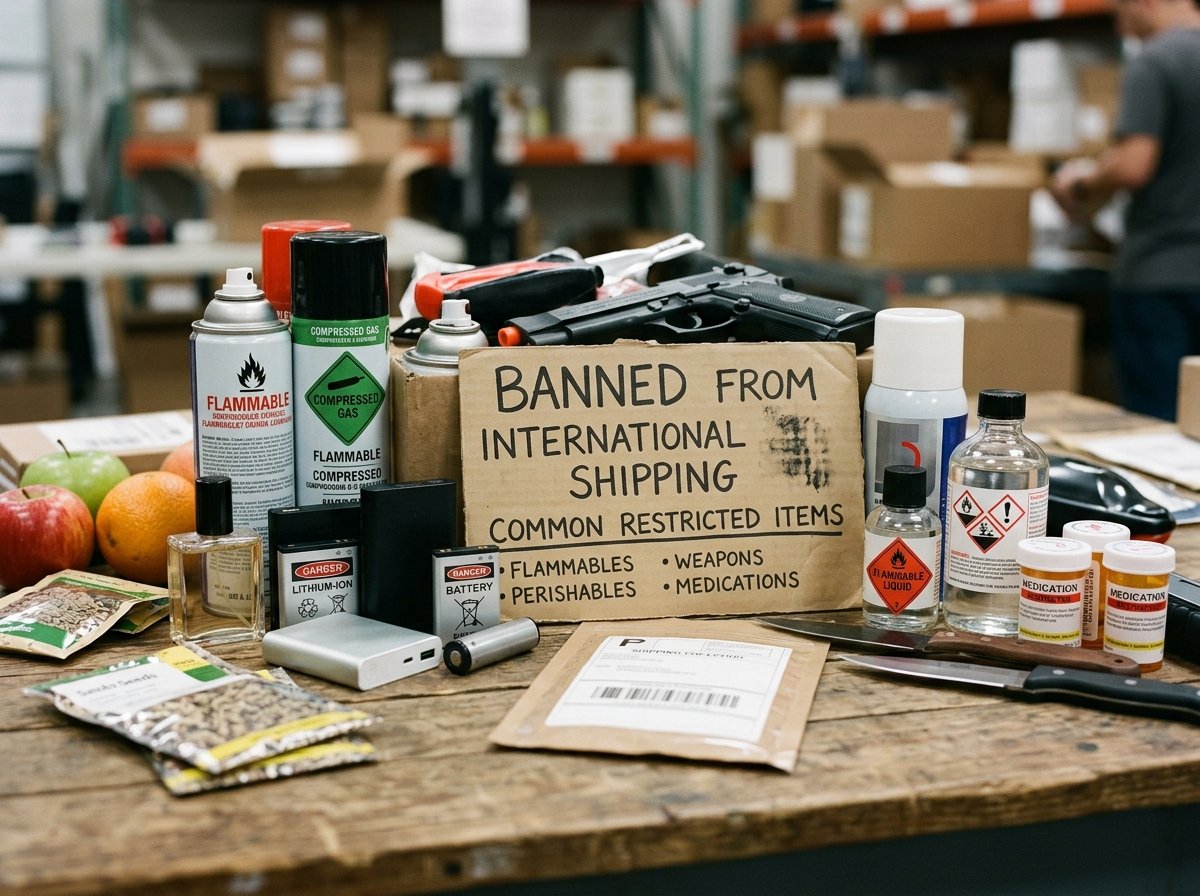
Sounds frustrating, right? But here’s the thing: thousands of shipments get seized, returned, or destroyed every single day because senders didn’t know what’s actually banned from international shipping. And we’re not just talking about obviously dangerous stuff like explosives. Everyday items — perfumes, batteries, certain foods, even some skincare products — can land you in trouble at customs.
Whether you’re sending a care package to a loved one abroad, shipping personal belongings while moving to another country, or running an online store that ships worldwide, knowing what you can’t send is just as important as knowing how to send it. One wrong item, and your entire shipment could be held, destroyed, or worse — you might face fines.
This article breaks down every major category of banned and restricted items in international shipping, explains why they’re banned, and gives you practical tips to avoid costly mistakes.
Why Are Certain Items Banned From International Shipping?
Before we get into the actual list, it helps to understand the logic behind these bans. Items don’t get banned randomly. There are real reasons, and they usually fall into a few clear categories.
Safety risks are the biggest reason. Anything that could explode, catch fire, leak toxic fumes, or endanger the aircraft, ship, delivery vehicle, or the people handling your package is going to be restricted or outright banned. Think about it — a cargo plane carries thousands of packages. One lithium battery that overheats could bring the whole thing down. That’s not an exaggeration; it’s happened before.
Public health and environmental protection play a huge role too. Countries don’t want invasive species entering through imported plants or seeds. They don’t want contaminated food items bypassing food safety standards. And they definitely don’t want diseases crossing borders through biological materials.
Legal and regulatory reasons cover things like drugs, weapons, counterfeit goods, and items that violate intellectual property laws. Every country has its own laws about what can enter its borders, and customs agencies enforce these strictly.
Cultural and political reasons sometimes apply as well. Some countries ban specific books, religious materials, or political content. Others restrict certain animal products tied to endangered species.
The tricky part? Banned item lists vary from country to country. Something perfectly legal to ship to Germany might be completely prohibited in Australia. That’s why doing your homework before shipping is non-negotiable.
Universally Banned Items — Things No Courier Will Ship
Some items are banned across the board. No major courier — not DHL, not FedEx, not UPS, not your national postal service — will touch these. International aviation regulations (set by IATA and ICAO) and universal postal union rules make these non-negotiable.
Explosives and Fireworks
This one’s obvious, but you’d be surprised how many people try to ship fireworks as “gifts” during festival seasons. Firecrackers, sparklers, flares, ammunition, detonators, and anything that can explode under pressure or heat is completely banned. If you’re planning to send Diwali gifts internationally, stick to sweets and clothes — skip the patakhas entirely.
Narcotics and Illegal Drugs
Any substance classified as illegal under international drug control treaties can’t be shipped. This includes marijuana (even where it’s locally legal — federal and international shipping laws still ban it), cocaine, heroin, MDMA, and their derivatives. Even certain prescription medications without proper documentation can be flagged.
⚠️ Warning: Some countries also ban CBD products, kratom, and certain herbal supplements that are legal in your home country. Always check the destination country’s drug laws.
Biological Hazards and Infectious Substances
Human or animal tissues, blood samples, cultures of pathogens, medical waste, and other biohazardous materials can’t go through standard shipping channels. There are extremely specialized (and expensive) services for shipping medical specimens, but regular couriers won’t handle them.
Radioactive Materials
Anything containing radioactive elements — whether it’s industrial equipment, certain medical devices, or even some antique items with radium-painted dials — is banned from standard international shipping.
Human Remains
You can’t ship human remains (including cremated ashes) through regular courier services. Most countries require specialized funeral transport services with extensive documentation for this.
Dangerous Goods That Are Heavily Restricted
Now we enter a gray area. These items aren’t always 100% banned, but they’re classified as dangerous goods (DG) under IATA regulations. Some couriers will ship them with special packaging, labeling, and documentation. Others won’t touch them at all. Understanding dangerous goods shipping rules is critical if you deal with any of these regularly.
Flammable Liquids and Aerosols
Perfumes, nail polish removers, paint thinners, certain cleaning solvents, lighter fluid, and aerosol sprays (deodorants, hairsprays, insect repellents) all fall into this category. The alcohol content in perfumes makes them flammable, which is why most couriers refuse to ship them internationally without DG certification.
Did you know? Even a small 50ml perfume bottle is classified as a flammable liquid by IATA. If you’re shipping cosmetics and skincare products internationally, you need to carefully check each item’s flammability and composition.
Lithium Batteries
This is a big one because lithium batteries are everywhere — in phones, laptops, tablets, power banks, e-cigarettes, drones, and electric vehicles. They’re not completely banned, but the rules are strict and confusing.
Batteries installed inside devices (like a phone with its battery in place) are generally allowed with restrictions. Standalone lithium batteries or damaged/recalled batteries are almost always banned from air shipping. The watt-hour rating matters too. Batteries over 100Wh typically need special approval.
If you’re shipping a mobile phone or laptop, make sure the device is turned off, the battery is at around 30% charge, and the packaging protects against short circuits.
Compressed Gases
Camping gas cylinders, oxygen tanks, CO2 cartridges, fire extinguishers, and even some whipped cream chargers fall under compressed gases. The pressure inside these containers makes them dangerous at altitude, which is why they’re banned from air freight entirely.
Magnetized Materials
Strong magnets can interfere with aircraft navigation systems. Industrial magnets, certain speakers, and magnetic tools above a specific gauss level can’t be shipped by air.
Food, Plants, and Agricultural Items — The Overlooked Category
Here’s where most people get caught off guard. You’d think sending your mom’s homemade pickle or some local spices would be harmless, right? Customs authorities don’t always agree.
Fresh and Perishable Foods
Most countries ban or heavily restrict the import of fresh fruits, vegetables, meat, dairy products, and eggs through postal or courier services. The reasoning is solid — these items can carry pests, bacteria, and diseases that could devastate local agriculture and ecosystems.
Australia’s biosecurity is legendary for being strict. The Australian Border Force has been known to fine passengers thousands of dollars for undeclared food items. The same rules apply to shipped packages. The shipping restrictions to Australia are some of the toughest globally.
Seeds and Live Plants
Sending seeds or live plants across borders isn’t just restricted — it’s often illegal without a phytosanitary certificate. Countries protect their ecosystems from invasive species, and a single shipment of the wrong seeds could cause ecological damage worth millions.
If you absolutely need to ship botanical items, read up on how to ship plants and seeds legally. The process involves inspections, certificates, and often a permit from the destination country’s agricultural department.
Homemade and Unpackaged Foods
Even non-perishable homemade foods can be problematic. Customs officials can’t verify ingredients, allergens, or preparation hygiene for homemade items. Commercially packaged foods with clear ingredient labels in an accepted language have a much better chance of clearing customs — though even these face restrictions depending on the destination.
Alcohol, Tobacco, and Related Products
Alcohol
You can’t just toss a bottle of wine into a box and ship it internationally. Alcohol is one of the most commonly restricted items in international shipping. Many courier companies (including most postal services) flat out refuse to carry it. Others will, but only with proper licensing, age verification, and compliance with both origin and destination country regulations.
Tax and excise duties make this even more complicated. Want the full breakdown? Here’s a detailed guide on how to ship alcohol and wine internationally.
Tobacco and E-Cigarettes
Cigarettes, cigars, loose tobacco, vaping devices, e-liquids, and hookah products are banned or heavily restricted in international shipping. Many countries have strict import limits on tobacco products, and some (like Australia, Brazil, and Singapore) have outright bans on importing e-cigarettes or vaping liquids.
Weapons, Replicas, and Self-Defense Items
This category goes beyond actual firearms. Plenty of items you might consider harmless can be classified as weapons by customs.
Obviously banned: Firearms, ammunition, gun parts, explosive devices, military equipment, and chemical weapons.
Surprisingly also banned (in many countries): Pepper spray, tasers, stun guns, brass knuckles, butterfly knives, switchblades, crossbows, sword canes, nunchucks, and even certain martial arts training weapons.
Replica and toy weapons can also cause problems. Realistic-looking toy guns, airsoft guns, and BB guns are treated as weapons by customs in the UK, Australia, Japan, and several other countries. Even if you’re shipping toys and games internationally, avoid anything that resembles a real weapon.
Pro Tip: If you’re shipping antique swords or collectible knives, check the destination country’s specific import laws. Some allow them with proper documentation as “antiques” or “collectibles,” while others ban them entirely.
Counterfeit and Intellectual Property Violations
This catches a lot of online sellers off guard. Shipping counterfeit goods internationally isn’t just a shipping violation — it’s a criminal offense in most countries.
Knock-off designer bags, fake branded shoes, pirated DVDs, counterfeit electronics with fake brand logos, and unlicensed copies of software or media — all of these can be seized at customs. The shipper can face fines, legal action, and a permanent ban from using certain courier services.
For eBay sellers shipping internationally or Etsy shop owners, this is particularly relevant. Even if you unknowingly sell and ship a counterfeit item, you’re still liable. Always verify the authenticity of branded products before shipping them across borders.
Country-Specific Bans That Catch People Off Guard
This is where things get really specific and often surprising. Beyond the universal bans, individual countries have their own lists of prohibited imports that can seem unusual if you’re not familiar with them.
United States
The US bans Kinder Surprise eggs (yes, the chocolate ones with toys inside) because of a regulation against embedding non-food items inside food products. Cuban cigars still have complex import restrictions. Certain cheeses made from unpasteurized milk aged less than 60 days are also prohibited. Before shipping anything to the States, check the shipping restrictions to the USA carefully.
United Kingdom
Post-Brexit, the UK has its own set of import rules separate from the EU. Meat and dairy products from most non-EU countries face strict restrictions. Certain plant-based products need health certificates. The shipping restrictions to the UK have changed significantly since 2021, so don’t rely on outdated information.
Australia
Australia is arguably the strictest country for biosecurity. Wooden packaging must be heat-treated and stamped. Any item containing animal or plant material — including leather goods, wooden crafts, or items packed with straw — may need to be declared and inspected.
Middle Eastern Countries
Some Gulf states restrict items related to other religions, pork products, and materials considered culturally inappropriate. Certain books, magazines, and media with content deemed offensive can be confiscated.
Asian Countries
Japan bans certain stimulant medications that are perfectly legal elsewhere (some ADHD medications, for example). China restricts the import of printed maps that don’t align with their official territorial boundaries. India bans the import of satellite phones without government clearance.
How to Avoid Problems With Banned Items
Knowing what’s banned is half the battle. The other half is building a process to avoid mistakes, especially if you ship frequently.
Always check two sets of rules — your origin country’s export regulations AND your destination country’s import regulations. An item might be legal to export from your end but illegal to import at the other end.
Call your courier before packing. DHL, FedEx, UPS, and all major couriers have customer service teams that can tell you if a specific item can be shipped to a specific country. Five minutes on the phone can save you days of frustration.
Declare everything honestly on customs forms. Under-declaring or mislabeling items to avoid restrictions is technically customs fraud. If you get caught — and customs officers are trained to spot mismatches between declared content and actual content — you could face fines or even criminal charges.
Use proper packaging and labeling. Some restricted items (like certain electronics with batteries) can be shipped if they meet specific packaging requirements. If you’re unsure about packaging standards and common mistakes, invest time in learning them. A properly packed and labeled item has a much better chance of clearing customs smoothly.
Keep documentation ready. For items that are restricted but not fully banned — like certain medications, commercial food products, or licensed goods — having the right paperwork (prescriptions, commercial invoices, certificates of origin, phytosanitary certificates) can make the difference between a smooth delivery and a seized package.
What Happens if You Ship a Banned Item?
Let’s say you accidentally (or intentionally) ship something that’s banned. What actually happens?
In the best-case scenario, the package gets flagged at customs, and the courier contacts you. You might have to pay return shipping fees, and the item gets sent back.
More commonly, the item gets confiscated and destroyed. You lose the item, you don’t get your shipping fees back, and you might not even get a notification about exactly what happened.
In serious cases — especially with drugs, weapons, counterfeit goods, or items shipped with false declarations — legal action can follow. This could mean fines, criminal charges, or being blacklisted by courier services and customs authorities.
Your shipping insurance also won’t cover banned items. If an item is prohibited and it gets seized, no insurance policy in the world will reimburse you.
FAQ
Can I ship prescription medication internationally?
It depends on the medication and the destination country. Small quantities for personal use, accompanied by a valid prescription and a doctor’s letter, are allowed by many countries. But some medications that are legal in one country are classified as controlled substances elsewhere. Always check the destination country’s drug import rules before shipping any medication.
Are all lithium batteries banned from international shipping?
No, not all. Batteries installed inside devices (like smartphones and laptops) are generally permitted with specific packaging requirements. Standalone lithium batteries, damaged batteries, and batteries exceeding certain watt-hour limits are typically banned from air transport. Ground shipping options may exist for some types.
Can I ship homemade food items to family abroad?
This is very destination-dependent. Most countries restrict or ban homemade food items because they can’t be verified for safety. Commercially packaged, sealed, and clearly labeled non-perishable foods (like packaged snacks or sealed spice containers) have a better chance of getting through. Fresh foods, dairy, and meat are almost always banned.
Is shipping alcohol internationally legal?
Shipping alcohol is legal in some corridors but heavily regulated. Most postal services don’t allow it. Private couriers like DHL and FedEx may ship alcohol, but only with proper licensing, documentation, and compliance with both the sending and receiving country’s alcohol import laws. Some countries ban all alcohol imports entirely.
What’s the penalty for shipping banned items internationally?
Penalties range from package confiscation and loss of shipping fees to formal fines and criminal prosecution. The severity depends on the item, the destination country’s laws, and whether the customs declaration was truthful. Items like drugs and weapons carry the harshest penalties, including imprisonment in some jurisdictions.
Your Next Step
Shipping internationally doesn’t have to be stressful, but it does require you to do a bit of research before you tape up that box. The rules exist for good reasons — safety, health, security, and environmental protection. And honestly, once you understand the logic behind them, most of the bans start making sense.
If you’re shipping something and you’re even slightly unsure whether it’s allowed, pause and check. Visit your courier’s website, call their helpline, or check the destination country’s customs website. That ten-minute check is way easier than dealing with a seized package, a fine, or a ruined relationship with your courier service.
And if you’re comparing which courier handles international shipments best for your needs, check out this detailed DHL vs FedEx international shipping comparison to make a smarter choice.
Ship smart, ship safe — and always read the fine print before you send. 📦