
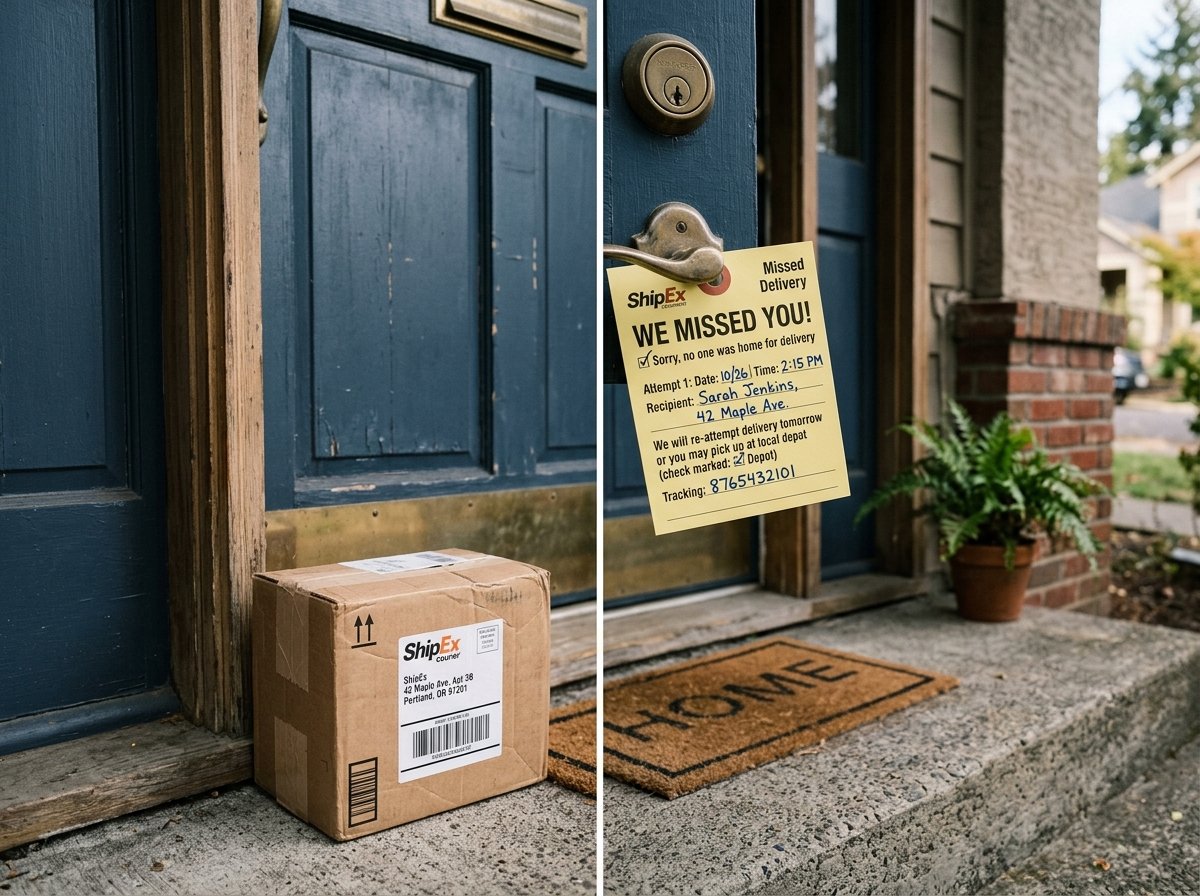
You’ve been tracking that package for three days. The status finally says “Out for Delivery.” You feel a little rush of excitement. And then — life happens. A meeting runs late. You’re stuck in traffic. The school calls and you have to pick up your kid. By the time you get home, there’s no package at the door. Just a little card sticking out of your letterbox that says, “Sorry, we missed you.”
Sound familiar? You’re not alone. Studies suggest that around 12% of all first-attempt deliveries fail because nobody’s home to receive the parcel. That’s millions of packages every single day, globally.
So, what actually happens to your package when the delivery person knocks and nobody answers? Does it go back to the warehouse? Does it sit outside your door? Can someone else grab it? And most importantly — how do you make sure this doesn’t keep happening?
Let’s break it all down, step by step.
Why Missed Deliveries Are So Common
Before we get into what happens after a missed delivery, it helps to understand why this situation is so incredibly common. And honestly? It’s not always your fault.
Most courier companies deliver during standard business hours — roughly 8 AM to 6 PM. Guess what? Those are exactly the hours when most people are at work, commuting, or running errands. The timing just doesn’t line up with modern life.
There are other reasons too. Sometimes the delivery window is vague — “between 9 AM and 5 PM” isn’t exactly helpful when you’re trying to plan your day. Other times, the doorbell doesn’t work, or the driver can’t access your apartment building. Maybe you live in a gated community and the driver doesn’t have the access code.
The point is: missed deliveries happen to everyone. What matters is knowing what comes next and how to handle it smartly.
What Actually Happens When You Miss a Delivery
Here’s where things get interesting — because there’s no single answer. What happens to your package depends on the courier company, the type of delivery, and sometimes even the sender’s instructions. But most deliveries follow a fairly predictable pattern.
The Delivery Driver’s First Decision
When the driver arrives and no one answers, they typically have a few options depending on company policy.
Option 1: Leave the package in a “safe place.” Some couriers, like Amazon, USPS, or Hermes (now Evri), might leave the parcel at your door, behind a gate, in a porch, or with a neighbor. This is especially common for packages that don’t require a signature. You might get a photo notification showing exactly where they left it.
Option 2: Leave a “Sorry We Missed You” card. This is the classic approach. The driver leaves a card with instructions on how to reschedule delivery or pick up your package from a local depot or collection point. Royal Mail, FedEx, and DHL often do this for items that need a signature or are high-value.
Option 3: Attempt delivery to a neighbor. In the UK especially, it’s quite standard for drivers to knock on a neighbor’s door and leave the package with them. You’ll usually get a card telling you which neighbor has your parcel.
Option 4: Take the package back to the van. If none of the above works — no safe place, no neighbor available, signature required — the driver takes the package back. It goes to a local depot, a post office, or a pickup point, depending on the courier.
What Happens After the First Attempt
Most major courier companies will attempt delivery two or three times before taking further action. Here’s the general flow:
After the first failed attempt, you’ll usually get a notification — either through the courier’s app, an email, or a text message. This notification gives you options. You can reschedule delivery for another day, choose a different delivery time slot (if available), redirect the package to a different address, or ask them to leave it with a neighbor or in a safe place next time.
If you don’t respond and the second attempt also fails, the courier tries one more time in most cases. After the final failed attempt, the package typically gets held at a local depot or collection point for a set number of days — usually 5 to 14 days, depending on the company.
⚠️ Warning: If you don’t collect or reschedule within that window, the package gets returned to the sender. And depending on the seller’s return policy, you might need to place a new order — sometimes at your own shipping cost.
How Different Couriers Handle Missed Deliveries
Not every courier plays by the same rules. Here’s a quick look at how the major ones handle the “nobody’s home” situation.
Royal Mail (UK)
Royal Mail typically leaves a red “Something For You” card. You can reschedule online, pick up from your local delivery office, or arrange for a neighbor delivery. They hold packages for 18 calendar days before returning them. If you’re comparing Royal Mail’s services with other UK options, this Royal Mail vs Parcelforce comparison might help you understand the differences.
FedEx
FedEx usually makes three delivery attempts on consecutive business days. After the third attempt, the package is held at a FedEx location for 5 business days. You can customize delivery through FedEx Delivery Manager — a free tool that lets you redirect packages, schedule specific times, or authorize a safe drop-off spot.
DHL
DHL’s approach varies by service type. For DHL Express, they’ll attempt delivery and may leave the package with a neighbor or at a ServicePoint. You typically have 7 days to pick up from a ServicePoint before it gets returned. If you ship internationally through DHL and want to understand how they stack up against other global couriers, check out this DHL vs FedEx international shipping comparison.
Amazon
Amazon is pretty flexible. For most standard deliveries, drivers will leave packages in a “safe location” and snap a photo. For high-value items or those requiring a signature, they’ll reattempt or send it to an Amazon Locker or pickup point. The app gives you real-time updates and usually lets you adjust delivery preferences on the fly.
UPS
UPS makes three delivery attempts. After that, the package is held at a UPS Access Point for 7 days. UPS My Choice (free tier available) lets you reschedule, redirect, or authorize a release without a signature.
💡 Pro Tip: Almost every major courier now has a free app or online account that gives you way more control over your deliveries. If you don’t have one set up yet, do it today. It takes two minutes and saves you endless headaches.
The “Left in a Safe Place” Situation — Is It Actually Safe?
This is a big concern, and honestly, a valid one. When a courier leaves your package “in a safe place,” what does that actually mean? And who’s responsible if it disappears?
A “safe place” is loosely defined — it could be behind your wheelie bin, inside a porch, next to the back door, or under a doormat. The driver makes a judgment call, and sometimes that judgment isn’t great.
Here’s what you should know about liability. If you instructed the courier to leave it in a safe place (through an app or delivery preferences), you typically bear the risk. If the courier decided on their own to leave it somewhere without your authorization, they’re usually liable if it gets stolen or damaged. If the sender specified “leave in a safe place” without your consent, the sender and courier share responsibility.
Did you know? In the UK, once a package is left in a safe place without authorization, the courier is considered to have not completed delivery. You can file a claim or ask the retailer for a replacement.
If you’ve ever had a package marked as delivered but it didn’t actually arrive, that’s a separate (and equally frustrating) problem. Here’s a detailed guide on what to do when a package is marked delivered but hasn’t arrived.
What If Your Package Gets Returned to the Sender?
This is the worst-case scenario, and it happens more often than people think. You miss all the delivery attempts, forget to pick it up from the depot, and the holding period expires. Now the courier ships it back to wherever it came from.
What happens next depends entirely on the sender.
If you bought from a retailer (like Amazon, ASOS, eBay): Most big retailers will refund your order once they receive the returned package. You’ll need to reorder and pay for shipping again in some cases. Some sellers — especially smaller ones on platforms like eBay or Etsy — might charge you a restocking fee or deduct the return shipping cost from your refund. If you sell on these platforms yourself, knowing how to handle situations like this is crucial — this guide to handling returns for online businesses covers it well.
If someone sent you a personal package: This is trickier. The sender gets the package back, and they’ll have to pay again to reship it. Nobody’s refunding anything here. The original shipping cost? Gone.
If it’s an international shipment: Returned international packages can get stuck in customs both ways. This adds delays, and sometimes additional fees. If you’re expecting something from abroad, missed deliveries become especially expensive and time-consuming to sort out.
How to Make Sure You Don’t Miss a Delivery Again
Okay, so now you know what happens. But how do you actually prevent this from happening in the first place? Here are some genuinely practical strategies that work.
Set Up Delivery Alerts and Accounts
This is the single most effective thing you can do. Sign up for FedEx Delivery Manager, UPS My Choice, Royal Mail’s app, or DHL’s tracking tools. These free accounts let you see when a package is coming, customize delivery preferences, and get real-time updates. Most people skip this step and then complain about missed deliveries. Don’t be that person.
Use Click and Collect or Locker Services
If you know you won’t be home, why risk it? Most major couriers and retailers offer pickup options — Amazon Lockers, InPost lockers, post office collection, or store pickups. You collect the package on your schedule, and there’s zero chance of a missed delivery.
Give Specific Safe Place Instructions
Rather than leaving it up to the driver’s judgment, tell them exactly where to leave it. “Behind the green gate on the left side of the house” is much better than hoping they’ll figure it out. Most delivery apps let you add detailed instructions, and some even let you upload a photo of the spot.
Redirect to Your Workplace
If your workplace allows personal deliveries, this can be a simple fix. You’re already there during delivery hours, so why not use it? Just make sure your company is okay with it — some offices have policies about personal packages.
Coordinate with Neighbors
If you have a trusted neighbor who’s usually home during the day, ask if they’d mind accepting packages for you. It’s old-school, but it works. Just make sure you add their details to your delivery preferences so the driver knows to try them.
Choose Your Shipping Speed Wisely
This might sound unrelated, but it matters. If you pick standard shipping vs expedited shipping, the delivery window is usually wider and less predictable. Faster services like next-day or same-day delivery often come with tighter, more specific time slots — which makes it easier to be home.
Special Cases: High-Value, Fragile, and Signature-Required Packages
Not all packages are created equal. If you’re expecting something expensive, fragile, or legally restricted, the stakes of a missed delivery go up significantly.
Signature-Required Deliveries
Some items — electronics, legal documents, medications, alcohol — absolutely require someone to sign for them. No signature, no delivery. The driver won’t leave these with a neighbor or in a “safe place,” no matter what. You either have to be home, or you’ll need to pick it up from a depot.
If you’re shipping something like a mobile phone or laptop, both the sender and recipient should know that signature confirmation is practically mandatory. The same goes for jewelry and valuables — these almost always require proof of delivery.
Age-Restricted Deliveries
Items like alcohol and wine require age verification at the door. The driver needs to see an ID from someone over 18 (or 21, depending on the country). A missed delivery here means the package goes straight back to the depot — no safe place, no neighbor drop-off.
Insured and High-Value Packages
If you’ve paid for shipping insurance, a missed delivery isn’t the end of the world — but it does complicate things. Insurance usually covers loss and damage, not the inconvenience of re-delivery. If the package gets returned to the sender and is lost in transit during the return journey, though, that’s when insurance becomes essential.
Can You Redirect a Package That’s Already Out for Delivery?
Sometimes you realize mid-morning that you won’t make it home in time. Can you do anything about it at that point?
The answer is: sometimes, yes. Most major couriers now offer in-flight delivery changes — meaning you can redirect a package even after it’s been dispatched. You can often send it to a neighbor’s address, a nearby pickup point, or reschedule it for the next day. FedEx, UPS, and DHL all offer this through their apps and online tools.
There are limits, though. You usually can’t redirect a package to a completely different city. And if the driver is already at your door, it’s too late to make changes digitally — you’d have to physically catch them.
For a more detailed walkthrough of how rerouting works, check out this guide on how to redirect a package to a different address.
What If You’re Moving or Relocating?
Here’s a scenario people don’t think about until it bites them. You’ve ordered something, but you’re in the process of moving to a new address. The package is headed to your old place, and you’re not there anymore.
If you’re relocating abroad or even just moving across town, make sure to update your delivery addresses on all your online shopping accounts before you move. Set up mail forwarding with your postal service — Royal Mail, USPS, and most national postal services offer this for a small fee.
And if you have active orders during a move, contact the courier directly and request a redirect before the delivery date.
Understanding Your Tracking Status
One more thing that trips people up: confusing tracking statuses. Your tracking might say “delivery attempted,” “held at depot,” “available for pickup,” or something equally vague.
If you’re not sure what a particular status means, this guide on understanding tracking statuses explains the most common ones across all major couriers. Knowing what each status actually means helps you take the right action quickly instead of just staring at your screen hoping for updates.
FAQ Section
Q: How many times will a courier attempt delivery before returning the package?
Most couriers attempt delivery 2 to 3 times. After the final attempt, the package is held at a local depot or collection point for 5 to 18 days (varies by courier). If you don’t collect it within that window, it’s returned to the sender.
Q: Will the courier leave my package with a neighbor without asking me?
It depends on the courier and the type of package. Many UK couriers (Royal Mail, Evri, DPD) routinely leave packages with neighbors and notify you via a card or app. For signature-required or high-value items, neighbor delivery usually isn’t allowed unless you’ve specifically authorized it.
Q: Who is responsible if my package is left outside and gets stolen?
If you authorized a “safe place” delivery, you typically bear the risk. If the courier left the package without your consent and it was stolen, the courier or the retailer is usually responsible. You can file a claim with the courier or contact the seller for a replacement or refund.
Q: Can I change the delivery address after a package has been shipped?
Yes, most major couriers — FedEx, UPS, DHL, Amazon — allow you to redirect packages through their apps or websites, even after shipping. There may be limits on how far you can redirect (same city vs. different region), and some services charge a small fee for this.
Q: What happens to perishable items if no one is home?
Perishable goods (food, flowers, certain cosmetics) are time-sensitive. If no one’s home, the courier might leave them in a safe place to avoid a return trip, but the quality could suffer. For temperature-sensitive items, many couriers will take them back immediately rather than risk spoilage. It’s always better to be home for perishable deliveries or use a pickup point.
Your Next Step
Missed deliveries are annoying, but they’re also almost entirely preventable with a little planning. Set up those free courier accounts. Add delivery instructions to your address. Use lockers and pickup points when you know you’ll be out.
The one thing that makes the biggest difference? Take five minutes right now to download the app for whatever courier delivers to you most often. Set your preferences, add a safe place, and enter a backup contact number. That tiny bit of effort saves you from chasing down missed packages for the rest of the year.
Your packages are already on their way — make sure someone’s there to meet them.