
A customer orders a pair of sneakers from your online store. They arrive on time, packaging looks great, but the size doesn’t fit. Now that customer wants a return. What happens next decides whether they’ll ever buy from you again — or warn others to stay away.
Here’s something most new online sellers don’t realize: around 20–30% of all products bought online get returned, compared to just 8–10% for brick-and-mortar stores. That’s a huge number. And if you don’t have a clear, smooth system to handle those returns, you’re basically bleeding money and trust at the same time.
The good news? Returns aren’t the enemy. Handled well, they actually build loyalty, improve your reputation, and sometimes even increase future sales. Let’s talk about how you can make that happen for your business — step by step, without the corporate jargon.
Why Returns Happen (And Why That’s Normal)
Before you figure out how to handle returns, you need to understand why customers send things back. And no, it’s not always because your product is bad.
The most common reasons for online returns include sizing issues (especially with clothing and footwear), the product looking different from the photos, items arriving damaged, wrong product shipped, or the customer simply changing their mind. Some of these are within your control. Some aren’t.
The key mindset shift is this: returns are a cost of doing business online. Your customer can’t touch, try, or inspect the product before buying. So naturally, some purchases won’t work out. The brands that accept this reality and build systems around it are the ones that grow.
Think about Amazon, Zappos, or any major e-commerce player. Their return process is dead simple. That’s not accidental. They know a smooth return experience makes customers feel safe enough to click “Buy” in the first place.
If you’re selling products like shoes and footwear or cosmetics and skincare, expect a higher return rate. It’s just the nature of those categories.
Create a Return Policy That’s Clear and Fair
Your return policy is the foundation of everything. If it’s confusing, buried deep in your website, or full of legal-sounding language that nobody understands — you’ve already lost.
A good return policy answers these questions in plain language:
What can be returned? Not everything needs to be returnable. Perishable goods, customized items, intimate products — these are standard exceptions. Just state them clearly.
What’s the time window? 15 days? 30 days? 60 days? Pick a timeframe that feels reasonable. Studies show that longer return windows actually lead to fewer returns, not more. It’s called the “endowment effect” — the longer someone has a product, the more attached they get to it.
Who pays for return shipping? This is a big one. Free return shipping is ideal for the customer, but it’s expensive for you. Some businesses offer free returns above a certain order value. Others deduct the return shipping cost from the refund. Whatever you decide, be upfront about it.
How will the refund work? Will it go back to the original payment method? Will you offer store credit? How many days will the refund take? Spell this out.
Pro Tip: Put a simplified version of your return policy on your product pages, not just on a separate policy page. Customers check return info before they buy. If they can’t find it easily, some won’t buy at all.
Set Up a Smooth Return Process
Having a policy is one thing. Having a process is something else. You need a system that works smoothly for both your team and your customers.
Make It Easy to Initiate a Return
Nobody wants to send three emails and wait five days just to start a return. Give customers a straightforward way to request a return — a form on your website, a portal in their account, or even a simple email template they can fill out.
Some platforms like Shopify, WooCommerce, and BigCommerce have built-in return management tools or plugins. Use them. The less manual work involved, the fewer mistakes you’ll make.
Provide Prepaid Return Labels (When Possible)
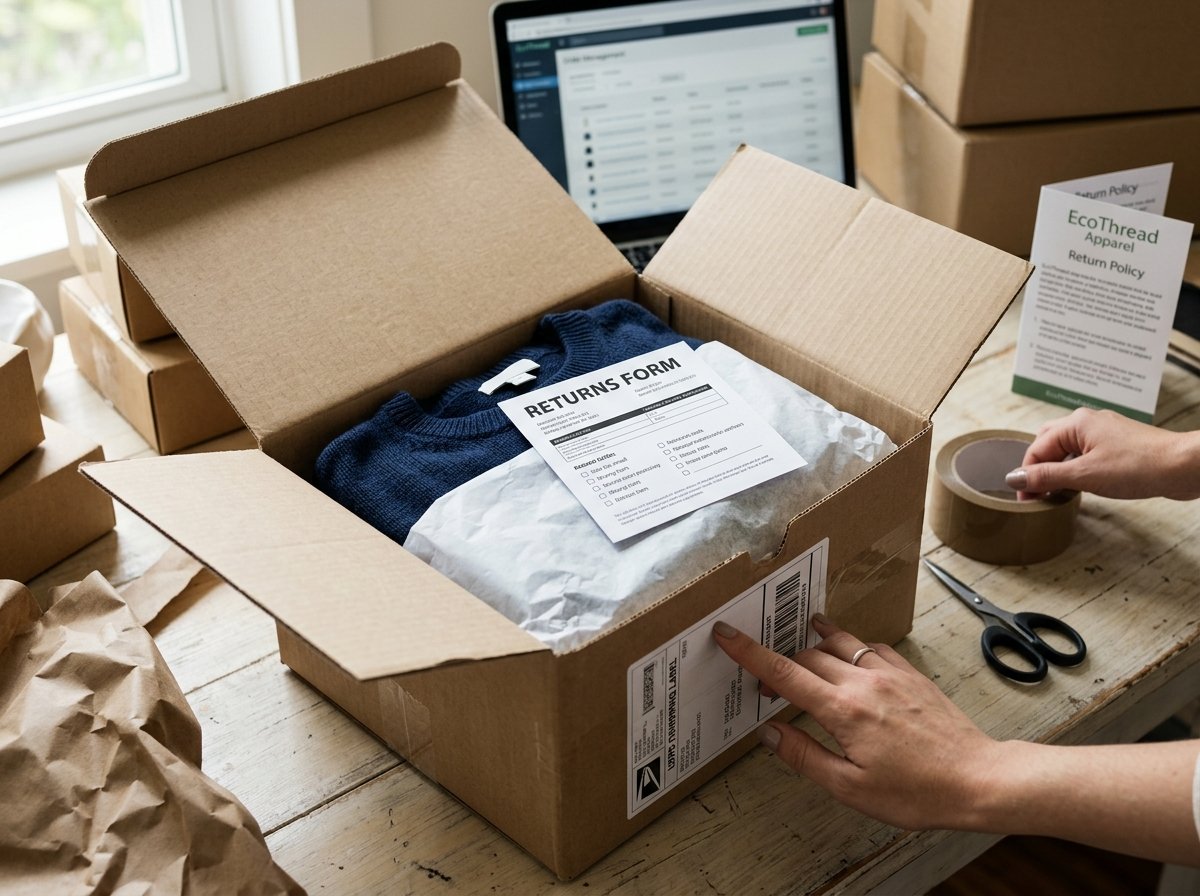
If your margins allow it, include a prepaid return label with the original shipment or make one available for download. This removes a massive friction point. The customer doesn’t have to figure out which courier to use, how much it costs, or how to print a label.
If you can’t afford to offer this on every order, consider offering it selectively — for defective products, wrong shipments, or orders above a certain value.
Track Every Return
This sounds obvious, but many small online businesses lose track of returns once the product leaves the customer’s hands. Use tracking numbers for return shipments. Know where each returned item is at every stage. If you’re using courier services, understanding how tracking statuses work can save you a lot of confusion and back-and-forth with customers.
Inspect and Process Quickly
Once a return arrives, don’t let it sit in a corner for a week. Inspect the item, update the customer, and process the refund or exchange within 2–3 business days. Speed matters here. The faster you process, the more confident the customer feels about buying from you again.
Return Shipping: Who Pays and How to Keep Costs Down
Return shipping is probably the most painful part of the whole equation. It costs real money, and if you’re not careful, it can eat into your profits fast.
Here’s how smart online businesses manage it:
Flat-rate return shipping — Charge a small, fixed fee for returns regardless of the product. This is predictable for both you and the customer.
Free returns for exchanges — If the customer is exchanging (not refunding), make the return shipping free. This keeps the revenue within your business instead of giving a full refund.
Regional return centers — If you ship nationally or internationally, having return drop-off points or partnering with local couriers in key regions can cut costs significantly. When you’re choosing between carriers, comparing economy vs. express international shipping options can help you find the most cost-effective return routes.
Negotiate with your courier — If you’re processing a decent volume of returns, talk to your shipping provider about bulk rates. Most carriers offer bulk shipping discounts that apply to both outbound and return shipments.
One more thing — if you sell internationally, returns become even more complex because of customs, duties, and longer transit times. Factor this into your policy. Some sellers choose to refund international customers without asking for the product back if the item value is low, because the return shipping cost would exceed the product’s worth.
Reduce Returns Before They Happen
The best return is the one that never happens. And a big chunk of returns are preventable if you get a few things right.
Better Product Descriptions and Photos
About 22% of online returns happen because the product “looked different than expected.” That’s a product page problem, not a customer problem. Use multiple high-quality photos from different angles. Include measurements, dimensions, and scale references. If it’s clothing, mention the model’s height and what size they’re wearing.
Write descriptions that are honest. If a fabric is thin, say so. If a color leans more warm than cool, mention it. Setting accurate expectations upfront saves you a return later.
Sizing Guides That Actually Help
Generic size charts are almost useless. If you sell clothing or footwear, invest in a detailed sizing guide — or better yet, integrate a sizing tool that recommends sizes based on the customer’s measurements. Brands like ASOS reduced returns by double digits just by improving their size recommendation system.
Better Packaging
Sometimes the product is perfect, but it arrives damaged because the packaging wasn’t good enough. This is entirely within your control. Don’t skimp on packaging materials. If you’re not sure how much protection your products need, understanding how much bubble wrap you actually need is a good starting point. Also, avoiding common packaging mistakes can dramatically reduce damage-related returns.
Quality Control Before Shipping
Check products before they go out. A quick inspection — right size, right color, no defects, correct quantity — takes 30 seconds and prevents returns that take days and dollars to process.
How to Handle Refunds, Exchanges, and Store Credit
Not every return needs to end with a refund hitting the customer’s bank account. You’ve got options, and how you use them can protect your cash flow.
Full refund — This is what most customers expect and what regulations in many countries require for defective or misrepresented products. Process it quickly. Delays here create angry customers and chargebacks.
Exchange — Offer to send the right size, color, or a replacement. Many customers actually prefer an exchange because they wanted the product — just not the version they received. Make the exchange process as frictionless as the original purchase.
Store credit — This works well for change-of-mind returns. You keep the money in your ecosystem, and the customer gets to pick something else. Some businesses add a small bonus (like 10% extra credit) to sweeten the deal. It’s a smart way to turn a return into a future sale.
Partial refund — If the item has been used or is missing tags/accessories, a partial refund can be fair for both sides. Just make sure this is mentioned in your return policy so there are no surprises.
Did you know? According to a 2024 survey by Narvar, 96% of consumers said they’d shop with a retailer again based on an easy return experience. That return isn’t a loss — it’s an investment in customer lifetime value.
Use Returns Data to Improve Your Business
Every return tells you something. If you’re just processing returns without analyzing why they’re happening, you’re missing valuable information.
Track the reasons for every return. After a few months, you’ll start seeing patterns. Maybe a specific product gets returned 40% of the time because of sizing. Maybe items shipped to a particular region arrive damaged more often. Maybe a certain supplier’s products have higher defect rates.
This data helps you make better decisions — fix the product listing, switch to a more reliable courier for that route, negotiate with or replace a supplier, or even discontinue a product that causes more headaches than revenue.
Some e-commerce platforms give you built-in return analytics. If yours doesn’t, a simple spreadsheet works. Just make sure you’re recording: product name, order date, return date, reason for return, and resolution (refund, exchange, or credit).
Handle Difficult Return Situations Gracefully
Not every return is straightforward. Some customers will try to return items outside the window. Some will send back used or damaged goods claiming they arrived that way. And some will just be upset and vocal about it.
For late returns: Have a standard response, but build in flexibility. If a loyal customer is a few days late, accommodate them. Rigid policies applied without context create more damage than the cost of accepting one late return.
For suspected abuse: Yes, return fraud exists. Some customers buy, use, and return — or even return different items than what they ordered. If you notice a pattern, it’s okay to flag that account and adjust your response. Some businesses limit return-heavy accounts or require photo proof before approving returns.
For angry customers: Stay calm, respond fast, and focus on the solution. A customer who’s upset about a return but gets treated well often becomes more loyal than a customer who never had a problem. It’s counterintuitive, but it’s backed by data — this is called the “service recovery paradox.”
Warning: Never argue with a customer publicly — especially on social media or review platforms. One poorly handled complaint, visible to thousands, can cost you far more than a dozen refunds.
Tools and Platforms That Help Manage Returns
If you’re running a growing online business, manual return management quickly becomes a nightmare. Here are some categories of tools that help:
Return management software like Returnly, Loop Returns, and AfterShip Returns Center automate the entire process — from return requests to label generation to refund processing.
Shipping and courier integrations that generate return labels and provide tracking within your existing order management system. If you’re selling on platforms like eBay or Etsy, these platforms have their own return workflows that integrate with major couriers.
Customer communication tools that send automated updates at each stage — return received, inspection done, refund processed. Customers hate silence during the return process even more than they hate the wait.
If you’ve set up automated shipping for your online store, extending that automation to returns is the logical next step. The less you handle manually, the fewer errors and delays you’ll deal with.
The Financial Side: Accounting for Returns
Returns affect your bottom line in ways you might not think about immediately. It’s not just the refund amount — there’s return shipping cost, restocking labor, potential loss if the product can’t be resold, and payment processing fees that sometimes don’t get refunded.
Keep a separate line item in your accounting for returns. Know your return rate (total returns ÷ total orders × 100) and your return cost (total cost of processing returns over a period). If your return rate is consistently above 25%, something needs fixing — either in your product, your descriptions, or your shipping process.
Build a small “returns buffer” into your pricing strategy. This doesn’t mean overcharging customers — it means realistically accounting for the fact that a percentage of sales will come back and planning your margins accordingly.
FAQ
How long should my return window be?
For most online businesses, 30 days works well. It gives customers enough time without being so long that they forget about the product entirely. Some brands offer 60 or even 90-day windows and report that it actually reduces return rates because customers feel less pressure and often decide to keep the item.
Should I offer free return shipping?
It depends on your margins and your competition. If you sell in a category where free returns are standard (like fashion), you’ll be at a disadvantage without it. If free returns aren’t feasible, consider offering them only for defective products or wrong shipments, and charge a small flat fee for change-of-mind returns.
What should I do with returned products?
Inspect them thoroughly. If they’re in perfect condition, restock them. If they have minor cosmetic issues, consider selling them at a discount as “open box” or “like new.” If they’re damaged beyond resale, check if you can file a claim — especially if the damage happened during shipping. Understanding how to file a claim for a lost or damaged package can help you recover some of that cost.
How do I deal with return fraud?
Track patterns. If a customer frequently returns items or sends back different products, flag the account. Require photos before approving high-value returns. Some businesses use weight checks — if the returned package weighs significantly different from the original shipment, it’s a red flag.
Are there legal requirements for return policies?
Yes, and they vary by country. In the EU, customers have a 14-day cooling-off period for online purchases by law. In the US, there’s no federal return law, but the FTC requires you to clearly disclose your policy. In Australia, consumer guarantees under Australian Consumer Law give customers return rights for faulty products regardless of your policy. Always check the regulations for the countries you sell to.
Your Returns Process Is Your Reputation
Here’s what it comes down to — every online business will deal with returns. You can’t avoid them. But you can decide whether your return process builds trust or destroys it.
A customer who returns a product and has a smooth, respectful experience is far more likely to come back than one who had a “perfect” first order but sees a nightmare return policy. Your return process is a direct reflection of how much you value your customers after they’ve given you their money.
Start with a clear, honest policy. Build a system that’s efficient for your team and easy for your customers. Use the data from returns to improve your products and listings. And treat every return not as a failure, but as a chance to show your customer why they should keep shopping with you.
That’s the real competitive advantage — not having zero returns, but handling every return like a business that actually cares.