
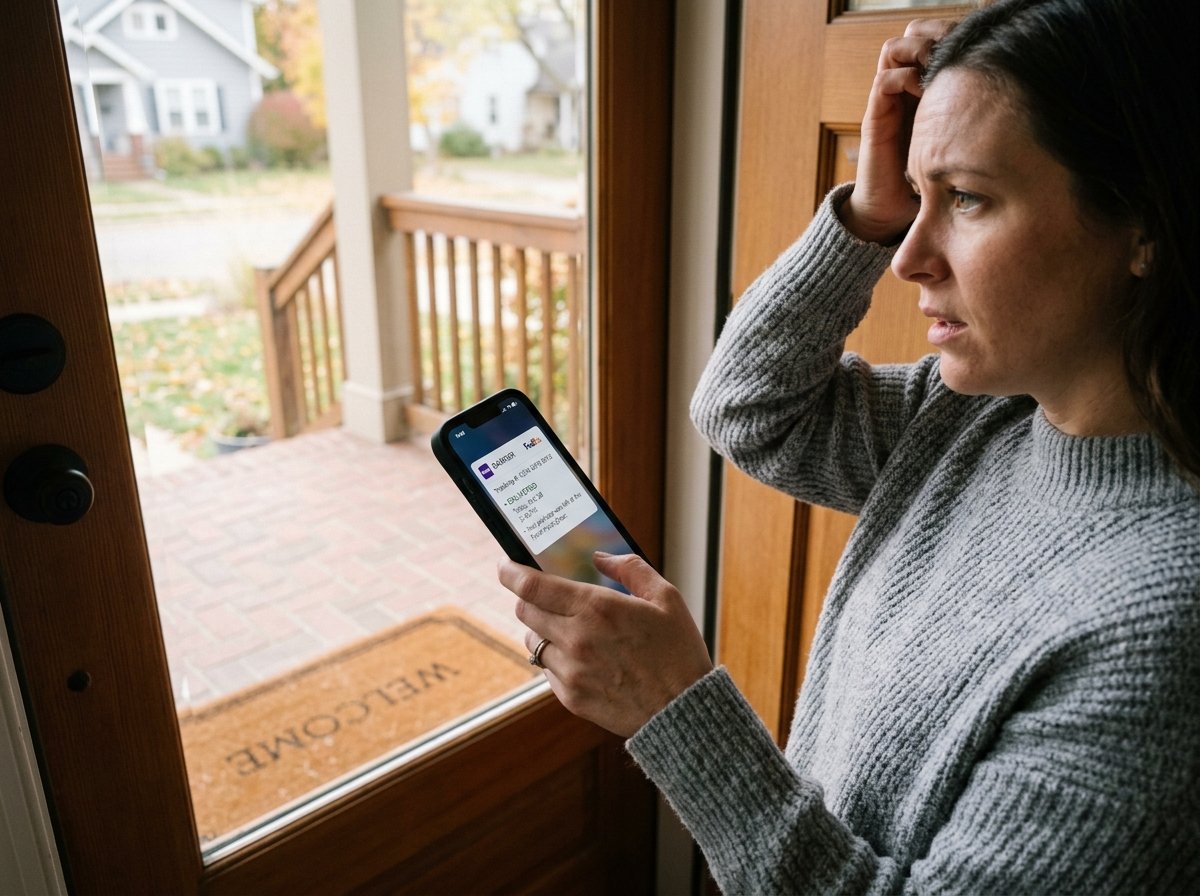
You’re tracking your package all day. The status finally changes to “Delivered.” You rush to the door, check the porch, look around the mailbox — and there’s nothing. No package. No slip. No sign that anyone even stopped by.
That sinking feeling? You’re not alone in it.
According to a 2024 Security.org survey, roughly 49 million Americans had at least one package stolen in the previous year, and millions more experienced deliveries marked as “delivered” that simply weren’t. Whether it’s a $15 phone case or a $500 pair of headphones, the frustration is real — and the confusion about what to do next is even worse.
This guide walks you through every single step you should take — from the first 30 minutes to filing a formal claim — so you can actually get your package or your money back.
Why Does This Even Happen?
Before you panic or assume the worst, it helps to understand why a package might show “delivered” when it clearly hasn’t reached you. It’s not always theft. In fact, more often than not, it’s something far less dramatic.
Pre-scanning by the driver is one of the most common reasons. Some delivery drivers mark packages as delivered before they actually drop them off, especially during busy routes. They might be running behind on their delivery targets or trying to close out their route. Your package could show up an hour or two later — sometimes even the next morning.
Wrong address delivery is another big one. The driver might have dropped your package at a neighbor’s door, a different apartment unit, or even a completely wrong house. GPS glitches, confusing building numbers, or similar-sounding street names can all cause this.
Then there’s the access point delivery. Carriers like UPS and FedEx sometimes leave packages at authorized pickup points — a local store, a locker, or your building’s front office — and mark them as delivered. You might not realize it unless you read the delivery details carefully.
And yes, sometimes packages genuinely do get stolen from porches. Porch piracy is real, it’s growing, and it’s especially common during holiday seasons and sale events.
⚡ Quick Fact: UPS, FedEx, USPS, and Amazon all have slightly different definitions of “delivered.” For some, handing it to a building receptionist counts. For others, leaving it at a community mailroom does. Always read the fine print in the tracking details.
Step 1: Don’t Panic — Wait a Few Hours First
This sounds counterintuitive when your heart is racing, but hear me out. A lot of “missing” packages show up within 24 hours.
Drivers sometimes scan packages as delivered at the start of a street and then physically deliver them over the next couple of hours. Or your package might have been handed to a building manager, doorman, or neighbor who hasn’t told you yet.
Give it at least 3–4 hours if the delivery was marked during normal business hours. If it was marked in the evening, wait until the next morning. Many people who file complaints immediately end up finding their package sitting behind a bush or at a side door.
What you should do during this waiting period is go outside and thoroughly check. Look at your back door, your side porch, behind planters, inside your garage if it was open, and any spot where a driver might have thought was “safe” enough to leave a package. You’d be surprised how creative some drivers get with hiding spots. I’ve heard stories of packages tucked inside recycling bins, behind AC units, and under doormats.
Step 2: Read the Tracking Details — Really Read Them
Don’t just look at the word “Delivered.” Click into the full tracking details. Every major carrier gives you additional information that most people skip over.
You might see notes like “Left with individual,” “Delivered to front desk,” “Left at access point,” or “Delivered to alternate location.” These small details can tell you exactly where your package actually ended up.
If the tracking says “left with individual,” ask your family members, roommates, or neighbors if they accepted it. If it says “delivered to access point,” check with your apartment office or the nearest UPS/FedEx pickup location. You can usually find the specific access point name in the tracking info.
Some carriers, including Amazon and FedEx, also provide photo proof of delivery — a picture showing where the driver left your package. Check your app or email for this photo. It might reveal that your package was delivered to a completely different-looking porch than yours.
If you want to truly understand what different tracking updates mean, this guide on understanding tracking statuses breaks it all down clearly.
Step 3: Ask Your Neighbors
This step is simple, but people skip it out of awkwardness. Don’t.
Walk over to your immediate neighbors — the ones on either side and directly across from you — and ask if a package was delivered to them by mistake. Misdeliveries are incredibly common, especially in apartment buildings, townhouse complexes, and neighborhoods where houses look similar.
If you live in an apartment or condo, check with the leasing office, front desk, or mailroom first. Many carriers hand packages to front desk staff and consider that a successful delivery. Some buildings have package lockers — check those too, especially if your building uses systems like Luxer One, Parcel Pending, or Amazon Hub.
Pro Tip: If you’re not comfortable knocking on doors, leave a polite note in their mailbox or on their door. Something like: “Hi! A package meant for [your address] may have been delivered here by mistake. If you have it, I’d appreciate it if you could let me know. Thank you!”
You can also post on neighborhood apps like Nextdoor. You’d be surprised how often someone responds within an hour saying, “Oh yeah, I found a random box on my porch!”
Step 4: Contact the Carrier Directly
If it’s been 24 hours and your package still hasn’t shown up, it’s time to call the carrier. And I mean actually call — not just send a tweet or leave a comment.
Here’s who to contact depending on who shipped your package:
USPS — File a missing mail search request at usps.com or call 1-800-ASK-USPS (1-800-275-8777). USPS gives you a case number and usually responds within 2–3 business days. You can also visit your local post office and speak with the postmaster directly. Sometimes the local route driver can recall exactly where they left it.
UPS — Call 1-800-742-5877 or start a claim at ups.com. UPS will launch a “driver follow-up” where they contact the specific driver who handled your package. This usually takes 1–2 business days. If you shipped something valuable, make sure you understand how shipping insurance works before you file the claim.
FedEx — Call 1-800-463-3339 or file a claim at fedex.com. FedEx will investigate and may check with the driver. They can also trace the GPS data from the delivery scan to see where the driver was when they scanned your package.
Amazon — This one’s a bit easier. Go to “Your Orders,” find the order, and click “Problem with order.” Select “Package didn’t arrive.” Amazon is generally pretty responsive with either reshipping the item or issuing a refund — often within 48 hours. If the order was fulfilled by a third-party seller, the process might take a bit longer.
DHL — Call 1-800-225-5345 or go to dhl.com to file a complaint. If you’re comparing carrier reliability for future shipments, this DHL vs FedEx comparison might help you decide.
⚠️ Warning: Keep your tracking number, order confirmation, and any communication screenshots handy before you call. The smoother your information, the faster they process your request.
Step 5: Contact the Seller or Retailer
Here’s something a lot of people don’t realize: the seller is often more helpful than the carrier.
If you bought from a major retailer like Amazon, Walmart, Target, or Best Buy, they have dedicated customer support teams that deal with missing deliveries daily. Most large retailers will either reship the item or refund you within a few days — sometimes without even waiting for the carrier investigation to finish.
For smaller online stores or independent sellers on platforms like Etsy or eBay, the process is slightly different. You’ll need to contact the seller directly through the platform’s messaging system. If the seller used a tracked shipping method and the item genuinely didn’t arrive, most platforms have buyer protection policies that cover you.
If you’re an online seller yourself and you deal with lost package complaints regularly, this guide on handling returns for your online business is worth a read. It covers how to set up better processes so these situations don’t eat into your profits.
Key point: When you contact the seller, don’t be aggressive. A calm, factual message works way better. State your order number, the tracking number, the date it was marked delivered, and the fact that you’ve already checked with neighbors and the carrier. This makes your case much stronger.
Step 6: File a Formal Claim for a Lost Package
If the carrier’s investigation doesn’t resolve things, and the seller isn’t being helpful, it’s time to file a formal claim.
Every major carrier has a claims process for lost or missing packages. The specifics vary, but generally you’ll need your tracking number, proof of the item’s value (a receipt or order confirmation), and a description of what was in the package.
Here’s the reality check, though: claims only work if the package was insured. Most standard shipments come with limited coverage. USPS Priority Mail, for example, includes up to $100 in insurance automatically. UPS and FedEx include $100 of declared value coverage by default. If your package was worth more than that and you didn’t purchase additional insurance, your claim payout will be limited.
This is exactly why understanding package insurance matters, especially for high-value items like electronics, jewelry, or collectibles. If you’re regularly shipping or receiving expensive items, paying a few extra dollars for coverage can save you hundreds later.
For a step-by-step breakdown of the claims process across carriers, check out how to file a claim for a lost package. It covers deadlines, required documents, and what to expect.
⚡ Did You Know? Most carriers have a deadline for filing claims — typically 60 days from the shipping date for USPS and 60–90 days for UPS and FedEx. Don’t wait too long, or you’ll lose your window.
Step 7: File a Police Report (Yes, Really)
If you believe your package was stolen — especially if it was a high-value item — file a police report. Most people skip this step thinking it’s pointless, but there are two good reasons to do it.
First, some carriers and retailers require a police report before they’ll process a refund or insurance claim for stolen packages. It’s a formality, but without it, your claim might get denied.
Second, police departments track package theft trends in neighborhoods. Your report might not lead to an immediate arrest, but if multiple reports come from the same area, police may increase patrols or set up sting operations. Several cities across the US have started dedicated “porch pirate” task forces thanks to accumulated reports.
Filing is usually quick — you can often do it online through your local police department’s website. You’ll get a report number that you can share with the carrier and the retailer.
How to Prevent This From Happening Again
Once you’ve dealt with the immediate mess, let’s make sure this doesn’t keep repeating. Because let’s be honest — going through this process once is enough.
Require a signature on delivery. Most carriers offer signature confirmation as an add-on. It costs a few dollars extra, but it guarantees your package won’t just be left on the porch. This is especially worth it for anything over $50.
Use Amazon Locker or carrier pickup points. If you order frequently from Amazon, you can have packages delivered to a nearby locker. UPS has Access Point locations and FedEx has FedEx Office. Your package sits securely until you pick it up. No porch, no risk.
Get a smart doorbell or security camera. Ring, Google Nest, Wyze — these cameras record delivery activity and can deter thieves. Plus, if a package does get stolen, you’ll have video evidence, which helps with police reports and insurance claims.
Coordinate delivery timing. If you work from home certain days, try to schedule deliveries for those days. Or ask a trusted neighbor to watch for packages when you’re away. If you know no one will be home, you can often redirect your package to a different address or a pickup location.
Ship to your workplace if your employer allows it. Office deliveries rarely go missing because there’s always someone at the front desk to receive them.
Try a lockable package box. Products like the Yale Smart Delivery Box or the Bench Sentry give delivery drivers a secure place to drop your package. They’re essentially mailboxes for parcels.
What If It Happens During the Holiday Season?
The holiday season — from Black Friday through New Year’s — is peak time for both delivery delays and package theft. Carrier networks are overloaded, drivers are handling 2–3 times their normal volume, and porch pirates know that doorsteps are full of gifts.
During this period, expect delivery scans to be less accurate. Packages marked “delivered” at 3 PM might not physically arrive until the next morning because drivers batch-scan items to save time. If your holiday package shows delivered but isn’t there, the 24-hour waiting rule becomes even more important.
For anyone shipping gifts during this time, choosing between standard and expedited shipping can make a real difference in reliability. Expedited shipments tend to get more careful handling and more accurate tracking because they’re in the system for a shorter time.
If you’re planning to ship holiday gifts, especially internationally, this New Year shipping guide for businesses has some practical timing and carrier tips.
What Happens If No One Is Home?
This ties directly into the “delivered but missing” problem. When a driver arrives and nobody’s home, different carriers handle it differently.
Some leave the package at your door. Some try a neighbor. Some leave it at a nearby pickup point. And some — especially for signature-required deliveries — take it back and try again the next day.
The problem is that the tracking status might still update to “delivered” or “delivery attempted” without giving you enough detail. If you’re curious about how each carrier handles this scenario, this piece on what happens if no one is home for delivery covers USPS, UPS, FedEx, and Amazon’s specific policies.
Credit Card Chargebacks: Your Last Resort
If the seller won’t refund you, the carrier denies your claim, and you’ve genuinely never received the item — you have one more option. A credit card chargeback.
Most credit cards offer purchase protection. You can dispute the charge by calling your credit card company and explaining that you paid for an item that was never received. The credit card company will investigate and may reverse the charge.
A few things to know about chargebacks:
They can take 30–90 days to resolve. Your credit card company will contact the seller, ask for evidence, and make a decision. During this time, the charge may be temporarily credited back to your account.
Chargebacks should genuinely be a last resort, not a first move. If you file a chargeback while the seller is already trying to help you, it can create complications and delay the resolution. Always try the seller and carrier first.
Also, document everything. Keep screenshots of your tracking info, emails with the seller, chat transcripts with the carrier, and any police report numbers. The more documentation you have, the stronger your chargeback case.
FAQ Section
How long should I wait before reporting a package as missing?
Wait at least 24 hours from the time it was marked delivered. Many packages that show “delivered” turn up within a few hours due to early scanning by drivers. If it’s been a full day and you’ve checked with neighbors and your building office, then contact the carrier and seller.
Can I get a refund if my package was stolen from my porch?
It depends on who shipped it and whether it was insured. Most major retailers like Amazon, Walmart, and Target will issue a refund or reship the item. For smaller sellers, you may need to file an insurance claim or a credit card chargeback. Filing a police report strengthens your case significantly.
Will the carrier pay for a lost package?
Carriers typically cover up to $100 by default for lost packages. If your item was worth more than that and you didn’t purchase additional shipping insurance, you’ll only receive the default coverage amount. Always consider adding insurance for valuable shipments — you can learn more about how package insurance works here.
What if the delivery photo shows someone else’s door?
This is actually strong evidence in your favor. Screenshot the photo immediately and share it with both the carrier and the seller. It proves the driver delivered to the wrong address, which makes your refund or reshipment claim much easier to process.
Does filing a police report actually help?
It does, even if it doesn’t feel like it. A police report creates an official record of the theft, which carriers and retailers often require before processing claims. It also contributes to neighborhood theft data, which can lead to increased police attention in your area.
Your Next Move
Look, dealing with a missing package is frustrating. There’s no way around that. But the good news is that most cases get resolved — whether through the carrier finding the package, the seller sending a replacement, or a refund coming through.
The key is to move through the steps methodically. Check your surroundings, read the tracking details carefully, talk to your neighbors, contact the carrier, reach out to the seller, and file claims if needed. Don’t skip steps, and don’t wait too long to act — those claim deadlines are real.
And once you’ve sorted this one out, take ten minutes to set up some prevention measures. A security camera, a delivery locker, or even just using pickup points can save you from going through this whole ordeal again. Your future self will thank you for it.