
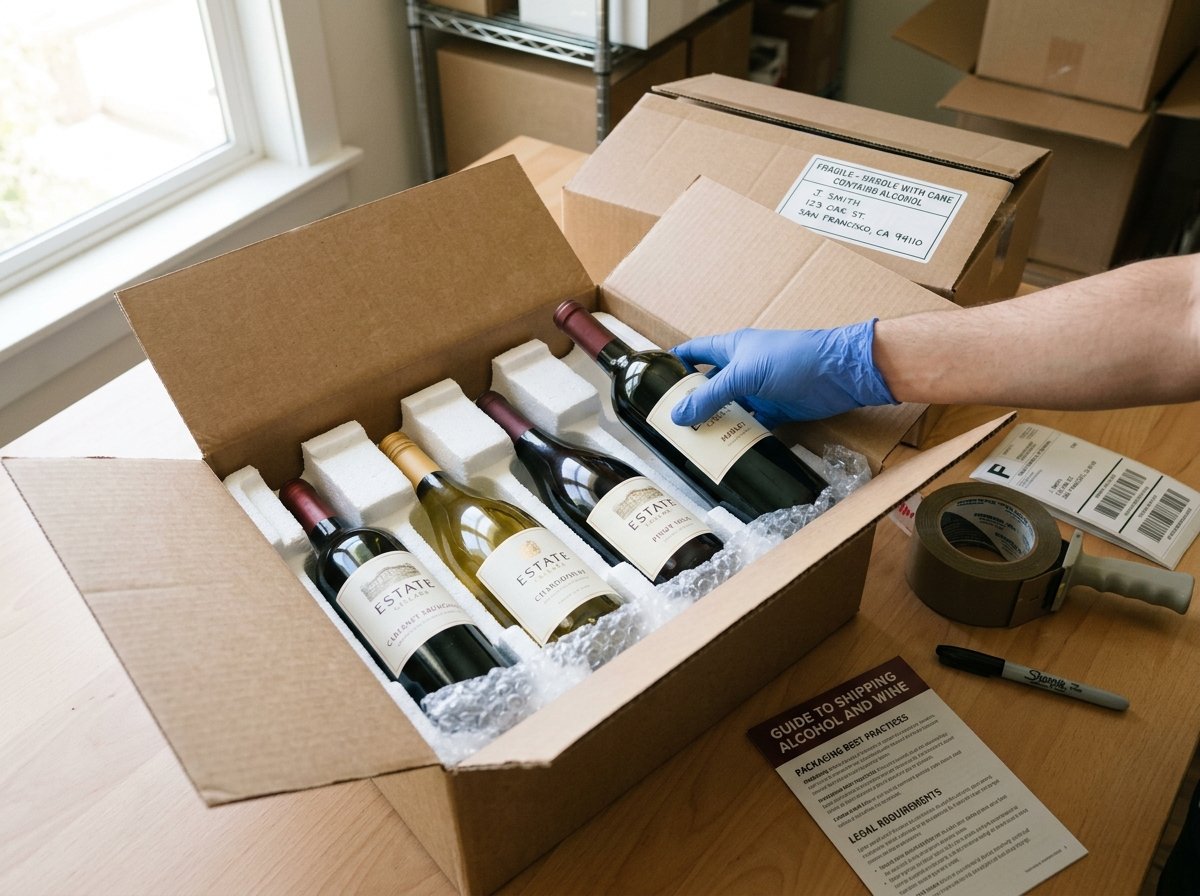
A single bottle of wine, poorly packed, can turn an entire shipment into a soggy, glass-filled mess — and that’s the easy part. The real headache? The legal trouble you might face for shipping it wrong. Alcohol isn’t just another item you toss in a box and drop off at the post office. It’s one of the most regulated products to ship, whether you’re sending a birthday gift across the state or fulfilling orders for your online wine business.
Every year, thousands of bottles get damaged, confiscated, or returned because the sender didn’t know the rules. And those rules change depending on where you live, where you’re shipping to, which carrier you use, and whether you’re a licensed business or just a regular person trying to send a nice bottle of Merlot to your cousin.
This guide breaks down everything you need to know about shipping alcohol and wine — the legal stuff, the packaging tricks, the right carriers, and the mistakes that could cost you money or worse. Let’s get into it.
Why Shipping Alcohol Is So Complicated
You can ship shoes, books, even electronics without thinking twice. But alcohol? That’s a different world entirely.
The reason is simple: alcohol is a controlled substance in most countries. Governments tax it, regulate its sale, and control who can buy or distribute it. So when you try to ship it, you’re essentially moving a regulated product across jurisdictions — and every jurisdiction has its own set of rules.
In the United States, alcohol shipping laws vary from state to state. Some states allow direct-to-consumer wine shipments, while others ban it outright. The European Union has its own excise duty rules. Australia, Canada, and the UK each have separate regulations too.
And here’s what catches most people off guard: even if it’s legal to ship alcohol from your location, it might be illegal for the recipient to receive it in theirs. You’re responsible for knowing both ends of the transaction.
This is exactly why understanding items banned from international shipping matters before you even start packing a bottle.
Who Can Legally Ship Alcohol?
This is the first question you need to answer, and it depends heavily on your situation.
Licensed Businesses: If you’re a winery, brewery, distillery, or a licensed alcohol retailer, you’re generally allowed to ship alcohol — but you still need the proper permits. In the US, you’ll need both a federal permit (from the Alcohol and Tobacco Tax and Trade Bureau, or TTB) and the relevant state licenses. Most states require a direct shipper’s license if you want to sell and ship wine directly to consumers.
Individuals and Private Senders: Here’s where it gets tricky. Most major carriers in the US — FedEx, UPS — technically allow alcohol shipments, but only from licensed shippers. If you’re just a regular person, you’re technically not supposed to ship alcohol through these carriers. The US Postal Service (USPS) flat-out prohibits it, period. No exceptions.
That said, people do send bottles as gifts. Some do it by not declaring the contents (which is risky and not recommended), while others use third-party shipping services that hold the necessary licenses.
⚠️ Warning: Shipping alcohol without proper licensing can result in fines, confiscation of the shipment, and in some cases, criminal charges. This isn’t a rule you want to bend.
International Shippers: If you’re shipping alcohol across borders, customs regulations add another layer. Many countries limit the quantity of alcohol you can import, charge heavy duties, or ban certain types altogether. If you’re curious about specific country rules, check out shipping restrictions to the USA, shipping restrictions to the UK, or shipping restrictions to Australia.
Understanding Carrier Policies for Alcohol
Not all carriers treat alcohol the same way. Here’s a breakdown of the major ones and their policies as of 2025.
USPS
Let’s start with the simplest one: USPS does not allow alcohol shipments. Domestic or international, it doesn’t matter. Beer, wine, spirits — all prohibited. If they find alcohol in your package, it will be seized. There’s no workaround here.
FedEx
FedEx allows alcohol shipments, but only for licensed businesses that have signed a FedEx Alcohol Shipping Agreement. You can’t just walk into a FedEx location with a bottle of champagne and ship it. You need to have a license, your account must be approved, and every package must carry proper labeling (including a “Contains Alcohol” sticker and an adult signature requirement).
FedEx ships wine, beer, and spirits domestically within the US (state laws permitting) and internationally to select countries.
UPS
UPS has a similar policy. They allow alcohol shipments only from licensees who’ve entered into a UPS alcohol shipping contract. Same deal — adult signature required, proper labeling, and compliance with origin and destination laws.
One thing UPS does well is their state-by-state compliance tool, which helps licensed shippers verify whether a particular shipment route is legal.
DHL
For international alcohol shipments, DHL is often the go-to. They handle alcohol shipments in many countries, but rules vary by destination. You’ll need to declare the contents, handle customs documentation, and sometimes pay excise duties upfront.
If you’re deciding between carriers for international shipping, a comparison of DHL vs FedEx can help you weigh your options based on cost, speed, and reliability.
Specialty Alcohol Shippers
Several companies specialize exclusively in alcohol logistics. Services like Ship Compliant, Wineshipping, and Pack & Send handle the regulatory headaches for you. They manage licensing, compliance, packaging, and delivery — all for a fee, of course. If you’re running an e-commerce wine business, these services can save you enormous time and legal risk.
How to Pack Wine and Alcohol for Shipping
Alright, let’s say you’ve got the legal side sorted. Now comes the part where most damage happens: packaging.
Alcohol is heavy, glass is fragile, and liquid is messy. A single cracked bottle doesn’t just ruin that bottle — it can soak and destroy everything else in the shipment. So your packaging needs to do three things: absorb shock, prevent movement, and contain any leaks.
Choosing the Right Box
Don’t use a random cardboard box from your garage. You need a sturdy, corrugated cardboard box — ideally double-walled. The box should be slightly larger than the bottles to allow room for cushioning material.
Pro Tip: Wine shippers and many packaging suppliers sell molded pulp or Styrofoam wine inserts (also called wine shippers) designed to hold 1, 2, 3, 6, or 12 bottles snugly. These are hands-down the best option. They keep bottles separated, cushioned, and upright. A 6-pack Styrofoam wine shipper costs around $5–$10 and is worth every penny.
Wondering how to pick the right box for your shipment? Here’s a useful guide on how to choose the right box size for different types of products.
Wrapping Each Bottle
Even if you’re using molded inserts, wrap each bottle individually. Here’s how:
Start with bubble wrap — at least 2-3 layers around the entire bottle, especially the neck (which is the most fragile part). Secure it with tape. Then place the wrapped bottle inside the insert or box compartment.
If you don’t have inserts, you can use crumpled packing paper or foam peanuts to fill gaps. The key rule is simple: shake the box gently. If anything moves, add more cushioning. If you feel bottles touching each other or the box walls, you haven’t used enough padding.
Not sure how much cushioning material you actually need? This guide on how much bubble wrap you need gives you practical answers.
Preventing Leaks
This is the step most people skip — and regret later.
Wrap each bottle in a sealed plastic bag before bubble wrapping it. Zip-lock bags work for standard wine bottles. For larger bottles, use a plastic produce bag and tie it shut. This way, if a bottle does crack, the liquid stays contained and doesn’t destroy the rest of the shipment or make the box fall apart.
Some shippers also line the inside of the entire box with a plastic trash bag as an extra layer of leak protection. It takes 30 seconds and can save your entire shipment.
Sealing the Box
Use heavy-duty packing tape — not masking tape, not duct tape. Apply tape along all seams, especially the bottom. Use the H-taping method (tape across the center seam and both edges). If the box is heavy (a case of wine can weigh 20+ pounds), reinforce the bottom with extra tape.
Did You Know? A standard 750ml bottle of wine weighs about 2.65 pounds (1.2 kg). A case of 12 bottles can weigh over 35 pounds (16 kg) with packaging — enough to bust through a weak box bottom during handling.
Labeling Your Alcohol Shipment
Proper labeling isn’t optional — it’s legally required by most carriers and customs authorities.
Here’s what your package typically needs:
“Contains Alcohol” label placed visibly on the outside of the box. Most carriers provide these, or you can print your own.
“Fragile” and “This Side Up” stickers to encourage careful handling. Do these always work? Honestly, not always. But they help, and they set expectations.
Adult Signature Required — both FedEx and UPS mandate this for alcohol shipments. The recipient must be 21+ (in the US) and must show valid ID upon delivery. This means no doorstep drop-offs and no leaving packages with minors.
Customs documentation for international shipments — you’ll need a commercial invoice listing the type of alcohol, quantity, alcohol percentage (ABV), value, and country of origin. Some countries also require import permits or health certificates.
Shipping Wine vs. Spirits vs. Beer: Key Differences
Not all alcohol ships the same way, and it’s worth understanding the differences.
Wine is the most commonly shipped alcohol and has the most relaxed laws in many regions. In the US, over 45 states now allow some form of direct-to-consumer wine shipping (though the specific rules vary). Wine is also relatively straightforward to pack because bottles are standardized sizes.
Spirits (vodka, whiskey, rum, tequila, etc.) face stricter regulations almost everywhere. Many states that allow wine shipping still prohibit spirits shipping. Internationally, spirits often attract higher customs duties because of their higher alcohol content. Packing-wise, spirit bottles come in more varied shapes, so you might need custom cushioning.
Beer is bulky and heavy for its value. Shipping a case of craft beer can cost more than the beer itself. Some carriers allow beer shipments from licensed breweries, but the economics only make sense for limited-release or specialty brews that customers can’t get locally.
Quick Fact: According to the Wine Institute, US wineries shipped approximately 6.6 million cases of wine directly to consumers in 2022, totaling around $3.7 billion in sales. Direct-to-consumer wine shipping is a massive and growing market.
How Much Does It Cost to Ship Alcohol?
Shipping alcohol isn’t cheap, and there are several factors that drive the cost up.
Weight is the big one. Glass bottles are heavy, and alcohol itself adds significant weight. A single bottle of wine with proper packaging can easily weigh 4-5 pounds. Carriers charge based on actual weight or dimensional weight — whichever is greater. Since wine shippers with Styrofoam inserts take up a decent amount of space, dimensional weight sometimes kicks in.
Adult signature fees add $5–$7 per package with most carriers.
Shipping speed matters too. If you’re shipping during summer months, you might need expedited shipping to minimize the time bottles spend in hot delivery trucks. Heat can ruin wine — anything above 80°F (27°C) for extended periods can cook the wine and push corks out. Understanding the difference between standard and expedited shipping helps you decide when faster shipping is genuinely necessary.
As a rough guide, shipping a single bottle of wine domestically within the US costs between $15–$30 through FedEx or UPS, depending on distance and speed. A case of 12 bottles can run $40–$80+ for ground shipping.
Internationally, costs jump significantly. Shipping wine from the US to Europe might cost $50–$150+ per case, not including customs duties and taxes on the receiving end. Want to understand how shipping rates are actually calculated? That guide breaks down every factor.
Pro Tip: If you ship alcohol regularly, negotiate volume rates with your carrier. Most carriers offer bulk shipping discounts for businesses that ship frequently, and alcohol shippers can save 20-40% by committing to minimum volumes.
Shipping Alcohol Internationally: Extra Steps You Can’t Skip
International alcohol shipping adds layers of complexity that domestic shipping doesn’t have. Here’s what you need to handle.
Customs Declarations
You must accurately declare alcohol on customs forms. Under-declaring the value or misrepresenting the contents (calling wine “grape juice,” for example) is customs fraud. It can result in seizure of goods, fines, and being blacklisted by customs authorities.
Your customs declaration should include the type of alcohol, the volume, the ABV (alcohol by volume) percentage, the retail value, and the country where it was produced.
Import Duties and Taxes
Almost every country charges excise duty on imported alcohol, and rates vary wildly. The UK, for example, charges excise duty based on the alcohol content plus VAT (20%) on the total value including shipping. Australia charges $3+ per standard drink in excise, making imported spirits particularly expensive.
The recipient is usually responsible for paying these duties upon delivery. If they refuse to pay, the package gets returned — and you eat the shipping cost both ways.
Quantity Limits
Many countries cap how much alcohol you can import duty-free (usually very little — 1-2 liters for personal imports). Anything above that threshold is taxable. Some countries, like certain Middle Eastern nations, ban alcohol imports entirely for individuals.
Temperature Considerations
If you’re shipping wine internationally and the route passes through hot climates or your shipment will sit in a warehouse in Dubai or Singapore, temperature becomes a real concern. Consider using insulated packaging or cold packs. Some premium wine shippers use temperature-controlled containers for high-value shipments.
Tips for Businesses Shipping Alcohol Online
If you’re running a wine club, an online bottle shop, or selling craft spirits through your website, shipping is a core part of your business. Here are a few things that’ll make your life easier.
Get your licensing sorted first. Before you ship a single bottle, make sure you have every required license — federal, state, and any destination-specific permits. Compliance software like ShipCompliant by Sovos can automate the regulatory checks and tax calculations for you.
Offer flat-rate shipping on cases. Customers are more likely to order a full case if shipping is a flat rate. It simplifies your pricing and improves margins since shipping cost per bottle drops significantly with larger orders.
Communicate seasonal shipping policies clearly. During summer months, many wine shippers pause ground shipments or switch to 2-day air to protect wine quality. Let your customers know why their shipping costs might be higher in July than in January.
Have a clear breakage policy. Bottles will occasionally break in transit despite your best efforts. State upfront whether you’ll replace the bottle, offer a refund, or file a carrier claim. Speaking of which, shipping insurance is almost mandatory for alcohol shipments given the fragile nature and high value of the product.
If you’re selling on platforms like eBay, Etsy, or your own Shopify store, also read up on how to handle returns for your online business — because alcohol returns come with their own legal quirks (many states prohibit the return and resale of alcohol once shipped).
What Happens If Your Alcohol Shipment Gets Damaged or Lost?
It’s every shipper’s nightmare — you open a tracking update and see “delivered,” but the customer sends you a photo of a soggy box and broken glass.
Here’s the reality: breakage rates for alcohol shipments average around 1-3%, even with proper packaging. If you’re shipping volume, some losses are inevitable.
If a shipment arrives damaged, document everything. Photos of the outer box, inner packaging, broken bottles, and the shipping label. File a claim with the carrier within their time window (FedEx gives you 60 days; UPS gives you 60 days from the delivery date for visible damage).
If the package goes missing entirely, the process is similar. Track the shipment, confirm it’s actually lost (not just delayed), and file a claim for a lost package with your carrier. Having shipping insurance significantly speeds up reimbursement.
Pro Tip: Take a photo of every alcohol shipment before you seal it — showing the bottles, the packaging material, and how everything is arranged inside the box. This becomes your evidence if you ever need to prove that the damage wasn’t due to inadequate packing.
FAQ
Can I ship alcohol through USPS?
No. The United States Postal Service strictly prohibits shipping any type of alcohol — beer, wine, or spirits — through its mail system. This applies to domestic and international shipments. If USPS discovers alcohol in a package, they’ll seize it. Your only options for shipping alcohol within the US are FedEx and UPS (with proper licensing) or specialty alcohol shipping services.
Can I ship wine as a gift to a friend in another state?
Technically, major carriers like FedEx and UPS only accept alcohol shipments from licensed shippers, not individuals. Some people get around this by using third-party services that hold alcohol shipping licenses and will ship on your behalf (for a fee). If you try to ship wine yourself through a regular FedEx or UPS drop-off without a license, you’re taking a risk — the shipment could be refused or confiscated.
How do I keep wine safe from heat during shipping?
Ship during cooler months whenever possible. If you must ship during summer, use insulated Styrofoam shippers (many come with cold gel packs) and choose 2-day or overnight shipping to minimize transit time. Avoid shipping early in the week — a Monday shipment has less chance of sitting in a hot warehouse over a weekend compared to a Thursday shipment.
Is it legal to ship alcohol internationally?
It depends on both the origin and destination countries. Many countries allow it with proper customs documentation and payment of excise duties. But some countries — including many in the Middle East and parts of South Asia — either ban alcohol imports entirely or impose very strict permit requirements. Always check the destination country’s import rules before shipping.
Do I need to get an adult signature for alcohol deliveries?
Yes. Both FedEx and UPS require an adult signature (21+ in the US) for all alcohol deliveries. You cannot waive this requirement. If nobody is home to sign, the carrier will attempt redelivery or hold the package at a nearby facility. This is a non-negotiable legal requirement, not just a carrier preference.
One Last Thing
Shipping alcohol and wine isn’t something you can wing. Between the legal requirements, the fragile packaging needs, and the carrier-specific policies, there’s a lot that can go wrong if you’re not prepared. But here’s the good news — once you understand the rules and set up a reliable packing routine, it becomes second nature.
Start with the legal side. Make sure you’re allowed to ship, get licensed if needed, and verify that your destination accepts alcohol. Then invest in proper packaging — Styrofoam inserts, bubble wrap, leak-proof bags, and strong boxes. Choose a carrier that fits your needs and budget. And always, always require an adult signature.
Whether you’re a winery shipping your latest vintage to loyal customers or someone trying to send a special bottle for a friend’s anniversary, the effort you put into doing it right protects both the product and your peace of mind. Get the process right once, and every shipment after that is just routine.