
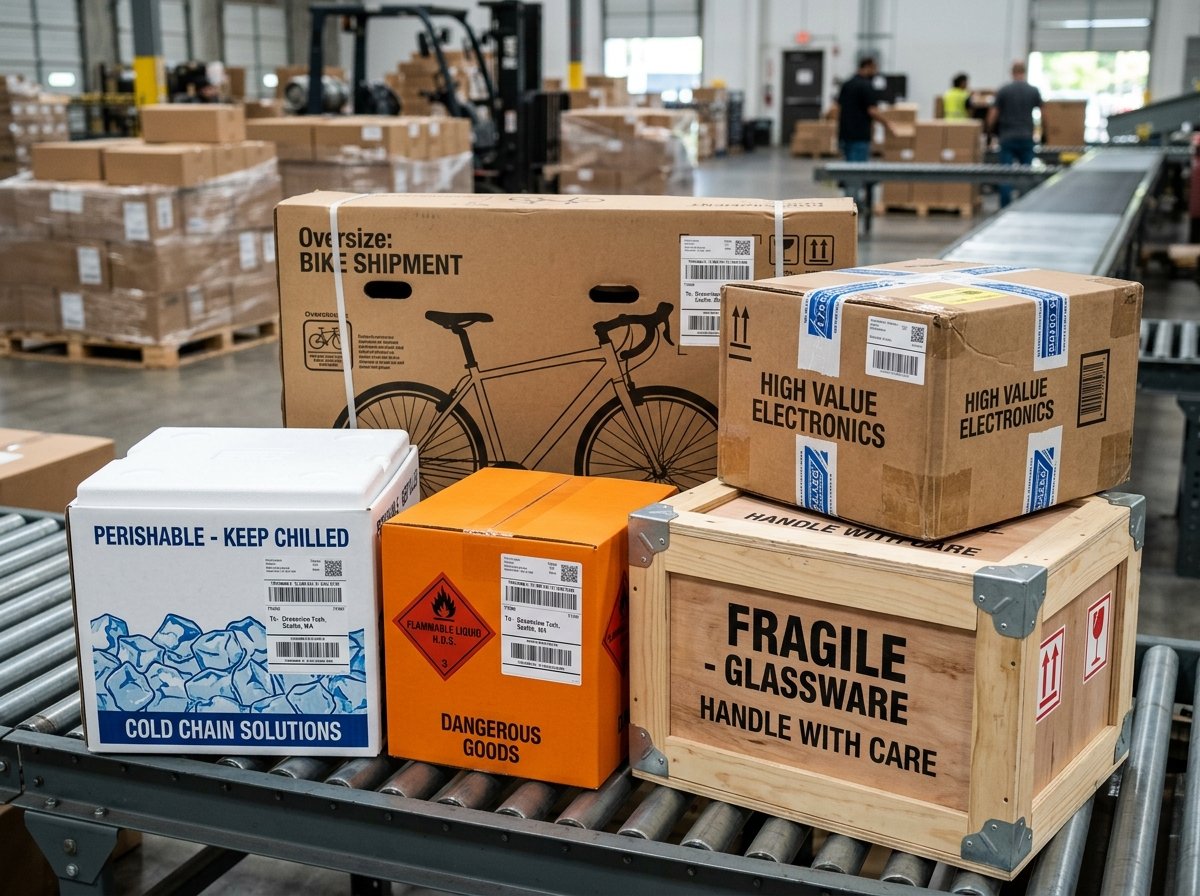
A wrong box doesn’t just look bad — it can crush, crack, or completely destroy what’s inside. According to shipping industry data, nearly 11% of packages arrive damaged, and a huge chunk of that damage traces back to one simple mistake: using the wrong box. Not the wrong courier. Not bad luck. Just the wrong box.
Think about it. You wouldn’t put a glass vase in a flimsy shoebox and toss it into a delivery truck, right? Yet people make similar mistakes every single day — either because they grab whatever box is lying around the house, or because they genuinely don’t know which box works best for their specific item.
Here’s the thing: shipping boxes aren’t one-size-fits-all. A box that’s perfect for books would be terrible for electronics. What works for clothing won’t protect ceramics. And if you’re shipping something heavy like car parts, using a thin corrugated box is basically asking for trouble.
This guide breaks down exactly which boxes work best for different types of shipments — so your stuff actually arrives the way it left. Whether you’re an online seller packing daily orders, someone sending a gift overseas, or a business shipping products in bulk, you’ll find practical answers here.
Why the Right Box Matters More Than You Think
Let’s get something straight before jumping into box types. Choosing the right box isn’t just about protection — though that’s obviously the big one. It affects three things directly.
Cost. Carriers like DHL, FedEx, and UPS calculate shipping charges based on either actual weight or dimensional weight — whichever is higher. So if you use an oversized box for a small item, you’re literally paying for empty air. That adds up fast, especially for international shipments.
Safety. A box that’s too big lets items bounce around inside. A box that’s too small puts pressure on the contents. Both scenarios lead to damage. The right fit, combined with proper cushioning, is what keeps things intact during transit.
Presentation. If you’re running a business — say you’re selling on eBay or Etsy — the unboxing experience matters. A crushed, dented, or oversized box doesn’t exactly scream “professional.” Your packaging is the first physical impression a customer gets.
So yeah, the box choice is a bigger deal than most people realize.
Understanding Box Types: A Quick Breakdown
Before matching boxes to shipments, you should know what’s actually available. Not all cardboard boxes are the same, and the differences matter.
Single-Wall Corrugated Boxes
These are your standard shipping boxes. They have one layer of fluted (wavy) corrugated material sandwiched between two flat liner boards. They’re lightweight, affordable, and work perfectly for items under 20–25 lbs. Most everyday shipments — clothes, books, non-fragile goods — do just fine in single-wall boxes.
Double-Wall Corrugated Boxes
Two layers of fluting instead of one. That extra layer adds significant strength and stacking resistance. If you’re shipping anything heavy, dense, or going on a long journey (especially international), double-wall is your friend. They handle 25–60 lbs comfortably and resist punctures much better.
Triple-Wall Corrugated Boxes
These are the heavyweights of the box world. Think industrial-grade. You’d use these for very heavy items — machinery parts, large electronics, or furniture components. They can handle 60–150 lbs and sometimes even replace wooden crates for certain shipments. For guidance on shipping furniture internationally, triple-wall or crate-style packaging is often recommended.
Rigid/Set-Up Boxes
These are the non-folding, sturdy boxes you see with premium products — think high-end phones, jewelry, luxury cosmetics. They don’t fold flat, they cost more, but they provide excellent protection and a premium feel. If you’re shipping valuables, these are worth considering.
Mailer Boxes
Flat, slim, and designed to fold into shape without tape on the bottom. Perfect for clothing, documents, small accessories, and subscription boxes. They look clean, ship efficiently, and work great for e-commerce brands that care about presentation.
Poly Mailers and Padded Envelopes
Not technically boxes, but worth mentioning because sometimes you don’t need a box at all. Soft goods like t-shirts, scarves, or non-fragile flat items ship perfectly in poly mailers. Padded envelopes work well for small electronics, phone cases, or jewelry. Using these instead of boxes when appropriate can save you real money on shipping costs.
Best Boxes for Fragile and Breakable Items
This is where most shipping damage happens, so let’s give it proper attention.
Fragile items — glassware, ceramics, porcelain figurines, mirrors, picture frames — need two things from their box: snug fit and cushion space. The box should be large enough to allow 2–3 inches of protective padding on every side of the item, but not so large that things shift around.
What to use: Double-wall corrugated boxes. Single-wall can work for lightweight fragile items (like a single wine glass well-wrapped in bubble wrap), but double-wall gives you that extra margin of safety. For items like artwork and paintings, specialty flat boxes or custom-built picture boxes with corner protectors are the way to go — we’ve covered this in detail in our guide on how to ship artwork and paintings.
Pro Tip: Here’s a test that professional packers use. Once your item is packed inside the box, give it a gentle shake. If you feel movement, add more cushioning material. If nothing shifts, you’re good. Also, understanding how much bubble wrap you actually need can save you from both under-packing and over-spending.
For bottles — wine, olive oil, sauces, perfume — use cell divider inserts inside your box. These cardboard grids keep bottles separated so they don’t clink against each other. If you’re shipping alcohol or wine, specialized wine shippers with molded foam inserts are your safest bet.
Best Boxes for Electronics and Gadgets
Electronics are a special category because they’re not just fragile — they’re also sensitive to static electricity, moisture, and temperature shifts.
If you’re shipping a mobile phone or laptop, the ideal setup is a double-wall corrugated box with anti-static bubble wrap or foam inserts. Never let the device touch the walls of the box directly. There should always be a cushioning buffer.
For small electronics (phones, tablets, portable speakers, gaming controllers): A snug-fitting single-wall box works, as long as you’re using proper anti-static packaging inside. Rigid mailer boxes are also great for phones and small gadgets — they provide a tight fit and look professional if you’re selling refurbished devices.
For larger electronics (monitors, printers, gaming consoles, desktop PCs): Double-wall boxes, always. And if you have the original manufacturer packaging, use it — those boxes are literally engineered for that specific product. Pack the original box inside a slightly larger shipping box with padding between the two. This “box-in-a-box” method is considered the gold standard for electronics.
For computer components and circuit boards: Anti-static bags are non-negotiable. Then place them in a rigid box with foam padding. Static damage doesn’t show up immediately but can ruin a component completely.
⚠️ Warning: Never use packing peanuts with electronics. They create static electricity and can work their way into ports and openings. Use foam inserts, air pillows, or crumpled kraft paper instead.
Best Boxes for Clothing and Soft Goods
Clothing is one of the easiest categories to ship, but people still get it wrong — usually by using boxes that are way too big.
For single garments or small orders: Poly mailers are your best friend. They’re lightweight, waterproof, take up minimal space, and cost significantly less than boxes. Since clothes are soft and non-fragile, they don’t need rigid protection. A poly mailer keeps them clean and dry during transit.
For multiple garments or bulkier items (jackets, sweaters, shoe-and-clothing combos): Mailer boxes or slim single-wall corrugated boxes work perfectly. Fold the clothes neatly, wrap them in tissue paper if you want a polished look, and seal the box. No bubble wrap needed.
For shoes and footwear specifically: The shoebox itself is usually fine for protection, but don’t ship it bare — place it inside a slightly larger shipping box or a poly bag. Carrier labels stuck directly on shoeboxes can damage the branding, and that annoys buyers. We’ve put together a separate guide on how to ship shoes and footwear safely that covers this in detail.
Quick Fact: Clothing shipments are where dimensional weight pricing hits hardest. A big box of t-shirts might weigh only 2 lbs but get charged for 8 lbs because of the box size. Keep your boxes as small as practically possible for soft goods.
Best Boxes for Heavy and Dense Items
Books, tools, machinery parts, auto accessories, weights, cast iron cookware — heavy stuff needs boxes that won’t give out.
The rule is simple: If the contents weigh more than 20 lbs, go double-wall. Over 50 lbs, consider triple-wall or wooden crates. Heavy items put enormous stress on box corners and seams, especially during transit when packages get stacked on top of each other.
For books and media: Small, single-wall boxes work great, but only if you keep the total weight under 20 lbs per box. People make the classic mistake of filling a large box with books until it weighs 40 lbs. The box splits open, the books spill out, and everything gets damaged. Use smaller boxes and distribute the weight. Reinforce the bottom with extra tape — the “H-tape” method (taping the center seam plus both edges) makes a noticeable difference.
For car parts and auto accessories: Double-wall boxes with custom foam inserts. Metal parts need wrapping to prevent surface scratches, and any protruding parts should have extra padding. If you regularly ship car parts, our guide on shipping car parts and auto accessories covers weight limits, carrier requirements, and best practices.
For tools and hardware: Group small items together in ziplock bags or small inner boxes before placing them in the main shipping box. This prevents small metal pieces from rattling around and poking through the box walls.
Pro Tip: For any heavy shipment, use water-activated tape (also called gummed tape) instead of regular packing tape. It bonds with the cardboard fibers and creates a much stronger seal. This is what fulfillment centers and warehouses prefer.
Best Boxes for Odd-Shaped and Oversized Items
Not everything fits neatly into a rectangular box, and that’s where things get creative.
Bicycles: Bike boxes are long, narrow, and specifically shaped for disassembled bicycles. You can often get these free from your local bike shop. Remove the pedals, turn the handlebars, and lower or remove the seat post before packing. Our detailed guide on how to ship a bicycle walks through every step.
Musical instruments: Guitars, keyboards, violins — these need hard cases first, then shipping boxes built around those cases. For guitars, specialized guitar shipping boxes exist with built-in neck support. Double-wall is essential here, with at least 3 inches of padding on every side. Instruments are expensive and delicate, so skimping on packaging is a bad idea. Check out our musical instrument shipping guide for instrument-specific advice.
Telescoping boxes are your secret weapon for odd-shaped items. These are two-piece boxes (a top and bottom half) that slide into each other, letting you adjust the length. They work great for items like golf clubs, fishing rods, curtain rods, or tall lamps.
Triangular tube boxes work well for rolled items — posters, blueprints, yoga mats, rolled canvas prints. They’re stronger than standard mailing tubes because the triangular shape resists crushing better than round tubes.
For truly oversized items that can’t fit into any standard box, you can create a custom box by cutting and combining two or more boxes together with heavy-duty tape. It’s not the prettiest solution, but it works in a pinch. Just make sure every seam is heavily reinforced.
Best Boxes for Food and Perishable Items
Food shipments add a time-sensitive element to the mix. You’re not just protecting against damage — you’re fighting temperature and freshness too.
For non-perishable food items (snacks, packaged spices, canned goods, dried fruits): Standard single-wall corrugated boxes work fine. Just line the inside with a food-safe plastic bag to protect against moisture, and use void fill to prevent cans or jars from shifting and colliding.
For perishable items (chocolates, baked goods, dairy, meat): Insulated shipping boxes are what you need. These are corrugated boxes lined with foam insulation panels (EPS or polyurethane). Add gel ice packs or dry ice depending on how cold things need to stay. The box should be sealed tightly to maintain the internal temperature throughout transit.
Did You Know? Most carriers have specific rules about shipping food internationally. Some countries ban certain food items entirely. Before packing, make sure you’ve checked relevant shipping restrictions to avoid your package getting seized at customs.
For baked goods and confections: Sturdy mailer boxes with food-grade tissue paper work well for items that need to look presentable on arrival. Separate individual pieces with dividers or cupcake-style inserts so they don’t smush together.
Best Boxes for Cosmetics and Beauty Products
This is a growing category, especially for e-commerce brands and indie beauty sellers.
Cosmetics are a mix of fragile (glass bottles, compacts, pressed powders) and liquid (serums, foundations, lotions). The box needs to handle both without leaking or breaking.
For individual products or small orders: Rigid mailer boxes or small single-wall corrugated boxes with molded inserts. The insert holds each product snugly in place. If you’re shipping glass bottles of serum or perfume, wrap each one in bubble wrap and place it upright in the box.
For subscription boxes or multi-product orders: Custom-sized mailer boxes with branded tissue paper and a secure internal layout. The key is eliminating movement inside the box. For a complete walkthrough, our cosmetics and skincare shipping guide covers labeling requirements, liquid rules, and packaging best practices.
⚠️ Liquid rule reminder: Most carriers require that liquid cosmetics be sealed in leak-proof containers with absorbent material around them. If a bottle leaks during transit, it can damage everything else in the box — and the carrier may not cover the loss.
Best Boxes for Jewelry and Small Valuables
Small, expensive, easy to lose. Jewelry shipping is less about box strength and more about security and presentation.
The ideal setup: A small rigid jewelry box (the kind with a satin or velvet lining), placed inside a padded mailer or a small corrugated box with padding. The outer box provides the protection, while the inner box provides the presentation.
For high-value pieces: Use a discreet outer box with no indication of what’s inside. Skip the branded jewelry store packaging on the outside — it attracts attention you don’t want. Also consider insuring your shipped package, especially for anything over $100 in value.
For costume jewelry or lower-value accessories: Padded envelopes or small poly mailers with bubble wrap lining work perfectly. These items aren’t usually fragile enough to need a full box, and the savings on shipping cost add up if you’re a regular seller.
Don’t forget that shipping jewelry and valuables involves specific carrier guidelines about declared value, insurance, and sometimes signature confirmation requirements.
Choosing the Right Box Size: The Practical Formula
Getting the box type right is half the battle. Getting the size right is the other half.
Here’s a simple formula: your item’s dimensions + 2–3 inches on each side for padding = your ideal box size. That’s it. If your item is 10″ x 8″ x 4″, look for a box around 14″ x 12″ x 8″.
Too much extra space? Fill it with air pillows, crumpled kraft paper, or foam peanuts (for non-electronics). Too little space? The item presses against the walls, and one bump during transit can cause damage.
If you’re unsure about sizing, our guide on how to choose the right box size goes deeper into measurement techniques, weight considerations, and carrier size limits.
A real-world example: Say you’re shipping a ceramic mug. The mug is about 4″ x 4″ x 5″. You’d wrap it in bubble wrap (adding about 1–1.5 inches on each side), then place it in a box around 8″ x 8″ x 9″ with crumpled paper filling the remaining space. That mug is going nowhere, and the box can handle normal transit stress.
Sustainability Matters: Eco-Friendly Box Options
More buyers care about sustainable packaging now than ever before. A 2024 Trivium Packaging survey found that 82% of consumers are willing to pay more for sustainably packaged products.
Recycled corrugated boxes — made from post-consumer recycled cardboard — perform almost identically to virgin material boxes. Most major box manufacturers offer recycled options at similar price points.
Mushroom-based packaging and molded pulp inserts (made from recycled paper) are replacing Styrofoam for cushioning inside boxes. They’re biodegradable, compostable, and increasingly affordable for small businesses.
If sustainability is a priority for your brand, we’ve put together a full breakdown of eco-friendly packaging options that covers materials, suppliers, and cost comparisons.
Pro Tip: Reusing boxes is great for the environment, but make sure you remove all old labels, cover old barcodes, and check for structural weakness. A reused box with a worn-out bottom seam is a disaster waiting to happen. Knowing the common packaging mistakes that damage parcels helps you avoid these errors whether you’re using new or reused materials.
FAQ Section
Can I reuse Amazon or other branded boxes for shipping?
Yes, absolutely — as long as the box is still structurally sound. Check all corners, edges, and flaps for weakness. Remove or cover all old shipping labels and barcodes completely. If a carrier scans an old barcode by mistake, your package could end up at the wrong address.
How do I know if I need single-wall or double-wall boxes?
As a general guide, single-wall boxes handle items up to about 20 lbs safely. For anything heavier, more valuable, or traveling long distances (especially international shipments), double-wall provides significantly better protection against crushing and punctures. If you’re ever in doubt, go with double-wall — the small extra cost beats paying for damaged goods.
Does box color or printing affect shipping cost?
No. Carriers charge based on weight and dimensions, not appearance. Printed or branded boxes don’t cost extra to ship. They do cost more to purchase, though, so factor that into your packaging budget if you’re a business.
What’s better: buying boxes new or getting free ones from stores?
Free boxes from grocery stores and retailers save money, but they come with risks. Produce boxes may carry moisture or residue. They’re often single-use quality and might not withstand the stress of shipping. For personal, one-off shipments, they can work in a pinch. For business shipping, invest in new boxes — it protects your products and your brand reputation.
Should I always use the smallest box possible?
Not always. The smallest box that allows adequate padding is the goal. Cramming an item into a box with no room for cushioning is worse than using a slightly larger box with proper protection inside. Balance size efficiency with safety.
Your Box Choice Is Your First Line of Defense
Here’s what it comes down to: the box you pick sets the stage for everything that happens to your shipment after you hand it over. The courier handles the transit. Customs handles the paperwork. But the packaging? That’s 100% on you.
Match your box type to your item. Get the size right. Use proper cushioning. And don’t cheap out on packaging to save a dollar if the contents are worth fifty.
If you’re shipping regularly — whether for business or personal reasons — spend an hour figuring out your go-to box types and sizes for your most common items. Buy them in small bulk. Keep tape, bubble wrap, and void fill stocked. Having everything ready makes packing faster and your shipments safer.
Your items deserve to arrive exactly the way they left your hands. The right box makes that happen.