
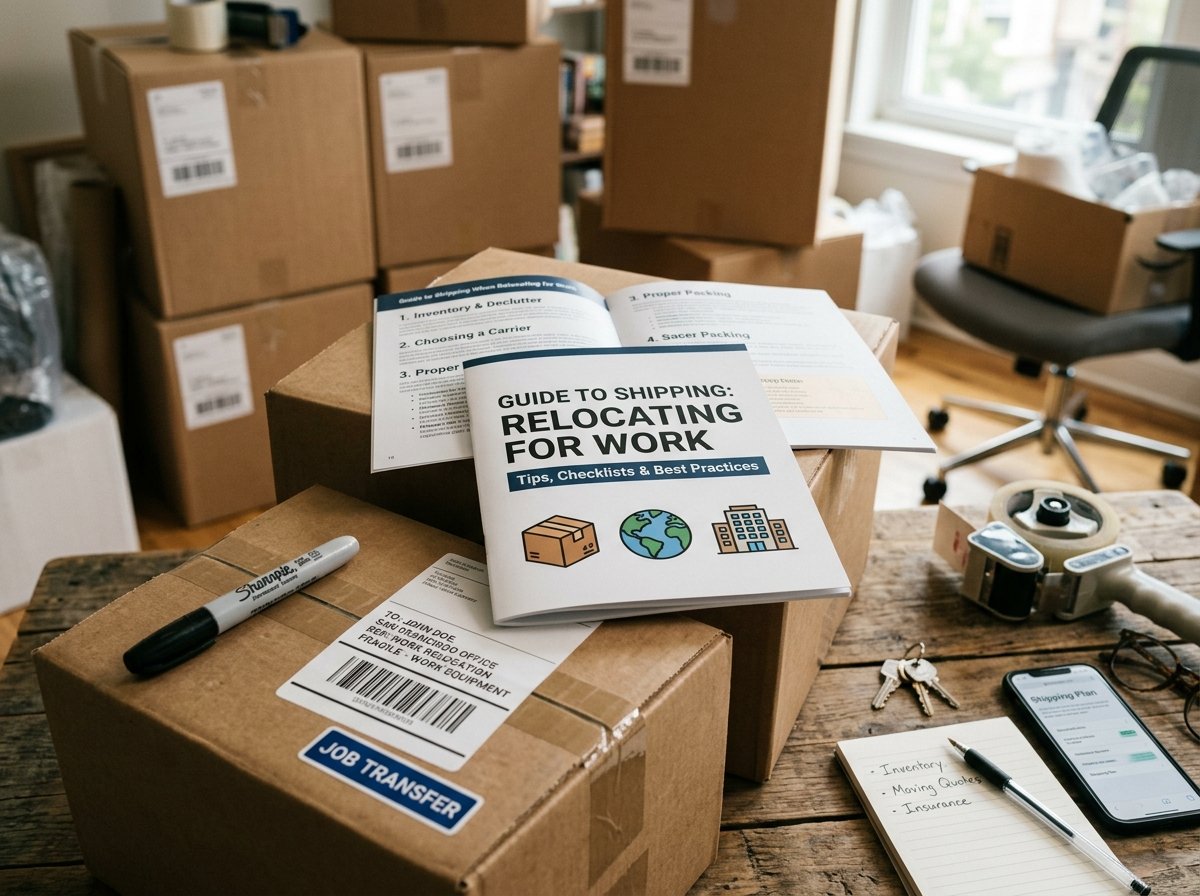
You just got that job offer. Different city — maybe even a different country. Exciting, right? But within minutes, the real panic hits: “How do I move all my stuff there?”
Here’s a stat that might surprise you. According to a 2024 survey by Allied Van Lines, nearly 68% of employees who relocated for work said the logistics of moving their belongings was more stressful than adjusting to the new job itself. And honestly? That makes complete sense.
You’re not just packing boxes. You’re making dozens of decisions — what to ship, how to ship, which courier to trust, how to protect fragile items, what’s even allowed across borders. And all this while wrapping up your current job, saying goodbyes, and figuring out your new apartment.
This guide is for you. Whether you’re shifting within your own country or moving internationally for a new role, I’ll walk you through every step of shipping your belongings during a work relocation. No fluff, no overwhelming lists — just practical, tested advice from real experience.
Why Shipping for Work Relocation Is Different From Regular Moving
Let’s clear something up right away. Moving for work isn’t the same as a casual house shift. The timeline is tighter, the stakes are higher, and your employer might be covering part of the cost — which means you need receipts, documentation, and a clean paper trail.
When you relocate for a regular reason, you usually have flexibility. You pick your dates, you take your time, you drive a rental truck if you want. But work relocations come with deadlines. Your start date is fixed. Your new team is expecting you. And you can’t show up to your first day sleeping on the floor because your mattress is stuck in transit.
There’s also the emotional angle nobody talks about. You’re already dealing with the stress of a new job, new city, maybe new culture. The last thing you need is a shipping disaster on top of that. So the smarter you plan this, the smoother everything feels.
Quick fact: Many companies offer a relocation allowance or package. Before you spend a single penny on shipping, check with your HR department. Some employers cover full moving costs, others give a lump sum, and some reimburse specific expenses. Knowing this upfront changes your entire shipping strategy.
Deciding What to Ship and What to Leave Behind
This is the part where most people waste time and money. They try to ship everything — including things that cost more to ship than to replace.
Think about it this way. That old bookshelf you bought for $40? Shipping it domestically might cost $60–80. Internationally? Could be $150+. It doesn’t make financial sense.
Here’s a practical way to sort your belongings. Sit in each room and mentally divide your stuff into three categories. First, things that are irreplaceable or have sentimental value — family photos, personal documents, that guitar your dad gave you. These absolutely ship with you, no question. Second, things that are expensive but replaceable — your TV, kitchen appliances, office chair. Do the math on shipping cost versus replacement cost in your new city. Third, things that are cheap and easy to replace — basic furniture, old linens, random kitchen utensils. These usually aren’t worth shipping.
Most people who relocate for work find that they’re better off shipping 50–60% of what they own and selling, donating, or storing the rest. It feels scary to let go, but your wallet will thank you.
Pro tip: If you’re shipping musical instruments, artwork, or anything fragile, these need special attention. You can check out how to ship musical instruments or how to ship artwork and paintings for detailed packing advice specific to those items.
Shipping vs. Moving Companies — Which One Makes Sense for You?
This is a question that comes up on every Reddit thread about work relocation. And the answer honestly depends on how much stuff you have.
Moving companies are best when you’re shipping an entire household — furniture, appliances, boxes of personal items, the whole nine yards. They show up, pack everything, load it on a truck (or container), and deliver it to your new place. It’s a full-service experience. But it comes with full-service pricing too. A domestic move across states in the US can cost $2,000–$5,000 for a one-bedroom apartment. International moves? Easily $3,000–$10,000+, depending on distance and volume.
Courier and shipping services like DHL, FedEx, or UPS make more sense when you’re shipping specific boxes and packages rather than an entire household. If you’ve trimmed your belongings down and you’re sending maybe 5–15 boxes plus a few odd-sized items, couriers can be significantly cheaper. You also get better tracking, faster transit times for smaller shipments, and more flexible pickup options.
There’s also a middle ground — freight shipping. If you have more than what couriers can handle but less than what requires a full moving company, freight services (both air and sea) can be the sweet spot. You essentially rent part of a shipping container.
The comparison between shipping and moving companies in terms of cost is worth reading if you’re stuck between these options. It breaks down when each option actually saves you money.
Choosing the Right Shipping Method
Not all shipping is created equal. The method you choose affects your cost, delivery time, and even how you need to pack.
Ground Shipping
Best for domestic relocations within the same country. It’s the most affordable option for heavy and bulky items. The tradeoff? It’s slower. A cross-country ground shipment in the US can take 5–10 business days. Within smaller countries or neighboring states, it might be 2–4 days.
Ground shipping works beautifully for things like boxes of clothes, books, kitchenware, and non-fragile items. If you’re curious about the pros and cons of ground vs air shipping, that comparison gives you a really clear picture.
Air Shipping
Faster, pricier. Air shipping makes sense when you need certain items quickly — like your work laptop, professional wardrobe, or essential documents. Most international air shipments arrive within 3–7 business days.
The cost is calculated differently too. Air carriers use something called dimensional weight, where they compare the package’s actual weight against its size and charge based on whichever is higher. This means light but bulky items can be surprisingly expensive to air ship. Understanding how dimensional weight works can literally save you hundreds of dollars if you pack smartly.
Sea Freight
For international relocations, sea freight is the budget-friendly champion for large volumes. You’re looking at 4–8 weeks for delivery, so it requires planning well in advance. But the cost savings are massive — sea freight can be 60–70% cheaper than air for the same volume.
A smart approach? Ship your non-urgent bulk items by sea a month or two before your move date. Then air ship the essentials you need immediately.
Packing Your Belongings the Right Way
Bad packing is the number one reason people end up with damaged items after a relocation. And the frustrating part? It’s completely avoidable.
Here’s where most people go wrong — they underestimate how rough the shipping process is. Your boxes will be stacked, tossed, loaded onto trucks, maybe transferred between vehicles, and handled by multiple people. That “fragile” sticker? It helps, but it doesn’t guarantee gentle handling.
Start with the right boxes. Don’t just grab random boxes from behind the grocery store. Those are designed for shelving, not for surviving transit. Invest in proper shipping boxes — sturdy corrugated cardboard rated for the weight you’re putting in them. The guide on choosing the right box size is genuinely helpful here because using a box that’s too big or too small causes most damage.
For fragile items, bubble wrap is your best friend. But how much do you actually need? Most people either use too little (items break) or too much (shipping cost goes up because of increased package size). There’s a practical breakdown on how much bubble wrap you really need that takes the guesswork out.
A few packing principles that work every time — fill empty space inside boxes with crumpled packing paper or foam peanuts so items don’t shift during transit. Place heavier items at the bottom, lighter ones on top. Wrap each fragile item individually before placing it in the box. And tape the bottom of every box with at least two strips of packing tape in an H-pattern. You’d be amazed how many boxes split open from the bottom because of a single weak strip of tape.
Electronics Need Extra Attention
Your laptop, gaming console, monitors — these are probably your most valuable non-sentimental items. Electronics are sensitive to impact, temperature changes, and static electricity.
If you still have the original packaging, use it. Manufacturers design those boxes specifically to protect that exact product. If you don’t have original boxes, wrap electronics in anti-static bubble wrap first, then regular bubble wrap, and place them in a snug-fitting box. For phones and laptops specifically, the guide on shipping mobile phones and laptops covers the dos and don’ts you should know.
Warning: Always back up all your data before shipping electronics. Hard drives can fail from shock impact even when well-packed. Cloud backups or an external drive you carry with you personally are non-negotiable.
Understanding Shipping Costs and Getting the Best Deal
Shipping costs for a work relocation can range from a few hundred dollars for a domestic move with limited items to several thousand for an international move. The variables that affect your cost are weight, dimensions, distance, shipping speed, and any special handling requirements.
Most courier services calculate rates using the higher of actual weight versus dimensional weight. So a large, lightweight box of pillows might cost as much to ship as a small, heavy box of books. This is why efficient packing matters — not just for protection, but for your budget.
Get quotes from at least three different services before committing. And don’t just look at the base rate. Ask about fuel surcharges, residential delivery fees, insurance costs, and customs duties (for international moves). That “cheap” quote can sometimes double after hidden fees get added. The resource on how shipping rates are actually calculated pulls back the curtain on how couriers price their services.
If you’re shipping a large number of boxes, ask about bulk or volume discounts. Many couriers and freight companies offer reduced rates when you’re shipping 10+ packages at once. It’s not always advertised, so you might need to call and negotiate directly.
Insurance — Don’t Skip This
Here’s something I’ve seen go wrong too many times. Someone ships $3,000 worth of belongings and skips the $50–100 insurance because “nothing will happen.” Then a box goes missing or arrives damaged, and they’re stuck with a basic carrier liability that covers maybe $100.
For a work relocation, get shipping insurance. Especially for electronics, jewelry, or anything you’d be upset about losing. Some carriers include basic coverage, but it’s usually not enough. Look into declared value coverage or third-party shipping insurance. You can read more about insurance options for shipped packages to understand what’s actually covered and what’s not.
International Work Relocations — The Extra Layer of Complexity
If your new job is in a different country, everything I’ve mentioned so far still applies — but with additional layers of paperwork, customs regulations, and restrictions.
Customs Documentation
Every country requires customs declarations for incoming shipments. You’ll need to list every item in your boxes with descriptions and estimated values. For personal effects (not commercial goods), most countries offer duty-free or reduced-duty import — but only if you fill out the right paperwork.
Common documents you’ll need include a detailed inventory list, your passport copy, visa or work permit, proof of employment in the new country, and sometimes a letter from your employer confirming the relocation. Start gathering these documents early. Customs delays are the most common reason international relocation shipments get held up.
Restricted and Prohibited Items
Every country has different rules about what you can and can’t bring in. Food items, plant products, certain medications, alcohol, and even some electronics might be restricted. Shipping something that’s not allowed can result in your entire shipment being held, fined, or destroyed at customs.
If you’re moving to specific countries, check the shipping restrictions. For example, shipping restrictions to the US, UK shipping restrictions, and Australian shipping restrictions all have their own quirks that can catch you off guard.
Did you know? Australia has some of the strictest biosecurity laws in the world. Even wooden furniture or packaging materials might need treatment certificates. Sending untreated wooden items to Australia can result in your shipment being fumigated (at your expense) or rejected entirely.
Timing Your International Shipment
For international work relocations, timing is everything. Sea freight takes 4–8 weeks, so you need to ship well before your departure date. Air freight takes 3–7 days but costs significantly more.
A practical approach many relocators use: Ship your bulk items by sea 6–8 weeks before your move date. Pack two large suitcases with everything you need for the first month — clothes, toiletries, essential documents, a few kitchen basics. Then air ship one or two boxes of important items you couldn’t fit in your luggage but need within the first week.
Creating a Shipping Timeline for Your Relocation
Winging it doesn’t work for relocation shipping. You need a timeline, even a rough one. Here’s what a realistic schedule looks like.
6–8 weeks before your move: Start sorting your belongings. Decide what ships, what gets sold, and what gets donated. Request quotes from shipping and moving companies. Check if your employer covers relocation costs and submit any required pre-approval paperwork.
4–6 weeks before: Order packing supplies. Start packing non-essential items — off-season clothes, books, decorations, kitchen items you won’t need in the coming weeks. If shipping internationally by sea, this is when your shipment needs to go.
2–3 weeks before: Pack the bulk of your remaining items. Schedule courier pickups or moving company dates. Confirm delivery addresses and contact information. Make sure your customs paperwork is complete for international moves.
1 week before: Pack your essentials suitcase — the things you’ll carry with you. Do a final check on tracking numbers and shipment statuses. Confirm someone will be available at the destination to receive deliveries.
Pro tip: Create a master spreadsheet listing every box number, its contents, its shipping method, tracking number, and expected delivery date. This sounds tedious, but trust me — when you’re in a new city and you need to find your phone charger or your work shoes, that spreadsheet becomes gold.
What Your Employer’s Relocation Package Might Cover
Not all relocation packages are created equal. Some are generous, some are minimal, and some are surprisingly flexible if you ask the right questions.
Typical employer relocation benefits can include a lump sum payment for moving expenses, direct payment to a moving or shipping company, temporary housing allowance for your first few weeks, travel costs to the new city, and sometimes even a “settling in” allowance for buying things you couldn’t bring.
Here’s what most people don’t realize — relocation packages are often negotiable, especially for mid-to-senior level positions. If the standard package covers $2,000 for shipping but your actual cost is $3,500, ask if they’ll cover the difference. The worst they can say is no. Many companies have a range they can work within, and HR teams expect candidates to ask.
Keep every single receipt related to your relocation. Even expenses your employer doesn’t directly cover might be tax-deductible in many countries. In the US, while the Tax Cuts and Jobs Act of 2017 suspended moving expense deductions for most employees through 2025, active-duty military members still qualify. Tax laws may change, so check the latest 2025–2026 rules with a tax advisor.
Tracking Your Shipments and Handling Problems
Once your boxes are on their way, the waiting game begins. And this is where knowing how tracking works really helps reduce stress.
Most major couriers provide real-time tracking. But the status updates can be confusing if you don’t know what they mean. “In transit” is straightforward. But what about “shipment exception” or “held at customs” or “delivery attempted”? The guide on understanding tracking statuses is really handy reference material to bookmark during your relocation.
What if something goes wrong? Packages do occasionally get lost, damaged, or delivered to wrong addresses. If a package is marked delivered but hasn’t actually arrived, don’t panic — there are specific steps you can take. Contact the carrier immediately, check with neighbors, and file a trace request within 24 hours.
For lost or damaged shipments, knowing how to file a claim properly is important. There are time limits on claims (usually 15–60 days depending on the carrier), and you’ll need photos, receipts, and your tracking information ready.
Special Situations — Pets, Vehicles, and Oversized Items
Some relocation needs go beyond boxes and suitcases.
Furniture: If you’re bringing large furniture pieces, standard courier services won’t cut it. You’ll need freight shipping or a moving company. International furniture shipping has its own set of rules around wood treatment, disassembly requirements, and customs documentation.
Vehicles: Shipping a car during relocation is a whole separate process involving auto transport companies, title documentation, and potentially import duties. If you’re only relocating domestically and the distance is drivable, sometimes the simplest option is to drive the car yourself and ship everything else.
Pets: This deserves its own research because regulations vary wildly by country. Most countries require health certificates, specific vaccinations (rabies is universal), microchipping, and sometimes quarantine periods. Airlines and pet transport services handle this, not regular couriers. Start this process at least 2–3 months before your move.
FAQ
Can I ship personal belongings internationally without paying customs duties?
Most countries allow duty-free import of personal effects and used household goods when you’re relocating permanently. But you’ll need proper documentation — proof of residency in the new country, a detailed inventory, and sometimes a customs declaration form. New, unopened items are more likely to attract duties. Check your destination country’s customs website for specific rules and thresholds.
How far in advance should I start planning my relocation shipment?
Start at least 6–8 weeks before your move date if shipping internationally, and 3–4 weeks for domestic relocations. Sea freight needs the most lead time (up to 8 weeks for delivery), while air shipping is faster but more expensive. The earlier you start getting quotes and packing, the less stressful the entire process will be.
Should I buy shipping insurance for a work relocation?
Yes, absolutely. Standard carrier liability typically covers very little — sometimes as low as $0.50 per pound of package weight. For a relocation where you’re shipping valuable electronics, clothing, and personal items potentially worth thousands of dollars, a proper insurance policy (usually 1–3% of declared value) gives you genuine protection against loss and damage.
What items should I carry with me instead of shipping?
Always keep original documents (passport, visa, employment letter, birth certificate, degrees), medications, a few days of clothing, your laptop or tablet, chargers, jewelry, and anything with immediate sentimental value in your carry-on or personal luggage. These are either irreplaceable, time-sensitive, or too valuable to risk in a shipment.
Will my employer reimburse shipping costs even if they don’t offer a formal relocation package?
It depends on the company, but it’s always worth asking. Many employers — especially startups and mid-size companies — don’t have a formal relocation policy but are willing to cover reasonable moving expenses for the right candidate. Get any agreements in writing before you spend money. Even a partial reimbursement makes a significant difference.
Your Move, Your Terms
Relocating for work is one of those life events that’s equal parts exciting and overwhelming. The job part? You’ve got that handled — that’s why they hired you. The shipping and moving part? That’s what this guide is here for.
The biggest takeaway is simple: plan early, pack smart, and don’t try to move everything you own. Your new city is a fresh start, and sometimes traveling lighter makes that fresh start feel even better.
Get your quotes this week. Start sorting your belongings this weekend. And remember — thousands of people ship their lives across cities and countries for work every single month. With the right planning, you’ll look back on this move and wonder why you were ever stressed about it.