
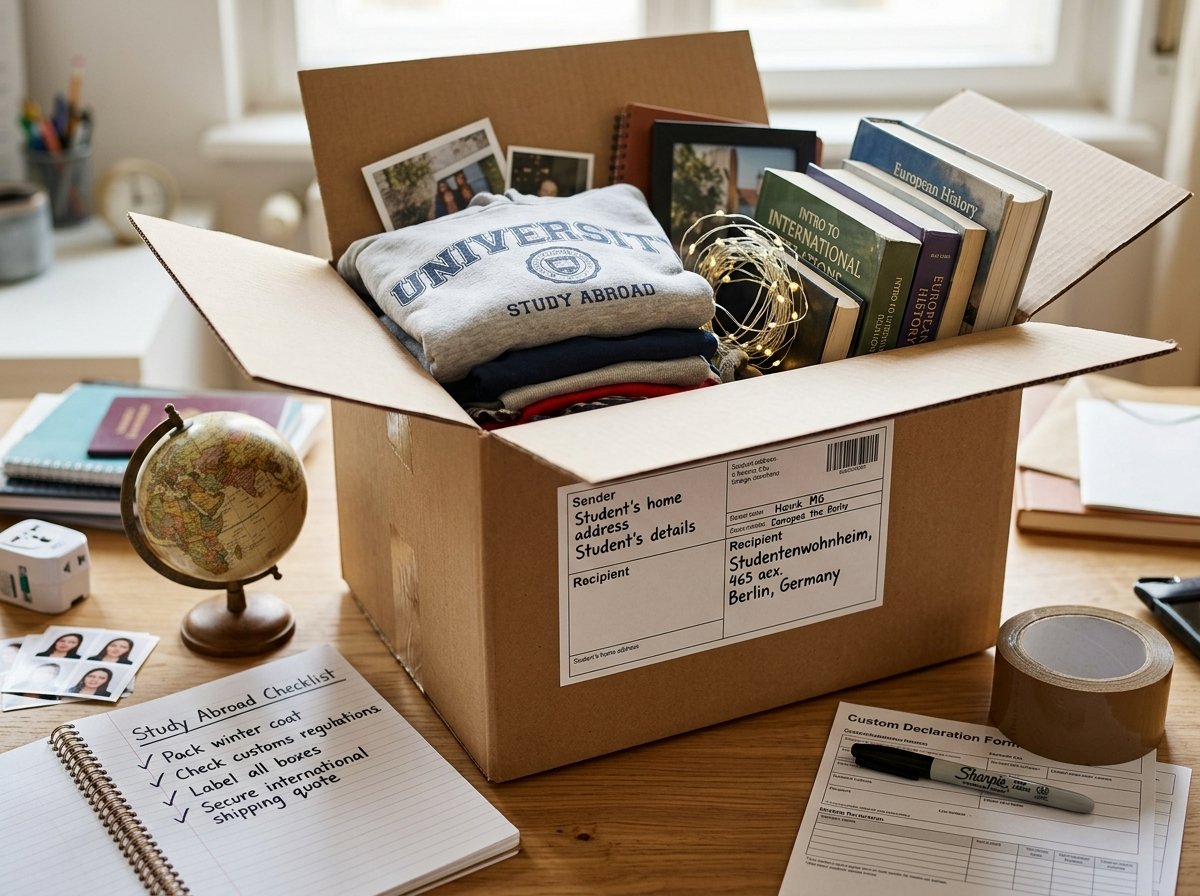
Picture this — your university admission is confirmed, your visa is stamped, and excitement is through the roof. Then you look at your room and realize: “How on earth do I get all this stuff to another country?”
You’re not alone. Every year, hundreds of thousands of students face this exact headache. Whether you’re heading to the UK, USA, Canada, Australia, or Germany, figuring out how to ship personal effects as a student can feel overwhelming. Between airline baggage limits, customs paperwork, and the fear of your favourite kurta getting lost somewhere over the Atlantic — there’s a lot to think about.
But here’s the good news. Shipping your belongings abroad doesn’t have to be stressful, expensive, or confusing. You just need the right plan. And that’s exactly what we’re going to build together in this guide — step by step, no jargon, no fluff.
Why Students Even Need to Ship Stuff Separately
Let’s talk about the obvious question first. Why not just pack everything in your suitcases?
Well, most international airlines allow 1–2 checked bags (typically 23 kg each). That sounds like enough until you start packing. Books, a laptop, winter clothes, shoes, bedsheets, a rice cooker your mom insists you take — it adds up fast. And excess baggage fees? They’re brutal. Airlines charge anywhere from ₹3,000 to ₹15,000 per extra bag, depending on the route and carrier.
Shipping separately often turns out cheaper per kilogram than paying airline excess baggage fees, especially if you’re sending 30 kg or more. Plus, you don’t have to drag five suitcases through three airports and a bus terminal.
There’s also the practical side. Some items — like books, kitchen supplies, and extra bedding — aren’t urgent. You don’t need them on Day 1. Shipping them a couple of weeks early or having them arrive a week after you do makes perfect sense.
Pro Tip: Make two mental categories. “Carry with me” for essentials (documents, electronics, a few days of clothes). “Ship separately” for everything else.
What Can You Actually Ship as Personal Effects?
This is where a lot of students get confused. Personal effects, by customs definition, are used items meant for your personal use — not for resale, not brand new in packaging, and not commercial goods.
Here’s what typically qualifies: clothing, books, stationery, toiletries (with restrictions), small kitchen appliances, bedding, personal electronics like a spare tablet, photo frames, and similar everyday items.
What doesn’t qualify or gets tricky: food items (especially homemade ones — yes, your mom’s pickle jar might get stopped), medicines without prescriptions, large quantities of anything that looks “commercial,” and items restricted by the destination country.
Every country has its own import rules. Australia, for instance, is extremely strict about food, wood, and plant-based items. The UK and USA have their own lists too. Before packing anything, check the shipping restrictions for your destination country so you don’t end up with your box held at customs.
Did you know? Many countries allow students to import personal effects duty-free if they can prove they’re moving for studies. You’ll typically need your university admission letter, visa copy, and a declaration that the items are personal and used.
Choosing the Right Shipping Method
This is the big decision. And it depends on three things: your budget, your timeline, and how much stuff you’re sending.
Air Freight
Fast, reliable, and more expensive. Your shipment reaches within 5–10 days. Air freight works well if you’re shipping under 30–40 kg. The cost varies wildly based on the destination, but expect somewhere around ₹800–₹2,000 per kg for most popular student destinations.
Best for: Documents, electronics, clothes you’ll need soon, smaller shipments.
If you’re debating between speed and cost, understanding economy vs express international shipping can help you pick the right service tier.
Sea Freight
Slow but significantly cheaper. Sea freight takes anywhere from 4–8 weeks depending on the route. But the cost per kg drops dramatically — sometimes to ₹200–₹500 per kg for larger shipments.
Best for: Books (especially if you’re shipping a lot of them), kitchen items, extra clothes, bedding, and anything you won’t need immediately.
There’s a helpful breakdown of ground vs air shipping pros and cons that covers similar trade-offs if you want to dig deeper.
International Courier Services
Companies like DHL, FedEx, UPS, and Aramex offer door-to-door international shipping. You pack your box, they pick it up from your home, handle customs, and deliver it to your new address abroad. It’s convenient and trackable, but pricier than cargo services for heavy shipments.
If you’re comparing specific couriers, this DHL vs FedEx international shipping comparison breaks down pricing, speed, and service quality side by side.
Student Specialist Services
Companies like Send My Bag, My Baggage, Uni Baggage, and Seven Seas Worldwide specifically cater to students. They often offer flat-rate box pricing, student discounts, and simplified customs handling. These services are worth looking into because they’ve designed their entire process around exactly your situation.
How to Pack Your Belongings for International Shipping
Packing for international shipping isn’t the same as packing a suitcase. Your box will be handled by multiple people, loaded onto trucks, possibly stacked under heavier boxes, and travel thousands of kilometres. It needs to survive all of that.
Pick the Right Box
Use strong, double-walled corrugated cardboard boxes. Don’t reuse an old Amazon box that’s already been through one delivery — it’s structurally weaker than you think. Most courier and shipping services sell their own branded boxes that meet their size and strength requirements. Buying theirs also avoids any dimension-related issues later.
Not sure which box works for what? This guide on choosing the right box size explains it really well.
Protect Fragile Items
If you’re shipping anything fragile — a photo frame, a small gadget, ceramic items — wrap each piece individually in bubble wrap or thick newspaper. Place heavier items at the bottom and lighter, fragile ones on top. Fill empty spaces with crumpled newspaper, old t-shirts, or packing peanuts so nothing shifts during transit.
One thing students often overlook: common packaging mistakes that actually cause damage. Worth a quick read before you seal that box.
Distribute Weight Evenly
Don’t put all your books in one box. A 35 kg box of books is a nightmare to handle, and it’s more likely to get damaged (or exceed the carrier’s weight limit). Split heavy items across multiple boxes and mix them with lighter stuff like clothes or towels.
Most courier services have a per-box weight limit of 25–30 kg. Check this before you start packing.
Label Everything Clearly
Write your full name, destination address, phone number, and email on each box — on the top AND on at least one side. Use a permanent marker, and consider putting a copy of this information inside the box too, just in case the external label gets damaged.
Understanding Customs, Duties, and Paperwork
Here’s the part most students dread. Customs. But honestly, it’s not as complicated as it sounds — especially for personal effects.
The Basic Documents You’ll Need
Almost every international shipment requires a customs declaration form. Your shipping company will usually provide this. You’ll list what’s inside each box, the approximate value of the items, and declare that they’re personal belongings, not for commercial sale.
Beyond the customs form, keep these documents handy: your passport copy, visa copy, university admission/enrollment letter, and a packing list (a simple spreadsheet works — item name, quantity, approximate value).
Duty-Free Allowances for Students
Many countries offer duty-free import of personal effects for students and people relocating. The UK, for example, allows transfer of residence relief (ToR) if you’re moving for at least 12 months. Australia has similar provisions under its passenger concession scheme.
The key condition? The items must be used and for personal use. If you ship a brand-new PlayStation 5 still in its sealed box, customs might classify it differently and charge duty on it.
Warning: Always declare the accurate value of your items. Under-declaring might save you a few dollars in theory, but if customs inspects your shipment (and they do random checks), you could face fines, delays, or even confiscation.
Country-Specific Quirks
Some things to watch out for based on popular student destinations:
USA: The Customs and Border Protection (CBP) requires detailed declarations. Prescription medicines must have a doctor’s prescription. Food items (especially meat, dairy, and produce) face strict restrictions. Check shipping restrictions to USA before shipping.
UK: Post-Brexit rules mean all shipments from outside the UK go through customs. Students can claim Transfer of Residence relief but need to apply properly. Read up on shipping restrictions to UK to avoid surprises.
Australia: Probably the strictest. Biosecurity laws mean anything organic — food, wooden items, straw-based products — can get flagged. The shipping restrictions to Australia page covers what’s allowed and what’s not.
How Much Will It Cost? (Real Numbers)
Let’s talk money, because that’s ultimately what drives most student decisions.
Shipping costs depend on weight, dimensions, origin country, destination country, speed of delivery, and the service you choose. But here are some rough benchmarks for shipping from India (as of 2025):
Air courier (DHL/FedEx): ₹1,200–₹2,500 per kg to USA/UK/Canada. A 20 kg shipment could cost ₹25,000–₹50,000.
Sea freight: ₹15,000–₹30,000 for a standard box (up to 30 kg) to most destinations. Takes 6–8 weeks.
Student specialist services: Often ₹8,000–₹20,000 per box (up to 25–30 kg), depending on destination and speed. These tend to offer the best value for students.
Understanding how shipping rates are calculated can help you optimize your costs. Many carriers charge based on dimensional weight, not just actual weight. That means a large but light box could cost more than a small but heavy one. This dimensional weight guide explains the formula clearly.
Pro Tip: Pack tightly and use the smallest box that fits your items. You’re paying for space, not just weight.
Timing Your Shipment Right
Timing matters more than most students realize.
If you’re using sea freight, you need to ship at least 6–8 weeks before you need your items. That means if your classes start in September, you should be shipping by mid-July at the latest.
For air freight or courier, 2–3 weeks before your arrival is usually safe.
Here’s a practical timeline for a September intake:
June: Finalize your packing list. Research shipping services and get quotes. Start collecting documents (visa copy, admission letter).
July (first two weeks): Pack your boxes. Book your shipment. Complete customs paperwork.
July (last two weeks): Ship via sea freight. Or wait until August and ship via air.
August: Ship any remaining items via air courier. These should arrive around the time you do — or shortly after.
Don’t wait until the last week before your flight. You’ll end up paying rush fees, making packing mistakes, and stressing yourself out unnecessarily.
Should You Buy Insurance?
Short answer: yes, if you’re shipping anything you can’t easily replace.
Most courier and shipping services offer optional insurance. It typically costs 2–5% of the declared value of your items. So for a shipment valued at ₹50,000, insurance might cost ₹1,000–₹2,500.
Is it worth it? Think about it this way. If your box gets lost or damaged, will you be okay replacing everything from scratch in a foreign country at foreign prices? A winter jacket that costs ₹3,000 in India might cost ₹15,000 in London.
For a deeper look at how shipping insurance works, check out this guide on insurance for shipped packages.
Quick Fact: Most basic shipping services include liability coverage of around $100 or less. That barely covers one textbook in some countries. Dedicated insurance fills that gap.
Tracking Your Shipment
Once your shipment is on its way, you’ll want to know where it is. Every major courier provides a tracking number. Use it.
But here’s what students often don’t know — tracking updates for sea freight are much less frequent than air courier. Your sea freight box might show “departed origin port” for three weeks straight, and that’s completely normal. Don’t panic.
For air courier shipments, you’ll get more detailed updates: picked up, at origin facility, in transit, at customs, out for delivery. If a status confuses you, this tracking statuses guide explains what each one actually means.
Pro Tip: Save your tracking number in your phone’s notes app AND email it to yourself. You don’t want to dig through a pile of papers in a new country trying to find it.
What to Carry With You vs. What to Ship
This is a question every student struggles with. Here’s a simple way to think about it.
Carry with you (in your suitcase/carry-on):
Your important documents — passport, visa, admission letter, accommodation proof, medical records. Enough clothes for 3–5 days. Essential medicines. Your laptop, phone, and chargers. Some cash in local currency. One pair of comfortable walking shoes.
Ship separately:
Extra clothing (especially bulky winter wear). Books and study materials. Bedding and towels. Kitchen items (if your accommodation doesn’t provide them). Personal care products in larger quantities. Sentimental items like photo albums or small decor pieces.
If you’re shipping electronics like a spare laptop or tablet, there are specific packing and insurance tips worth following. This guide on shipping phones and laptops covers the details.
Real Mistakes Students Make (And How to Avoid Them)
I’ve seen students make the same mistakes over and over. Let me save you from them.
Shipping food without checking rules. Your mom’s homemade achaar, that packet of masala, the box of sweets — these can cause your entire shipment to get held or even rejected at customs. Always verify food import rules for your destination country.
Packing new, tagged items. If customs sees price tags and sealed packaging, they may classify your shipment as commercial goods. Remove tags, take items out of retail packaging, and make them look “used.”
Not getting quotes from multiple services. The price difference between two shipping companies for the same box can be 30–50%. Spend an hour comparing courier quotes — it could save you thousands.
Forgetting to update the delivery address. If your university accommodation address isn’t confirmed yet, don’t ship to a random address. Many shipping companies let you hold the shipment at a local depot until you’re ready. Ask about this option.
Under-packing or over-packing boxes. A half-empty box gets crushed. An overstuffed box bursts. Pack firmly but not to the point where the box is bulging.
FAQ Section
Can I ship home-cooked food or spices to my university abroad?
It depends entirely on the destination country. The USA and Australia have strict rules against many food items — especially homemade foods, dairy, meat products, and fresh produce. Commercially packaged, sealed spices are generally okay for most countries, but always check the specific import regulations. When in doubt, leave it out.
How early should I start planning my shipment?
Start at least 2–3 months before your departure date if you’re considering sea freight. For air courier, 3–4 weeks is usually enough. The planning phase — getting quotes, collecting documents, packing properly — takes longer than most students expect. Don’t wait until the last minute.
Is it cheaper to ship separately or pay airline excess baggage fees?
For anything over 30 kg, shipping separately almost always works out cheaper. Airlines charge ₹3,000–₹15,000 per extra bag, and each bag has a strict weight limit. A student shipping service might charge ₹10,000–₹15,000 for a 30 kg box — which would cost you at least ₹6,000–₹30,000 as excess luggage on most airlines. Plus, you don’t have to physically carry it all.
What happens if my shipment gets stuck at customs?
Usually, customs holds a shipment because of incomplete paperwork or restricted items. Your shipping company will typically contact you and guide you through the clearance process. You might need to provide additional documents or pay a small duty. If a restricted item is found, it may be confiscated but the rest of the shipment is usually released.
Can I claim my shipped items as duty-free?
Many countries allow duty-free import of personal effects for students relocating for education — but you need to meet specific conditions. The items must be used, for personal use, and you typically need to show your student visa and admission letter. Rules vary by country, so check with your destination country’s customs authority or your shipping provider.
Your Next Step
Shipping your personal effects abroad as a student isn’t rocket science. It’s really just a checklist: decide what to ship, pick the right service, pack carefully, sort your paperwork, and give yourself enough time.
The biggest regret most students have? Not shipping more stuff from home and ending up buying expensive replacements abroad. So take that extra hour to plan it out.
If you’re also dealing with a full relocation — not just a few boxes but furniture, large items, and everything in between — this guide on shipping belongings when moving abroad covers the bigger picture really well.
Start with one simple task today: make a list of everything you want to take. Just that. Once you see it all written down, the rest of the planning falls into place naturally. You’ve got this — and your future self, unpacking familiar things in a new country, will thank you for it.