
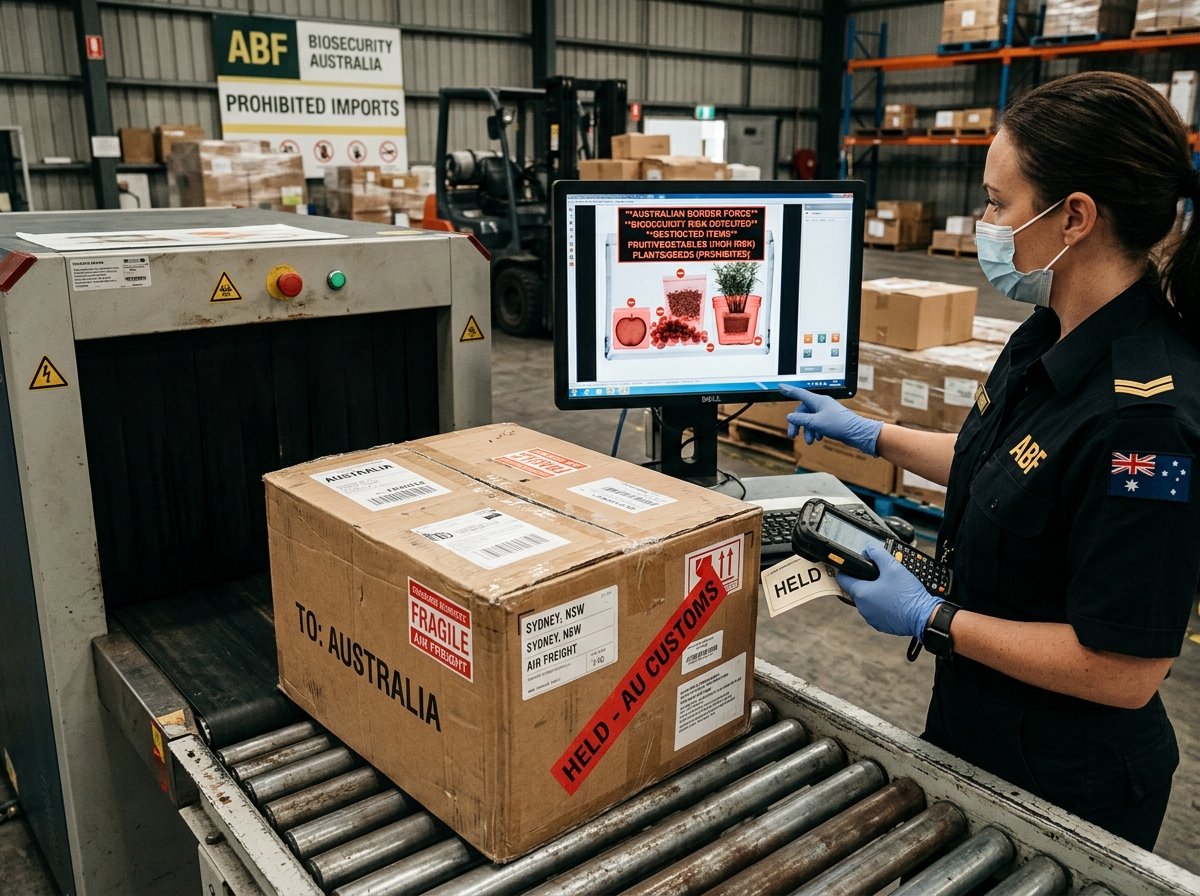
Australia once turned away an entire container of wooden furniture because inspectors found a single live beetle larva hidden inside the timber. That’s not an exaggeration — it’s how seriously the Australian Border Force (ABF) and the Department of Agriculture, Fisheries and Forestry (DAFF) treat biosecurity.
If you’re planning to ship something to Australia — whether it’s a gift for a friend in Melbourne, stock for your online store, or your personal belongings for a big move — you need to understand what’s allowed and what’s not. Because Australia doesn’t just have a few restrictions here and there. It has one of the strictest import control systems in the world.
And honestly? There’s a good reason for it. Australia is an island continent with unique wildlife and ecosystems. One invasive species, one contaminated food item, or one unchecked pest can cause real damage. That’s why their rules are tight, and penalties for breaking them are harsh.
This guide walks you through everything — banned items, restricted goods, food rules, biosecurity requirements, documentation, and practical tips to make sure your shipment actually gets through customs without being seized, returned, or destroyed.
Why Australia’s Shipping Rules Are So Strict
You might wonder — why is Australia so much more particular than, say, shipping to the US or UK? The answer lies in geography and biology.
Australia has been geographically isolated for millions of years. That isolation gave rise to species found nowhere else on Earth — kangaroos, platypuses, koalas, and thousands of plant species. But it also means Australian ecosystems are extremely vulnerable to foreign threats. A single invasive insect or plant disease introduced through a carelessly packed shipment can cause billions of dollars in agricultural damage.
The 2019 brown marmorated stink bug interceptions, for instance, led to entire ships being turned away from Australian ports. Australia’s biosecurity laws, governed primarily by the Biosecurity Act 2015, give border officials broad powers to inspect, quarantine, treat, or destroy any imported goods they deem risky.
So this isn’t about bureaucracy for the sake of bureaucracy. If you want your shipment to arrive safely, you play by their rules. And if you’ve previously dealt with shipping restrictions to the USA or shipping restrictions to the UK, know that Australia’s requirements go a step further, especially around organic materials and food products.
Items Completely Banned From Shipping to Australia
Let’s start with the hard no’s — things you simply cannot send to Australia under any circumstances. These items will be confiscated and destroyed at the border, and you could face fines starting at AUD 2,664 for individuals (as of 2025) or even criminal prosecution for serious violations.
Drugs and narcotics are an obvious one. Any controlled substances, including marijuana (regardless of legality in the sender’s country), are prohibited. This extends to certain prescription medications without proper documentation.
Weapons and ammunition are banned unless you hold an Australian import permit, which is extremely difficult to get for personal shipments. This includes firearms, crossbows, tasers, pepper spray, knuckle dusters, and even certain martial arts equipment like nunchakus or throwing stars.
Counterfeit goods — fake branded items, pirated DVDs, knockoff handbags — will be seized and destroyed. Australian customs works closely with brand owners and has sophisticated detection methods.
Certain animal products also fall under a complete ban. Ivory, products from endangered species (covered under CITES), and certain fur or skin products cannot enter Australia. This applies even if the item is vintage.
Soil and sand — you can’t send these to Australia. Even small amounts of soil attached to shoes, equipment, or plant roots will trigger quarantine action.
Pornographic material involving minors is a criminal offense to import. Australia also restricts certain other adult content that may be legal elsewhere.
⚠️ Warning: Australia’s definition of “weapon” is broader than many countries. Items like laser pointers above 1mW, certain types of knives, and body armor all require permits or are outright banned. Always check the ABF’s list before shipping.
For a broader look at what’s universally prohibited across borders, check out this detailed guide on items banned from international shipping.
Restricted Items That Need Permits or Special Conditions
Banned items are straightforward — you can’t send them. Restricted items are trickier. You can send them, but only if you meet specific conditions, get the right permits, or follow certain packaging and documentation rules.
Food and Edible Products
This is where most people get tripped up. Australia’s food import rules are incredibly specific, and they change depending on the type of food, how it’s processed, and where it’s coming from.
Fresh fruits, vegetables, and uncooked grains are almost always prohibited without an import permit and phytosanitary certificate from the exporting country. The DAFF maintains a database called BICON (Biosecurity Import Conditions) where you can look up the exact requirements for any food item from any country.
Dairy products — including cheese, butter, and milk powder — are restricted from many countries due to concerns about foot-and-mouth disease and other livestock diseases. Some commercially packaged, shelf-stable dairy products may be allowed, but homemade or unpackaged dairy is a guaranteed rejection.
Meat and meat products face similar restrictions. Jerky, salami, cured meats, and even canned meat from certain countries will be confiscated. Australia is free of many livestock diseases common in Asia, Africa, and parts of Europe, and they want to keep it that way.
Spices, herbs, and dried foods — here’s where it gets nuanced. Commercially packaged, clearly labeled dried spices are generally fine. But homemade spice mixes, loose herbs, or dried foods with seeds can be flagged. If seeds are still viable (meaning they could sprout), they’ll be confiscated.
Honey and bee products are restricted because of concerns about bee diseases. You’ll need to check BICON for your specific country of origin.
💡 Pro Tip: If you’re sending a care package with food to someone in Australia, stick to commercially sealed, clearly labeled, and fully cooked or processed items. Homemade food — no matter how lovingly prepared — is almost always going to cause problems at customs.
Plants, Seeds, and Biological Materials
Australia takes plant imports extremely seriously. Living plants generally require an import permit from the DAFF, a phytosanitary certificate from the country of origin, and may need to go through quarantine upon arrival.
Seeds are particularly sensitive. Some seeds are completely banned, while others require testing and certification. If you’re curious about doing this properly, the guide on how to ship plants and seeds legally breaks down the process step by step.
Wooden items — including wooden packaging, pallets, and crates — must comply with ISPM 15 standards (International Standards for Phytosanitary Measures No. 15). This means the wood must be heat-treated or fumigated and carry the proper stamp. Untreated wood will be held at the border, and you’ll pay for fumigation or re-export.
Medicines and Pharmaceuticals
You can send medications to Australia, but the rules are tight. The Therapeutic Goods Administration (TGA) controls what medications can enter the country.
Prescription medications require a valid Australian prescription or a letter from the recipient’s doctor. You can typically send up to three months’ supply of a prescribed medication for personal use. Some substances that are over-the-counter in other countries are prescription-only or even banned in Australia — codeine is a good example, as it was moved to prescription-only status in Australia in 2018.
Traditional or herbal medicines from Asia and other regions are often flagged. Some contain ingredients banned in Australia or may not meet TGA standards. Always check before shipping.
Alcohol and Tobacco
You can ship alcohol to Australia for personal use, but it’s subject to customs duty and the Goods and Services Tax (GST, currently 10%). There’s also a Wine Equalisation Tax (WET) for wine. The recipient may need to pay these taxes before the shipment is released.
You cannot ship tobacco products to Australia by post as of recent regulatory changes. Commercial tobacco imports require specific licensing. If you’re thinking about shipping wine or spirits, read through the guide on how to ship alcohol and wine for packaging and legal tips.
Electronics and Batteries
Australia follows its own electrical standards (AS/NZS standards), and electronic devices technically need to comply. For personal shipments, this is rarely enforced, but for commercial imports (selling electronics in Australia), compliance is mandatory.
Lithium batteries are the bigger concern. They’re classified as dangerous goods for shipping, and most couriers have strict rules about how they can be sent. Batteries must usually be inside the device (not shipped loose), and the watt-hour rating matters. If you’re shipping a phone or laptop, the guide on shipping mobile phones and laptops covers packaging and carrier-specific rules.
For a broader understanding of what counts as dangerous goods, the dangerous goods shipping rules page is a useful reference.
Australia’s Biosecurity Inspection Process
So what actually happens when your package arrives in Australia?
Every single international mail item and cargo shipment passes through screening. Australia Post and ABF work together on mail items, while DAFF handles cargo inspections. The process typically goes like this:
Your package arrives at an international mail facility (usually in Melbourne, Sydney, Brisbane, Perth, or Adelaide). X-ray screening catches obvious issues — dense organic matter, suspicious shapes, undeclared goods. If something flags, the package moves to manual inspection.
At manual inspection, officers can open your package. They’re specifically looking for biosecurity risks (food, plant material, soil, insects), prohibited items, and anything that doesn’t match the customs declaration. If they find a problem, you get one of three outcomes: the item is treated (fumigated, irradiated), the item is destroyed, or the entire shipment is returned to the sender (at the sender’s expense).
Here’s what most people don’t realize: even packaging materials can trigger an inspection. Straw, hay, or dried grass used as cushioning? Biosecurity risk. Wooden crates without ISPM 15 treatment? Held at the border. Used cardboard with soil residue? Flagged.
💡 Pro Tip: Use clean, new packaging materials. Synthetic cushioning like bubble wrap or foam peanuts won’t trigger biosecurity concerns. If you’re unsure about the right packaging approach, this guide on common packaging mistakes that damage parcels can help you avoid costly errors.
Customs Documentation You’ll Need
Getting your documentation right is half the battle. Incomplete or inaccurate paperwork is one of the top reasons shipments get delayed at Australian customs.
Commercial Invoice — required for all non-document shipments. It should list exactly what’s in the package, the quantity, value (in your local currency), country of manufacture, and a description that’s specific enough for customs to understand. “Gift” or “household items” as a description won’t fly. Be specific: “2 cotton shirts, 1 ceramic mug, 1 box of commercially packaged tea bags.”
Customs Declaration (CN22 or CN23) — if you’re shipping via postal services, you’ll fill this out. For courier services like DHL or FedEx, they handle the commercial invoice digitally, but you still need to provide accurate information.
Import Permits — required for restricted items like plants, certain foods, medicines, and animal products. These are obtained from the relevant Australian government department before shipping.
Phytosanitary Certificates — required for plant products, issued by the agricultural authority in the exporting country.
Fumigation Certificates — if you’re shipping wooden items, furniture, or goods in wooden packaging, you may need proof of ISPM 15 treatment.
For shipments valued over AUD 1,000, the importer needs to lodge a formal customs entry through an Australian customs broker. GST (10%) applies to most imported goods, and duty rates vary by product category. As of 2018, GST also applies to low-value goods imported by consumers (items under AUD 1,000 purchased from overseas retailers), though this mainly affects ecommerce sellers.
Practical Tips for Shipping to Australia Successfully
After going through all these restrictions, you might feel like shipping to Australia is impossible. It’s not. Millions of packages arrive safely every month. The key is preparation.
Check BICON before you ship anything organic. The Biosecurity Import Conditions database (bicon.agriculture.gov.au) is the definitive source. You can search by product and country of origin to get exact requirements. It’s free and updated regularly.
Declare everything honestly on your customs form. Under-declaring values to avoid duty is illegal and can result in fines. Failing to declare food or plant items — even accidentally — can land the recipient with a penalty. Australian border officers have seen it all, and they’re very good at spotting discrepancies.
Use a reputable courier for valuable or time-sensitive shipments. If you’re comparing services, the DHL vs FedEx international shipping comparison breaks down costs, delivery times, and coverage for Australian destinations. Both DHL and FedEx have customs brokerage teams that can pre-clear your shipment and flag potential issues before your package even leaves the origin country.
Pack clean. This sounds basic, but it’s critical for Australia. If you’re shipping used shoes, clean the soles. Shipping camping gear? Remove all dirt, grass, and sand. Sending furniture? Make sure there’s no soil, bugs, or organic debris. If you’re planning to ship furniture internationally, pay special attention to wood treatment requirements.
Allow extra time. Even smooth shipments to Australia can take longer than expected because of the inspection process. Express services typically clear customs faster than standard mail, but there are no guarantees. If you’re weighing speed versus cost, the economy vs express international shipping comparison can help you decide.
Shipping Personal Belongings to Australia (Moving or Studying)
If you’re relocating to Australia — for work, study, or permanent migration — shipping your personal effects has its own set of rules.
Used personal items are generally allowed duty-free if you’ve owned and used them for 12 months or more and you’re moving to Australia permanently or on a long-term visa. You’ll need to provide a detailed packing list and your passport/visa details.
But biosecurity rules still apply to personal shipments. That means your used hiking boots, wooden souvenirs, straw hat, bamboo basket — all of these will be inspected. Clean everything thoroughly before packing.
Students heading to Australia should check out the guide on shipping personal effects for students abroad. It covers what to ship versus what to buy there, and how to keep costs down.
What Happens If Your Shipment Gets Seized?
Let’s say you made a mistake — maybe you forgot to declare a food item, or you didn’t know that a certain traditional medicine is restricted in Australia. What happens next?
For minor biosecurity breaches (like an undeclared apple in your package), the item is confiscated and destroyed. You or the recipient may receive an infringement notice with a fine. As of 2025, fines for individuals can range from AUD 2,664 to over AUD 660,000 for serious or repeated offenses. Criminal prosecution is possible for deliberate smuggling.
If your shipment contains prohibited items like weapons or drugs, the matter is referred to the Australian Federal Police. The consequences here are obviously much more severe.
For items that are simply non-compliant (wrong documentation, missing permits), you usually get the option to re-export the goods at your expense or have them destroyed. Some items can be treated (fumigated or irradiated) at the importer’s cost and then released.
⚠️ Warning: “I didn’t know” is not a valid defense under Australian biosecurity law. The responsibility is on the sender and the recipient to ensure compliance. When in doubt, don’t ship it — or get professional advice first.
FAQ Section
Can I send homemade food to someone in Australia?
In most cases, no. Homemade food — especially items containing meat, dairy, eggs, or fresh ingredients — will almost certainly be confiscated. Commercially manufactured, sealed, and clearly labeled food products have a better chance of getting through, but you should still check BICON for specific items. Baked goods without meat or egg filling, commercially packaged chocolates, and sealed snack foods are usually the safest options.
How long does customs clearance take for packages going to Australia?
It depends on the shipping method and the contents. Express courier shipments (DHL, FedEx, UPS) often clear customs within 1–2 business days because these companies pre-submit documentation electronically. Standard postal shipments through Australia Post can take 3–10 business days for customs processing, especially if the package is selected for biosecurity inspection. If an item needs fumigation or additional documentation, delays of 2–4 weeks aren’t uncommon.
Do I need to pay taxes on gifts shipped to Australia?
Yes, gifts are not exempt from GST and duty in Australia. If the total value of the gift (including shipping costs) exceeds AUD 1,000, the recipient will need to pay GST (10%) and any applicable customs duty. For gifts under AUD 1,000, GST is generally not collected on postal shipments, though courier companies may charge GST and a processing fee regardless of value. Tobacco and alcohol attract duty and taxes regardless of value or gift status.
Can I ship skincare or cosmetics products to Australia?
Yes, but with conditions. Commercially manufactured cosmetics and skincare products are generally fine for personal use quantities. Products containing certain animal-derived ingredients, restricted chemicals, or ingredients from endangered species may be flagged. If you’re shipping in bulk for resale, you’ll need to comply with Australian Industrial Chemicals Introduction Scheme (AICIS) requirements. The guide on how to ship cosmetics and skincare products has detailed packaging and labeling advice.
Is it legal to ship prescription medication to Australia?
You can ship up to a three-month supply of prescription medication for personal use, provided the recipient has a valid prescription from an Australian-registered doctor or can provide equivalent documentation. Some medications legal in other countries are controlled or banned in Australia. Always check with the Therapeutic Goods Administration (TGA) before shipping.
Your Next Step
Shipping to Australia isn’t as scary as it sounds once you understand the logic behind the rules. Australia protects its borders fiercely because its ecosystems genuinely depend on it — and once you respect that, the process becomes about preparation rather than guesswork.
Before you pack anything, spend five minutes on the BICON database. Declare everything on your customs form — and be specific. Choose clean, new packaging materials. And if you’re shipping anything remotely unusual, call your courier’s customer service line and ask. A two-minute phone call can save you weeks of delays and hundreds of dollars in fines.
Your package can absolutely get to Australia safely. You just need to make sure it gets there the right way.