
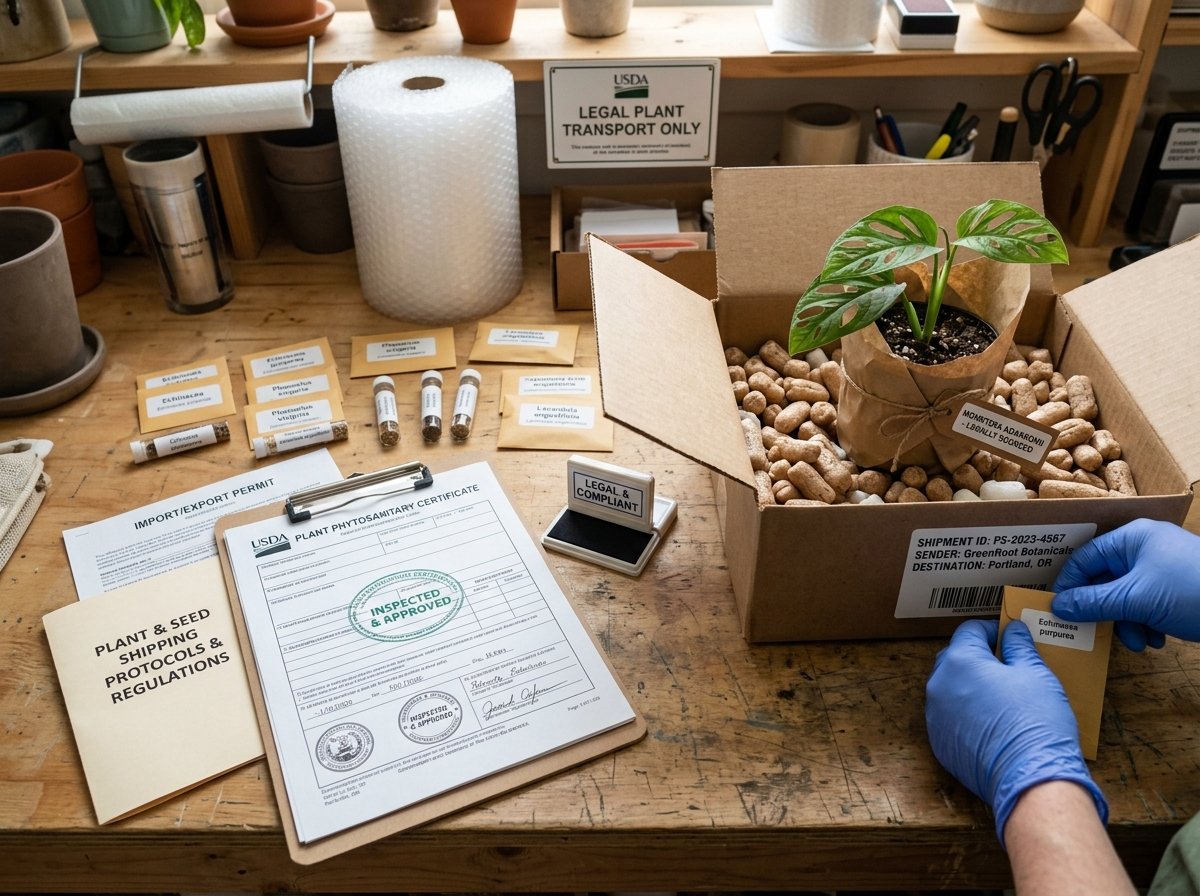
Every year, thousands of plant shipments get confiscated at borders — not because the plants were illegal, but because the sender didn’t know the right paperwork. One Reddit user shared how their rare orchid collection, worth over $500, was destroyed by customs simply because a phytosanitary certificate was missing. That’s not just money lost. That’s months of care gone in seconds.
If you’re someone who wants to send a beloved plant to a friend abroad, sell seeds through your online store, or just move your garden when relocating to another country, you need to understand how legal plant shipping actually works. The rules aren’t as scary as they sound, but ignoring them can cost you big — from fines to permanent import bans.
This guide breaks down everything: the regulations, the paperwork, the packing, and the courier choices. No confusing jargon. Just real, usable information.
Why Can’t You Just Ship Plants Like Any Other Item?
Here’s the thing most people don’t realize — plants and seeds are classified as regulated biological goods in almost every country on the planet. Why? Because they can carry pests, diseases, fungi, and invasive species that could wreck local agriculture and ecosystems.
Think about it this way. You send a beautiful rose cutting from India to Australia. Hidden inside its stem is a tiny insect larva you can’t even see. That larva reaches Australian soil, multiplies, and suddenly you’ve introduced a pest that local farmers have zero defence against. This isn’t hypothetical — it has happened multiple times throughout history.
That’s exactly why organizations like the USDA (United States Department of Agriculture), the EU Plant Health Regulation, DEFRA (UK), and Australia’s BICON (Biosecurity Import Conditions) have strict rules around what plants and seeds can enter their borders.
So before you even pick up a box, you need to know: what you’re shipping, where you’re shipping it, and what paperwork that specific route demands. If you’re also curious about items banned from international shipping, it’s worth checking that list too — plants appear on several restricted categories.
Understanding the Key Regulations (Country by Country)
Rules vary wildly depending on the destination. What’s perfectly fine to ship to Canada might get instantly seized in Australia. Let’s look at the major markets.
United States (USDA & APHIS Rules)
The USDA’s Animal and Plant Health Inspection Service (APHIS) controls all plant and seed imports into the US. You’ll need:
A phytosanitary certificate issued by the exporting country’s agriculture department, a PPQ 587 permit (Application for Permit to Import Plants or Plant Products) for most live plants, and proper labeling that includes the botanical name, country of origin, and quantity.
Some plants are completely banned — like citrus plants from many countries, certain soil-attached plants, and anything on the Federal Noxious Weed List. Seeds generally have fewer restrictions than live plants, but certain seed types (especially those for propagation) still need permits.
Pro Tip: The USDA’s APHIS website has a tool called PCIT (Phytosanitary Certificate Issuance & Tracking) where you can check import requirements for specific plants before you ship.
United Kingdom (DEFRA Rules)
Post-Brexit, the UK has its own phytosanitary framework separate from the EU. Most plants and plant products need a phytosanitary certificate and sometimes a plant passport for movement within the UK. DEFRA also maintains a list of prohibited and regulated plants.
If you’re comparing courier options for UK-bound shipments, understanding the shipping restrictions to UK can save you from surprises at the border.
Australia (One of the Strictest in the World)
Australia’s biosecurity laws are famously tough. The Department of Agriculture, Fisheries and Forestry requires an import permit for nearly all plant material. Many seeds and live plants are outright banned unless you go through an approved quarantine facility.
Fresh plant material often needs to undergo mandatory quarantine treatment (like methyl bromide fumigation or heat treatment) upon arrival. You can check Australia-specific rules through the shipping restrictions to Australia guide.
European Union
The EU follows the Plant Health Regulation (EU) 2016/2031. Plants entering the EU need a phytosanitary certificate, and certain high-risk plants require additional documentation. The EU also has a list of “Union Quarantine Pests” — if your plant could carry any of these, expect extra scrutiny.
India
India’s Plant Quarantine Order (Revised 2003, updated periodically) under the Directorate of Plant Protection governs both import and export. Exporting plants from India requires a phytosanitary certificate from the local Plant Protection Office. Importing into India requires an import permit issued before shipment.
The Paperwork You’ll Need (Don’t Skip This)
Paperwork is where most shipments fail. Not because the plant was prohibited, but because a single document was missing or filled incorrectly. Here’s what you typically need:
Phytosanitary Certificate
This is the single most important document for shipping plants internationally. It’s an official government certificate that confirms your plants/seeds have been inspected and are free from pests and diseases. You get it from the national plant protection organization (NPPO) of the exporting country.
The process usually involves bringing your plants to an inspection facility (or requesting an inspector visit), paying a small fee (varies by country — usually $20 to $100), and getting the certificate issued within 1–5 business days.
Warning: Phytosanitary certificates are typically valid for only 14 days from the date of issue. Ship your plants within that window, or you’ll need a new one.
Import Permit
Many destination countries require the receiver to obtain an import permit before the plants are even shipped. The US, Australia, India, and Japan are notable examples. This permit tells you exactly what conditions need to be met — like specific treatments, labeling requirements, or approved entry ports.
Customs Declaration
You’ll fill out a standard customs form declaring the contents, value, botanical names, and country of origin. Never describe your shipment vaguely as “gift” or “household item.” Customs officers are trained to flag these, and a mislabeled plant shipment can lead to penalties.
CITES Permit (For Protected Species)
If you’re shipping any species listed under the Convention on International Trade in Endangered Species (CITES), you’ll need a separate CITES permit from both the exporting and importing country. This applies to many orchid species, cacti, cycads, and other rare plants.
Around 36,000 plant species fall under CITES protection (as per the latest CITES database), so check before assuming your plant is exempt.
How to Pack Plants and Seeds for Shipping
Even with perfect paperwork, a badly packed plant will arrive dead — or worse, damaged in a way that triggers biosecurity concerns. Packing living material is genuinely different from packing regular items. If you’ve ever struggled with choosing the right packaging, the guide on how to choose the right box size is a good starting point for general principles.
Packing Live Plants
Remove all soil. This is non-negotiable for international shipments. Almost every country bans the import of soil because it can harbor pests, nematodes, and pathogens. Wash the roots gently and thoroughly with clean water.
Once the roots are clean, wrap them in damp sphagnum moss or peat moss, then wrap that in plastic cling film or place it in a sealed plastic bag. The goal is to keep roots moist without creating a soggy mess that promotes rot.
The stem and leaves need protection too. Wrap them loosely in newspaper or tissue paper — tight enough to prevent movement but loose enough that leaves aren’t crushed. For delicate plants, you can create a cardboard collar or use small sections of bubble wrap around the pot area (not around leaves directly, as trapped moisture causes fungal issues).
Place the wrapped plant inside a sturdy corrugated box with enough padding (crumpled newspaper works great) to prevent shifting. The plant should not move at all when you gently shake the box.
Poke a few small ventilation holes in the box — plants are alive and need some air exchange, especially for shipments lasting more than 24 hours.
Packing Seeds
Seeds are much easier to ship than live plants. Place them in small paper envelopes or breathable cloth bags — avoid airtight plastic for seeds that need to remain viable, as trapped moisture can cause mold.
Label each seed packet with the botanical name (not just the common name), quantity, and harvest date if known. Put the seed packets inside a padded mailer or a small box with some cushioning material.
Did you know? Seeds shipped in airtight, moisture-proof packaging (like sealed foil packets with silica gel) can remain viable for years. Commercial seed companies use this method, and it’s perfectly acceptable for shipping too — just make sure the outer label clearly identifies the contents.
Choosing the Right Courier for Plant Shipments
Not every courier accepts live plants. And among those that do, the policies, speed, and costs vary a lot. Your choice of courier can literally mean the difference between a thriving plant arriving at the doorstep and a wilted mess arriving at customs.
Speed Matters More Than You Think
Plants are perishable. A live plant sitting in a warehouse for five days will likely die. That’s why express or air shipping is almost always the better choice over ground or economy options. Yes, it costs more. But you’re shipping something alive.
If you’re weighing your options, the comparison between economy vs express international shipping will help you understand the time and cost tradeoffs.
For domestic shipments within a country, ground vs air shipping is also worth considering — ground can work if the distance is short (1–2 day transit), but anything longer and you’re risking the plant’s health.
Which Couriers Accept Plants?
USPS allows domestic plant shipping within the US, and they even have specific guidelines for it. International shipments through USPS are trickier and depend on the destination country’s rules.
FedEx and DHL both ship plants internationally, but they require proper documentation (phytosanitary certificates, customs forms) and typically recommend their express services for perishable botanical goods. If you’re deciding between the two for an international shipment, the DHL vs FedEx international shipping comparison covers their strengths and weaknesses.
UPS also accepts plant shipments but has specific packaging requirements and may require you to sign a declaration that the shipment complies with all local and international regulations.
Specialist plant couriers exist too — companies that specifically handle botanical shipments. They know the regulations, offer temperature-controlled options, and handle documentation. They’re pricier, but for high-value or rare plants, the investment makes sense.
Labeling Your Package
Your outer box should clearly say “Live Plants — Perishable — Handle With Care” and ideally include “This Side Up” arrows. Some couriers provide specific labels for perishable goods — ask when you book.
Also include the botanical names on the outside of the package (required by many customs authorities) and attach all documentation in a clear pouch on the exterior.
Domestic vs International Shipping: Key Differences
A lot of people think, “If I can ship this plant across my own country, I can ship it abroad too.” That’s a dangerous assumption.
Domestic shipping is relatively straightforward. Within the US, for example, most states allow plant shipments freely, though some states (like California, Arizona, and Florida) have agricultural checkpoints and restrictions on certain plants. You typically don’t need a phytosanitary certificate for domestic shipments, though a state-level nursery certificate might be required if you’re a commercial seller.
International shipping is a completely different game. You’re dealing with two sets of laws (exporting country and importing country), customs clearance, potential quarantine, and much longer transit times. The documentation requirements jump significantly, and the risk of your shipment being seized goes up if anything is out of order.
One thing that catches people off guard: even shipping plants between EU countries used to be simple, but post-2020 Plant Health Regulation changes, plant passports are now required for many more species within the EU itself.
Selling Plants and Seeds Online? Extra Rules Apply
If you’re running an online plant business — whether on Etsy, eBay, Amazon, or your own website — the legal requirements multiply.
You’ll likely need a nursery license or dealer permit from your state or country’s agriculture department. In the US, many states require a nursery license to sell live plants commercially, even online. Selling seeds is generally less regulated, but if you’re shipping across state lines or internationally, federal rules kick in.
For Etsy sellers specifically, the Etsy sellers guide to international shipping covers how to handle customs, labeling, and shipping options. eBay sellers can benefit from the guide on selling on eBay and shipping internationally too.
Handling returns is another headache with plants. Dead-on-arrival claims, quarantine seizures, and transit damage are common issues. Having a clear return and refund policy protects both you and your buyers. You can read more about handling returns for your online business to set up a fair system.
Quick Fact: According to the American Seed Trade Association, the US seed market alone was valued at over $12 billion in 2023. A big chunk of that now moves through e-commerce channels, making legal compliance more important than ever for small sellers.
What Happens If You Ship Plants Illegally?
Let’s be real — some people skip the paperwork and hope for the best. Here’s what actually happens when customs catches an illegal plant shipment.
Seizure and destruction. The plants get confiscated and destroyed. You don’t get them back, and you don’t get a refund on shipping costs.
Fines. In the US, civil penalties for violating the Plant Protection Act can reach up to $50,000 per violation for individuals. Commercial violations can go much higher. Australia’s Biosecurity Act penalties can exceed AUD $420,000 for serious offenses.
Criminal charges. Repeated or intentional violations (like smuggling protected species) can lead to criminal prosecution. People have actually gone to prison for plant smuggling — in 2022, a US man was sentenced to federal prison for illegally importing high-value orchids and succulents from South America.
Import bans. Your name gets flagged in the system. Future shipments — even perfectly legal ones — will face extra scrutiny and delays.
It’s just not worth the risk. The paperwork takes a few days and costs relatively little compared to these consequences.
Step-by-Step: Your Plant Shipping Checklist
Here’s a practical walkthrough you can follow:
Step 1: Identify your plant or seed by botanical name. Common names aren’t enough — “jasmine” could refer to dozens of different species, each with different import rules.
Step 2: Check the destination country’s import rules. Use official government databases (USDA PCIT for US, BICON for Australia, UK’s Plant Health Portal for UK). Look up your specific species and see what permits, certificates, and treatments are required.
Step 3: Check your own country’s export rules. Some plants need an export permit — especially CITES-listed species. Contact your national plant protection organization.
Step 4: Apply for permits. If the destination requires an import permit, the recipient needs to apply for it before you ship. This can take anywhere from a few days to several weeks, so plan ahead.
Step 5: Get your plants inspected and obtain a phytosanitary certificate. Book an inspection with your local agricultural office. Make sure your plants are clean, pest-free, and soil-free before the inspection.
Step 6: Pack your plants properly. Follow the packing guidelines above. Bare root, moist (not wet), protected, ventilated, and clearly labeled.
Step 7: Choose a fast, reliable courier. Express shipping is your best friend here. Book the shipment, attach all documentation to the outside of the package, and make sure the recipient knows when to expect the delivery.
Step 8: Track your shipment. Stay on top of the tracking status. If there’s a customs hold, you or the recipient may need to respond quickly with additional documentation. Understanding what different tracking statuses mean can help you react faster if something looks off.
FAQ
Do I need a phytosanitary certificate for shipping seeds?
It depends on the destination country. The US generally requires one for most seed imports. The EU requires it for seeds of certain species. Australia requires it for almost all seeds. Even if your country doesn’t require it for export, the destination country may demand it for import. Always check both sides.
Can I ship plants through regular mail services like USPS or Royal Mail?
Yes, but with conditions. USPS allows domestic plant shipments and some international ones (with proper documentation). Royal Mail accepts seeds in most cases but live plants are trickier and often need to go through a courier that handles customs clearance. Speed is critical — always choose the fastest option available for live plants.
What plants are completely banned from international shipping?
This varies by country, but common bans include soil-attached plants, plants from pest-infested regions, certain invasive species, and CITES-listed endangered species without proper permits. Citrus plants are banned by many countries due to citrus greening disease (HLB). Always check the specific banned list for your destination — the rules change regularly as new pest threats emerge.
Is it legal to ship dried herbs or pressed plant specimens?
Generally, dried and processed plant material faces fewer restrictions than live plants or seeds. Dried herbs for culinary use, for example, are usually treated as food products rather than regulated plant material. Pressed herbarium specimens may still need documentation depending on the species and destination. CITES rules still apply to dried specimens of protected species.
How long can plants survive in transit?
Most hardy houseplants can survive 3–5 days in a well-packed box. Succulents and cacti can handle up to 7–10 days because they store water. Tropical plants and delicate seedlings may not survive more than 2–3 days without light and proper humidity. This is why express shipping isn’t a luxury — it’s a necessity for live plant shipments.
Your Next Move
Shipping plants and seeds legally isn’t complicated once you understand the pattern: know your species, know your destination’s rules, get the right papers, pack carefully, and ship fast. That’s really what it comes down to.
The regulations exist for genuinely good reasons — protecting agriculture, ecosystems, and food security across the globe. Working within them isn’t just about avoiding fines. It’s about being a responsible plant lover who doesn’t accidentally introduce the next devastating pest to someone else’s country.
If you’re shipping for the first time, start with your country’s plant protection authority. Give them a call — they’re usually surprisingly helpful. Get your first phytosanitary certificate, learn the process, and every shipment after that gets easier.
Your plants deserve to arrive alive, legal, and ready to grow. Give them that chance by doing it right from the start.